 look news india

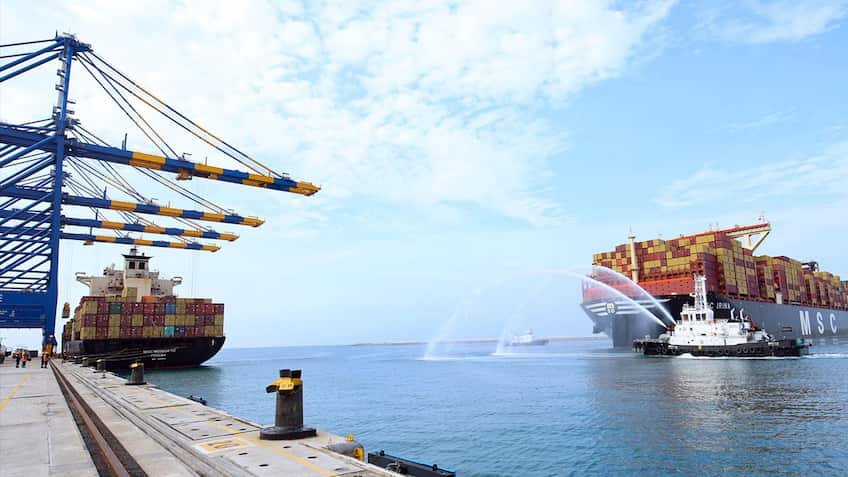
Amidst the geopolitical tension in West Asia and the shadow of the US-Iran conflict, a big and shocking news has come to light regarding global energy supply. In September, the movement of ships carrying liquefied natural gas (LNG) through the Strait of Hormuz, considered the most sensitive and strategic chokepoint of maritime trade, has touched the highest level since the beginning of the war. According to global shipping tracking data and energy analysts, a sudden surge in the number of LNG ships passing through the Strait of Hormuz in September 2026 has proved that the wheels of global gas supply are not going to stop despite the huge risks of war and missile attacks. This increase in the number of gas cargoes through this important sea route refutes all the fears which were being claimed that due to the conflict, LNG exports from the Persian Gulf to Western and Asian countries will come to a complete halt.
Shipping data and figures from major tracking agencies of the energy sector confirm this new record. A total of 19 LNG vessels successfully transited the Strait of Hormuz in the month of September, according to data from S&P Global Energy and Commodity Insights. Of these, 13 ships had departed from Qatar alone, while 6 had left loaded with LNG cargo from the ports of the United Arab Emirates (UAE). On the other hand, ship-tracking indicators from global marine data analytics firm Kpler show that the total number of ships reached 20 to 21 by the end of September, significantly higher than the level of 15 ships in June. This is the largest shipment record ever recorded in any single month since the war began. Although this figure is still around 20 to 25 percent of the normal pre-war level, the way the speed of passing of ships has increased in the second fortnight of September has emerged as a big relief for the global energy market.
It was not an easy task to safely get such a large number of ships out of the Strait of Hormuz, which had become a war zone. Shipping companies and tanker operators resorted to ‘Dark Transit’ technology to overcome this risky route. Under international maritime rules, it is mandatory for every big ship to keep its Automatic Identification System (AIS) transponder active, due to which its live location is visible on the satellite. But many ships turned off their AIS signals altogether as they entered Hormuz to avoid the threat of Iranian drones, patrol boats and missile attacks. According to reports, the giant gas tankers ‘Al Kharaitiyat’ and ‘Al Gharrafa’ suddenly disappeared from global radar as soon as they entered the strait and reappeared safely off India’s western coast a few days later. Apart from this, a ship named ‘Milaha Qatar’ also crossed the route under the same secret strategy and is currently unloading its gas cargo at Hazira, the western port of India.
A major credit for this record increase in ship movement also goes to the tight security cover provided by the US Navy and its allied countries. U.S. Naval Forces Central Command (NAVCENT) has activated specialized Naval Escorts and Convoy Systems to secure the movement of commercial energy vessels between the Persian Gulf and the Gulf of Oman. In the presence of warships, frigates and anti-drone air defense shields, LNG tankers are herded through this narrow passage. Although the operating costs of this type of high-security naval escort are very high and shipping insurance companies have increased war-risk premiums many times over, energy exporters are willing to bear this additional expense due to the strong demand and premium prices for natural gas in the European and Asian markets. This assurance of safety boosted the morale of shipping captains and led to an unexpected surge in the number of ships in September.
The smooth flow of LNG through the Strait of Hormuz is very important for the economic stability and energy security of all Asian countries including India. About 20 percent of the world’s LNG and 25 percent of crude oil passes through this narrow sea route. India imports about half of its total natural gas needs from abroad, with Qatar and the UAE being its largest and long-term suppliers. The country is heavily dependent on Qatari gas to run fertilizer factories, CNG automobile networks, city gas distribution (PNG) and power generation plants. If this corridor of Hormuz were completely blocked, there could be a serious danger of industrial production in India coming to a halt and inflation going out of control. The successful landing of LNG vessels at Indian terminals like Hazira and Dahej in September has provided a huge mental relief to the country’s energy importers and policy makers.
The winter season is about to begin in Europe and the Northern Hemisphere, during which gas consumption for heating homes and generating electricity reaches its peak. Since the Russia-Ukraine war, Europe has already ended its dependence on Russian pipeline gas and is relying on LNG from the Middle East and the US. In such a situation, if the supply of gas from Hormuz stops due to the US-Iran war, then international spot gas prices could break the historical record by 2022. This increase in the number of vessels in September has eased the price pressure on international TTF and JKM gas benchmarks. Analysts believe that if this pace of ship movement continues in October, global gas storages will be filled on time and the possibility of a serious energy crisis in winter will be averted to a great extent. However, unless a diplomatic solution is found in the Middle East, this entire security balance could be shaken in an instant by any single new military attack.