 look news india

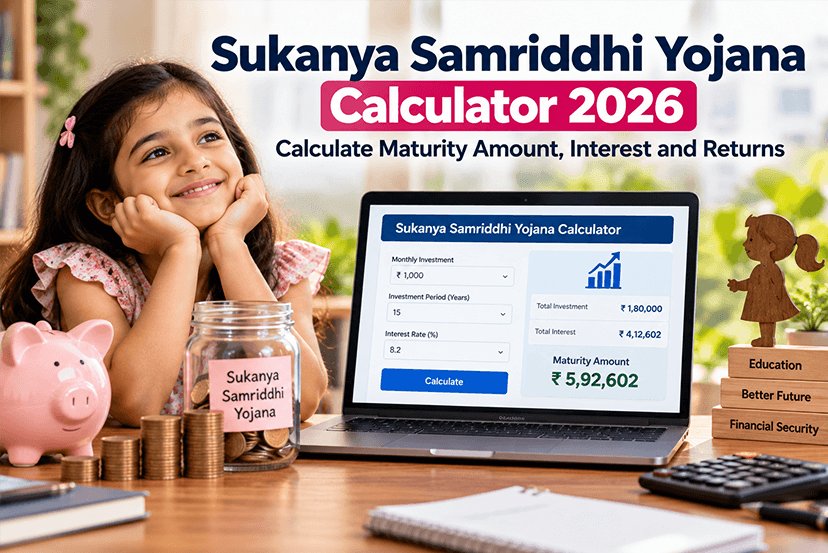
When a daughter is born in any family in India, the parents naturally worry about her upbringing as well as her higher education and secure future of marriage. In today’s era, given the rapid increase in the expenses on professional courses, medical-engineering studies and marriages, it has become extremely important to make a disciplined and solid financial plan in time. With the aim of providing financial support to the bright future of daughters, ‘Sukanya Samriddhi Yojana – SSY’, run by the Government of India, has emerged as the most popular and safe small savings scheme in the country. This government scheme, launched under the ‘Beti Bachao, Beti Padhao’ campaign, is not only easily available in post offices and authorized banks across the country, but it also guarantees much higher interest rates and triple tax benefit (EEE) compared to normal fixed deposits and PPF. This question often comes in the mind of middle class families that if they deposit a small and easy amount of just ₹ 2,000 from their household savings in Sukanya account every month, then how much total fund will be in the hands of their beloved when she turns 21. Its complete practical mathematics and compounding effect will stun every parent.
Sukanya Samriddhi Account is operated under the strict rules set by the Finance Ministry of the Central Government, due to which every penny deposited in it gets 100 percent sovereign guarantee. Under this scheme, parents or legal guardians can open an account any time from the birth of their daughter till she completes 10 years of age. Separate accounts can be opened in the name of maximum two daughters in a family; However, if twin or triplet daughters are born, a third account is also legally permitted on the basis of a special certificate. Under this scheme, an account can be opened with a minimum amount of Rs 250 and a maximum of Rs 1.5 lakh can be deposited in any one financial year. According to the interest rates announced from time to time by the Central Government, currently this scheme is offering bumper interest of 8.2 percent per annum, which is calculated on the basis of Annual Compounding. This interest rate is highest as compared to Post Office PPF, NSC or Bank FD.
The most unique rule of Sukanya Samriddhi Yojana is that in this the parents do not have to deposit money for the entire 21 years. As per the rules, installments have to be deposited only for the first 15 years from the date of account opening, whereas no new amount has to be deposited in the account for the next 6 years and the account continues to earn interest uninterruptedly till the 21st year of maturity. If you commit to deposit ₹2,000 every month in your daughter’s name, this works out to just ₹66 to ₹67 per day in terms of daily savings, which is not at all a burden on the monthly budget of any family. By depositing ₹2,000 every month, your annual investment becomes ₹24,000. When you deposit this amount for 15 consecutive years (i.e. total 180 months), the total principal deposited from your pocket on completion of 15 years will be ₹ 3,60,000 (i.e. total Rs 3.60 lakh). This is the amount that you have saved drop by drop in the name of your daughter in 15 years.
Now understand how big a fund this small investment of ₹ 3.60 lakh turns into after 21 years with an annual compound interest rate of 8.2%. When you deposit ₹24,000 annually during the first 15 years, the principal amount and the interest accrued on it together reach around ₹7.25 lakh by the end of the 15th year. In the subsequent 6 years (from 16th year to 21st year), you do not have to deposit even ₹ 1 new from your side, but compound interest of 8.2% per annum continues to be added on the accumulated capital of more than ₹ 7.25 lakh already present in the account. When the account completes its full maturity of 21 years, the total net interest you will receive as per the calculator’s estimate comes to around ₹8,04,000 (approximately ₹8.04 lakh). Thus, at the time of maturity, the total fund including your original deposit (₹3,60,000) and government interest (₹8,04,000) will be approximately ₹11,64,000 (ie approximately ₹11.64 lakh) gets dressed. That means, more than double the amount of your deposited capital comes into your hands only in the form of government guaranteed interest.
Sukanya Samriddhi Yojana not only gives better returns, but is also counted among the best financial instruments in the country in terms of tax savings. It has been kept in the category of ‘EEE’ i.e. Exempt-Exempt-Exempt under Indian Income Tax laws. Its first advantage is that on the amount of ₹ 24,000 deposited every year, the parent gets 100 percent tax exemption under Section 80C of the Income Tax Act, up to a total limit of ₹ 1.5 lakh. The second advantage is that no tax is deducted nor any TDS is levied on the 8.2% interest added to the account every financial year. The third and most important benefit is that at the time of maturity after 21 years, when the entire huge amount of ₹ 11.64 lakh is withdrawn, then the entire amount will attract zero tax under Section 10(10D). While Long Term Capital Gains (LTCG) tax of 12.5% is deducted on private mutual fund or stock market gains, Sukanya’s entire fund becomes 100% tax-free and comes directly into the hands of the daughter.
Keeping the financial security of the daughter paramount, very strict but practical rules for withdrawal have been made in Sukanya Samriddhi Yojana so that there is no misuse of money. When the daughter completes 18 years of age or passes 10th class, a maximum of 50 per cent of the total balance at the end of the previous financial year can be withdrawn as Partial Withdrawal for her higher education (college, university or vocational course fees). For this, it is mandatory to submit the official offer letter or fee slip for admission to the college. If the daughter’s marriage is fixed between the age of 18 to 21 years, then the account can be closed prematurely by applying for marriage expenses 1 month before or 3 months after the marriage date. But if the marriage does not take place, the account will continue to operate for the full 21 years and on the completion of the 21st year, the entire maturity amount will be directly transferred to the daughter’s bank account, because after the age of 18 years, the actual operating rights of the account come into the hands of the daughter.
Opening a Sukanya Samriddhi account is very easy and does not require going through any complicated paperwork. You can apply by visiting your nearest post office or branch of any major government and private bank (like SBI, PNB, BoB, Canara Bank, ICICI etc.). It mainly requires four documents: first, the original birth certificate of the daughter issued by the Municipal Corporation or competent authority; Second, identity card of the parent or guardian (Aadhaar card or PAN card); Third, valid proof of address of the guardian (electricity bill, passport, voter ID or ration card); And fourth, passport size color photographs of parents and daughter. A dedicated Sukanya Passbook is handed over to you once you fill the form and deposit the initial minimum of ₹250 or your first monthly installment of ₹2,000 in cash, check or draft. You can set up auto-debit every month through net banking and IPPB app of your bank or post office, so that the installment of ₹ 2,000 is deducted every month without any mistake and the future of your beloved can become financially independent without any risk.