 look news india

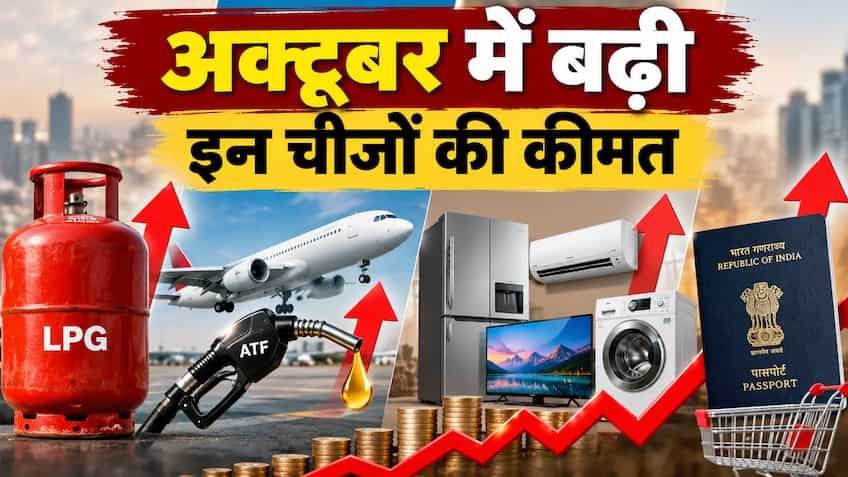
With the beginning of the festive season, inflation has had a strong impact on the pockets of common consumers and businessmen. Many major financial and commercial changes have been implemented in the country from October 1, due to which there has been an increase in the cost of everything from cooking gas to electronic appliances and administrative services. While on one hand the oil marketing companies have increased the prices of commercial LPG cylinders, on the other hand, due to the increasing cost of raw materials and logistics, home appliance brands have also indicated to increase the prices of TV, fridge and AC. Apart from this, the revised rules and fees related to making passport have also come into effect. Let us understand in detail what has become expensive in October.
Oil Marketing Companies (OMCs) have increased the prices of 19 kg commercial LPG cylinders on the first of the month.
-
New rates of cities: In the country’s capital Delhi, commercial cylinder has become costlier by ₹ 62.50 and has now reached ₹ 2,810. Whereas in Patna it has increased by ₹ 71.50 and has crossed ₹ 3,100. The new price in Mumbai has been recorded at ₹2,764.50 and in Chennai at ₹2,983 per cylinder.
-
Relief to domestic cylinders: It is a matter of relief that there has been no change in the prices of 14.2 kg domestic LPG cylinder. However, due to the cost of commercial gas, the cost of restaurants, hotels, cafes and street food vendors will increase, which can have a direct impact on the bills for eating out during the festive season.
This news may increase concerns for customers planning to buy home appliances and electronic gadgets during festivals. According to the Consumer Electronics Manufacturers Association (CEAMA), prices of consumer durables are being pushed up due to a surge in global prices of essential raw materials:
-
Reasons for increase in cost: A sharp increase has been recorded in the international prices of copper, steel, aluminum and crude oil derivatives. Along with this, due to increase in ocean freight charges, the production cost of companies has increased by 6% to 8%.
-
Impact on products: Its direct impact is being seen on the retail prices of split and window ACs, smart LED TVs, large refrigerators and washing machines, where companies have started implementing increases ranging from ₹1,000 to ₹3,500, depending on the model.
The revised rates for the process of making and renewing passports under the Passport Amendment Rules notified by the Ministry of External Affairs (MEA) have been fully implemented. Now getting a new passport has become much more expensive than before:
-
Fee for adults: The fee for a new passport of 36 pages in the general category has been increased from ₹1,500 to ₹2,500. At the same time, for a jumbo booklet of 60 pages, now you will have to pay ₹ 3,500 instead of ₹ 2,000.
-
Tatkal Passport Services: In Tatkal quota, the fee for passport of 36 pages has been increased from ₹3,500 to ₹5,000 and for 60 pages to ₹6,000.
-
Passport of children (minors): The fee for 36-page passport for children below 15 years of age has increased from ₹1,000 to ₹1,750. Also, the maximum validity of children’s passport has now been limited to only 5 years or till they turn 18 (whichever is earlier).
Along with electronics and gas, there has been some additional burden on the pockets of common banking consumers:
-
SBI Free ATM Withdrawal Limit: State Bank of India (SBI) has reduced the monthly limit of free transactions from ATMs of other banks from 10 to 5 for its salary package account holders. After exceeding the limit, additional charges and GST will have to be paid on cash withdrawal.
-
NPS Onboarding Charge: A one-time onboarding fee of ₹200 per PRAN has now been fixed at the time of new registration in the National Pension System (NPS) through Point of Presence (POP).