 look news india

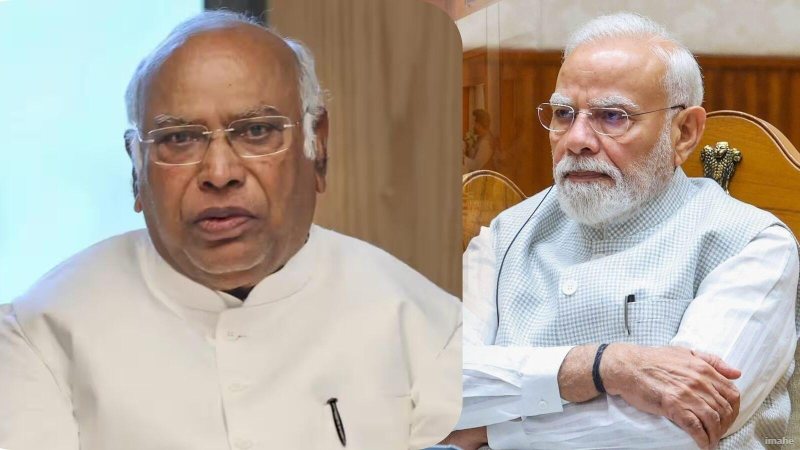
A very big and important news is coming out from Indian political circles at this time, which is directly related to the politics, development works and centre-state relations of the country’s southern state Karnataka. National President of Congress Party and Leader of Opposition in Rajya Sabha Mallikarjun Kharge has written a formal letter to the Prime Minister of the country, Narendra Modi, drawing his attention to many serious and important issues. Since the appearance of this letter written by Mallikarjun Kharge, who has deep political and personal connection with the land of Karnataka, political turmoil has intensified from the national capital Delhi to Bengaluru. In this letter, Kharge has mainly requested the Prime Minister’s intervention regarding various pending development works related to the state of Karnataka, central assistance funds, relief packages for natural disasters like drought and floods and other administrative and economic matters. In Indian politics, whenever a top opposition leader writes a letter to the Prime Minister of the country on such policy and regional issues, its diplomatic and electoral implications are very deep. Through this letter, the debate has once again erupted whether the Central Government is discriminating against the states ruled by opposition parties in financial and administrative matters, or whether it is a part of normal administrative correspondence, on which reactions have now started coming from both the sides.
Congress President Mallikarjun Kharge, in his detailed letter to Prime Minister Narendra Modi, has raised many fundamental and financial questions related to the interests of the people of Karnataka very prominently. This letter of Kharge has come out at a time when there is often tension between the state Congress government and the central government regarding allocation and fund transfer of various schemes. The letter mainly emphasizes that Karnataka is one of the highest revenue generating and rapidly developing states of the country, but despite this, when it comes to share in central taxes or relief funds received during natural disasters, the state does not get full support as per its expectations. Mallikarjun Kharge, citing his political experience and the local geography and conditions of Karnataka, has urged the Prime Minister to personally take cognizance of this matter and direct the concerned ministries to clear the files related to infrastructure, railway projects, irrigation schemes and agricultural development of the state expeditiously without any political delay.
Karnataka, this major state of South India, has been facing natural disasters like severe drought and sometimes excessive monsoon rains and floods for the last few years, due to which the farmers of the state have broken their backs. Mallikarjun Kharge, in his letter to the Prime Minister, specifically mentioned this serious humanitarian and agricultural crisis and demanded from the Central Government that immediate and adequate financial assistance should be released to Karnataka from the Central Disaster Relief Fund (NDRF). The proposals sent by the state government to the Center for loan waiver of farmers, settlement of crop insurance claims and to deal with drought are pending for a long time, due to which relief work at the ground level is being affected. Kharge has tried to convey the message through the letter that in this hour of disaster, the central and state governments should rise above politics and work together, so that Annadata farmers can get timely relief and can bring their farming back on track. He also underlined that the Center should show its generosity in creating employment opportunities in rural areas of Karnataka and timely release of funds from schemes like MNREGA, so that the general public does not have to face financial crisis.
This letter written by Mallikarjun Kharge to Prime Minister Modi has once again fueled the debate on ‘Cooperative Federalism’ in the country. Ideological differences are often seen among political parties on the balance of financial and administrative powers created between the Center and the States under the Indian Constitution. Opposition parties have always alleged that the central government treats non-BJP ruled states step-by-step and creates obstacles in their development work, whereas the ruling party’s stance is that resources are allocated to each state based on its own set rules and financial parameters. Since the Congress party is currently in power in Karnataka with an absolute majority, every step taken by the state leadership is seen through the prism of national politics. Political analysts believe that this letter of Kharge is not only an administrative appeal, but it is also a calculated political move to work out the upcoming political strategies and electoral equations, through which the Congress Party wants to prove that it is raising its voice strongly in the court of Delhi for the rights of Karnataka.
After this letter of Congress President Mallikarjun Kharge became public, now there is a discussion in the political circles whether the Prime Minister’s Office or the concerned Central Ministry gives any positive reaction on this or whether this matter remains a matter of political statements. The eyes of the general public, industrialists and especially farmers of Karnataka are fixed on whether after this letter the pending projects of the state will gain momentum and the funds received from the Center will increase. Mallikarjun Kharge, one of the most senior and experienced Dalit leaders of the country, writing a letter directly to the Prime Minister in this way shows that the opposition is working on a strategy to make its voice more vocal on regional development issues. In the coming days, it will be very interesting to see how the Central Government responds to the points raised in this letter and what kind of administrative steps are taken by both sides on the development front of Karnataka, because ultimately the future of the six and a half crore people of the state and their basic needs should be at the center of all these political and diplomatic talks.