 look news india

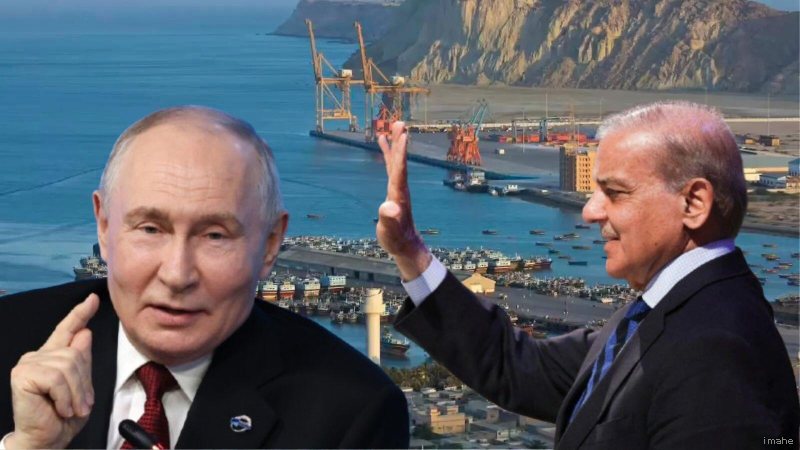
Russian President Vladimir Putin and the history of Russia’s strategic policies have witnessed that for centuries, Moscow’s biggest geopolitical ambition has been to gain unhindered access to the world’s open and warm water seas. If we turn deeper into the pages of history, since the Cold War era, it has been the top strategic priority of the Soviet Union and Russia to find permanent bases for their navy on warm water routes like the Indian Ocean or the Arabian Sea, so that they can get complete control over global trade and military movement by getting rid of the frozen ice of the Arctic and Baltic Sea. In this series, now a very shocking news is coming out from the geopolitical corridors of South Asia and which increases India’s national security concerns manifold. According to the latest diplomatic and defense equations, Pakistan has opened its strategic doors to implement Putin’s long-awaited dream and has given secret consent to ease Russia’s access to strategically extremely sensitive ‘hot water’ routes. This development is being considered a huge and direct blow to India’s security, because if Russian influence increases on Gwadar and other Pakistani ports, then India’s traditional dominance in the Indian Ocean will come under direct challenge. These rapidly changing alliances between the two countries have given New Delhi’s strategists and defense experts sleepless nights, as this move directly has the potential to seriously upset the regional balance of power.
If we look at Russia’s geographical history, most of its major ports remain frozen for a large part of the year due to heavy snowfall and severe cold, severely hampering the movement of its navy and international merchant ships. That is why Russia has always been in search of such geographical conditions where it could get a sea coast with open and warm water twelve months of the year. From the Russian tsarist rule of the eighteenth and nineteenth centuries to the dissolution of the Soviet Union, Moscow had always made strategic plans to move southwards, i.e. towards the Persian Gulf and the Arabian Sea. Even during the Afghanistan War, one of the hidden objectives of the Soviet Union was to somehow reach the shores of Pakistan or Baluchistan, but at that time, this dream remained unfulfilled due to strong opposition and regional resistance from America, Britain and other western powers. At present, when Russia is facing stringent economic sanctions from the Western countries and is looking for new friendly countries at the global level after the Ukraine conflict, then it has found a partner in the form of Pakistan which is not hesitating to invite Moscow to the hot water paths under its strategic compulsions and anti-India agenda. This geopolitical compulsion of Russia and diplomatic opportunism of Pakistan are giving rise to a new and dangerous equation in South Asia.
Pakistan has been struggling with its deteriorating economy and huge shortage of foreign exchange reserves for the last few years, due to which it is not shying away from pledging its strategic assets to foreign powers. Under its ‘CPEC’ project with China, Gwadar Port is already under the shadow of Beijing’s strategic control and influence, where there are always fears of Chinese naval interference. Now Russia’s entry into the equation has made the situation more complicated, as Pakistan has reportedly given the green signal to the use of its waterways and coastal infrastructure for Russian ships and energy supply carriers. Defense analysts believe that the main objective behind this policy of Pakistan is to increase strategic pressure on India and forcibly prove its importance on global forums. When Pakistani rulers allow Russia access to their warm water coasts and trade corridors, they forget that it will have far-reaching consequences for the peace and stability of the entire South Asian subcontinent. Thus, if Russia strengthens its strategic hold up to the mouth of the Indian Ocean by using Pakistan’s land and sea routes, it will be considered a huge and open attack on India’s security and sovereignty from Pakistan’s side.
For experts of Indian diplomacy and national security policy, this growing closeness between Pakistan and Russia has become a matter of grave concern. Relations between India and Russia have traditionally been extremely strong, trusted and strategic partners for decades, with Moscow always being New Delhi’s biggest supporter in matters of defense procurement and energy security. However, in the changing times, when Russia and Pakistan are coming closer to each other and Pakistan is giving Russia access to its hot water routes, it is being considered as a direct attack on a sensitive ‘vein’ of India. The security of India’s western coast and the Arabian Sea has always been one of the top priorities of the Indian Navy, as most of the country’s international trade and oil imports operate from this region. If Russian warships or strategic submarines reach close to the Arabian Sea and Indian Ocean through Pakistan, the Indian Navy will have to make drastic changes in its security strategies. Moreover, on the diplomatic front too, India faces a major dilemma as to how to react to this move by its old and trusted friend Russia, as maintaining friendship with Moscow is as important for India’s global energy and defense needs as securing its borders.
This new strategic alliance emerging between Pakistan and Russia has increased the heartbeats of not only India but also America, Western countries and other major Gulf countries. The US and its Western allies are keeping a close eye on how Russia is using alternative trade and shipping routes to avoid sanctions. On the other hand, China would also not want the interference of any other superpower i.e. Russia to increase so much in the Indian Ocean region that Beijing’s influence starts decreasing. In such a situation, Pakistan is playing a game among these superpowers where it is pushing the entire region to a powder keg for some slight economic and strategic gains. If Russia indeed succeeds in establishing its long-term presence in the warm waters through Pakistan, it would mark the biggest geopolitical shift of the post-Cold War era. In the coming times, India will have to further modernize its naval capabilities as well as establish a very close dialogue with Russia at the diplomatic level, so that Moscow can be made to realize that such regional alliances at the cost of India’s security are unacceptable for New Delhi. Thus, this exercise to fulfill Putin’s age-old dream is emerging as a huge threat to the future of peace and stability in South Asia.