 look news india

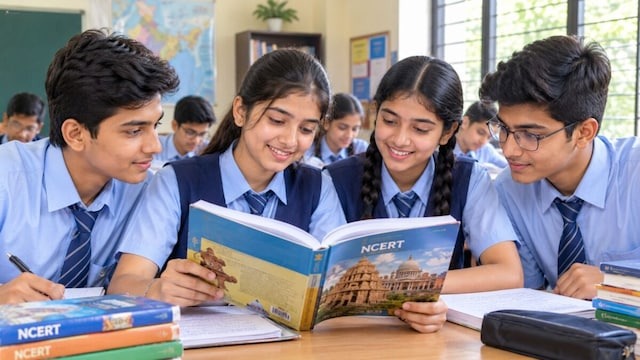
A historic and major change has begun in the Indian education system and school curriculum, which is going to prove to be a milestone in the ideological and cultural development of crores of students of the country. National Council of Educational Research and Training (NCERT) has once again made very big and important updates in school books in view of the academic session. Under the latest changes, the ideals of ‘Ram Rajya’ and the history of the sacred ‘Sengol’ installed in the new building of the Indian Parliament have now been made a part of the curriculum in schools across the country to introduce class 9 students to the depth of Indian history, culture and governance system. The main objective of this step is to connect the new generation with India’s ancient democratic traditions, moral values and cultural heritage, so that they can feel proud of their roots. There are widespread discussions going on across the country regarding this change in the education world and political circles, and every parent and student is curious to know what new chapters have been added to the new books and what impact they will have on the students’ education. In today’s detailed and analytical article, we are going to tell you in detail about this new curriculum of NCERT, the new chapters related to ‘Ram Rajya’ and ‘Sengol’ and the objectives behind it.
Inclusion of the ideals of ‘Ram Rajya’ in the new books of NCERT and its purpose
Under these latest amendments made by NCERT in the syllabus related to Social Science and History of Class 9, the administrative, moral and social nature of ‘Ram Rajya’ has been presented to the students in a very beautiful manner. For centuries, in the Indian mind, ‘Ram Rajya’ has been used to mean an ideal governance, a just system and an all-inclusive society where no citizen is discriminated against, law and religion are equal for everyone from the king to the subjects, and there is complete peace and prosperity in the society. The new books highlight how the values of Lord Rama’s reign can also serve as a source of inspiration for today’s modern democratic and welfare states. Instead of limiting students to only the battles and political history of kings and emperors, inclusion of this ancient concept in the curriculum to develop within them a sense of moral courage, dutifulness and social responsibility is being considered as a very commendable and visionary step.
Now school children will read the story of the sacred ‘Sengol’ of Parliament House in history books.
The second biggest and attractive attraction of the new NCERT books is related to Sengol (Sengol History in NCERT) of the new Parliament of the country. When the country gained independence from the British in 1947, this sacred scepter ‘Sengol’, associated with the ancient tradition of the Chola Dynasty of Tamil Nadu, was handed over to the first Prime Minister Pandit Jawaharlal Nehru as a symbol of the peaceful transfer of power, which has recently been reinstalled near the Speaker’s chair in the country’s new Parliament House. Now in the Class 9 syllabus, students will read detailed information about how this scepter has been a symbol of Indian culture, justice, transparency and sovereignty. The objective of the government and the academicians behind adding this chapter is that the youth of the country can understand how our present day governance system is deeply connected with the ancient Indian traditions and values. Reviving these important cultural symbols that have been buried in the pages of history and making them available to school children is indeed a huge step towards decolonization in the field of education.
What other new changes and conceptual amendments have been made in the curriculum?
Apart from ‘Ram Rajya’ and ‘Sengol’, in these new books of NCERT, Indian Knowledge Systems (IKS), ancient sciences, mathematics, philosophy and the contribution of those unsung heroes of India’s freedom struggle have also been given prominent place, who could not get adequate space in the earlier books. The Ministry of Education and the Curriculum Committee believe that unless the children of the country are acquainted with the real history, art, culture and technological achievements of their motherland, their overall intellectual development will remain incomplete. The language in the new textbooks has been made more simple, interesting and logical so that students can understand things deeply by getting out of the tendency to memorize. To implement these changes, special workshops are also being organized for teachers so that they can teach these new subjects to the students with complete sensitivity and factual accuracy.
Feedback from academics, parents and students: A positive and far-reaching step
This move of NCERT has been welcomed wholeheartedly by most of the educationists, intellectuals and parents across the country. He says that the best way to revive our cultural identity which is lagging behind in the blind race of modernity is to connect children with these great traditions at the school level itself. Although, ideological debate is also being seen regarding this in some circles, but overall, a lot of enthusiasm is being seen among the students and teachers to read these new chapters. In the coming new academic session, when students will read the just principles of ‘Ram Rajya’ and the historical journey of ‘Sengol’ through these books, the feeling of patriotism and cultural pride within them will become stronger. This change is proof that the Indian education system is now coming out of its colonial mentality and is rapidly moving towards its indigenous and original identity.