 look news india

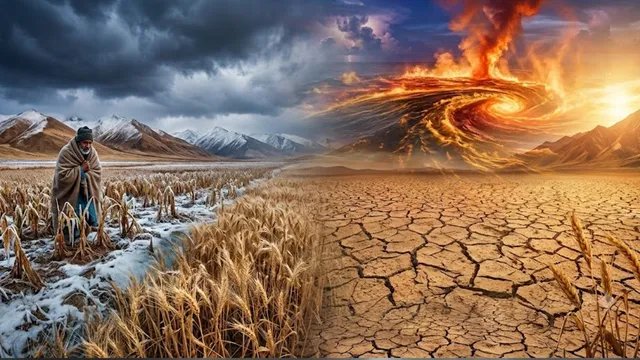
A very worrying international report has come out regarding the global climate and weather patterns. America’s prestigious Columbia University’s International Research Institute for Climate and Society (IRI) has warned in its latest climate update that El Niño may reach its severe form i.e. ‘Very Strong / Super El Niño’ during the end of the year 2026 and the winter of 2026-27. After a thorough analysis by the institute of 22 different global climate models (13 dynamic and 9 statistical), it has been concluded that all the models are unanimous that sea surface temperatures are rising unusually rapidly in the Pacific Ocean. Scientists say that this weather phenomenon could be one of the most powerful El Nino events ever recorded in history, which could pose a huge crisis on many fronts for the entire world as well as India in particular. 100% probability by February 2027: Scientific mathematics of return of Super El Nino According to Columbia University and American weather agency NOAA, the sea temperature in the Nino 3.4 region of the equatorial Pacific Ocean has gone more than 3 degrees Celsius above normal, which may touch an increase of up to 4 degrees Celsius in the coming peak months (November-December). IRI scientists estimate that the probability of El Nino remaining active till February 2027 remains 100 percent. However, it is expected to decline to around 61 percent by mid-2027. According to meteorologists, when the ocean surface warms on such a large scale, it completely disorients the global atmospheric circulation and the direction of jet streams, completely derailing the natural cycle of cold, heat and rain. Why did the alarm sound for India? Hot winters and direct impact on Rabi crops: The impact of El Nino in India is not limited to just weakening the monsoon, but it also has a deep and deadly impact on the winter season. Its main potential threats to India are as follows: Abnormally warm and dry winters: Due to strong El Nino, there is a strong possibility of below normal cold and above normal minimum temperatures in North and Central India (Punjab, Haryana, Uttar Pradesh, Rajasthan, Madhya Pradesh). Heavy damage to wheat and mustard crops: Wheat crop in the country needs severe cold (chilling hours) to germinate and develop grains. If night temperatures remain above normal in December and January, wheat production and grain size may be adversely affected, which may deepen the problem of food security and inflation in the country. Weak Western Disturbances: El Nino pushes the jet stream northward, which may significantly reduce winter rainfall in the plains of North India (Mawatha) and snowfall in the mountains (Kashmir, Himachal, Uttarakhand). Due to reduction in snowfall, there will be a danger of drying up of water inflow in rivers and dams in summer. Will the positive attitude of IOD (Indian Ocean Dipole) be able to provide relief to India? Amidst this dire danger, a ray of hope is also visible for Indian meteorologists. According to IRI and IMD data, the position of the ‘Indian Ocean Dipole’ (IOD) in the Indian Ocean is expected to be largely positive (Positive IOD) between September and December 2026. In climatology, a positive IOD is considered a natural counter-balance to El Nino. If the positive IOD remains strong, it can help in bringing moisture and suppressing the effects of drought and extreme heat of El Nino to some extent. However, history shows that when El Nino reaches the ‘Super’ category, the impact of a positive IOD is limited. Reservoir water levels and the new challenge of drinking water crisis in summer Most of the major dams and reservoirs in India depend on the south-west monsoon and post-monsoon rains. If the effect of El Nino reduces winter rainfall and snowfall, then the water crisis in the reservoirs of South India (Karnataka, Tamil Nadu, Andhra Pradesh) and Western India (Maharashtra, Gujarat) may deepen in the coming summer of 2027. Over-exploitation of groundwater will lead to a sudden increase in demand for electricity, as there will be a heavy load on the grid for irrigation and air conditioning. This will not only increase the agricultural cost of farmers, but there may also be a severe shortage of drinking water in cities. Important alert for NITI Aayog, Agriculture Ministry and farmers: After this serious warning from Columbia University, the Indian Meteorological Department (IMD), NITI Aayog and agricultural scientists have advised the Central and State Governments to be cautious. Scientists say that farmers should be advised to sow heat-tolerant wheat varieties (like HD-3385, PBW-725). Apart from this, it will be very important to promote micro irrigation techniques (drip and sprinkler), strengthen water shed management and manage the buffer stock in time so that the country’s economy and farmers can be protected from this possible attack of weather.