 look news india

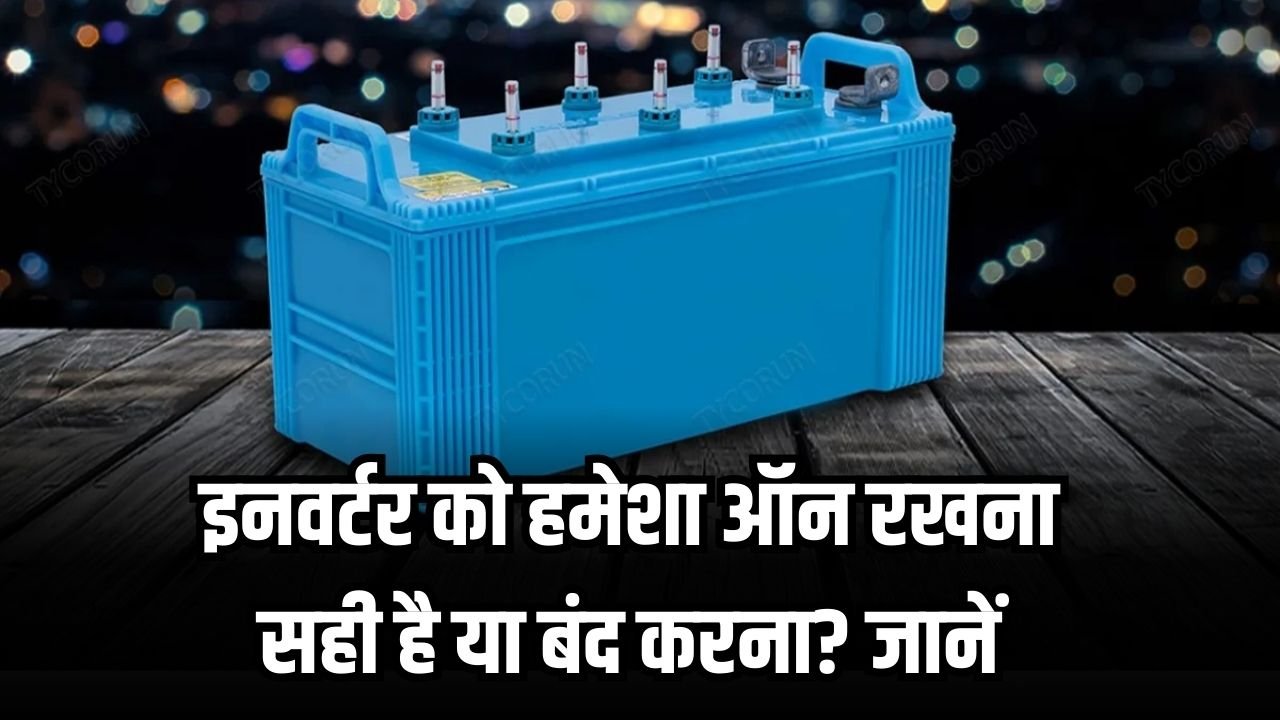
Inverters have become an essential home appliance to deal with power cuts in most of the cities and rural towns of India like Lucknow, Kanpur, Varanasi, Jaipur or Patna. During the summer season, inverters work day and night in every house to run fans, coolers and lights uninterrupted. However, this big question always remains in the minds of common consumers that even when the electricity is coming from the main grid in the house, whether the main power switch of the inverter or the front switch of the inverter should be kept on, or turning it off while there is electricity saves the electricity bill and prolongs the life of the battery. Without understanding this technical process, repeatedly switching off the inverter incorrectly or doing wrong switching can cause huge losses instead of benefits for the appliance.
Nowadays, modern digital and sine wave inverters available in the market are based on very intelligent and automated circuit technology. When mains supply is available from the main grid in the house, the inverter automatically goes into ‘bypass mode’. This simply means that fans, lights, and other appliances in your home run directly on grid electricity, not battery power. At the same time the internal charger of the inverter starts charging the battery. As soon as the battery is fully charged to 100 percent, the smart microcontroller of the inverter cuts off the charging current and puts it in ‘trickle charge mode’ i.e. float mode. This mode only uses the nominal current to prevent the battery’s natural self-discharge, completely eliminating the risk of overcharging.
According to technical experts and electrical engineers, under normal circumstances, keeping the inverter always on and connected to the main supply is considered the best and safest way. Its main benefits are as follows:
-
Automatic power backup without interruption: The biggest advantage of having the inverter on is that as soon as there is a power failure, the system switches to battery backup within milliseconds. If you are not at home or sleeping at night, the food kept in the fridge does not spoil and the fan does not switch off.
-
Availability of full charged battery: When the inverter is connected to mains power 24 hours a day, the battery is always ready in a fully charged state. If there is a sudden power cut of 4 to 6 hours during the day, you get complete backup.
-
Protection against voltage fluctuations: Many modern inverters have an inbuilt voltage stabilizer circuit. When the voltage in the main line suddenly increases or decreases too much, the inverter regulates the voltage to keep the home appliances safe.
Many people have this misconception that if the inverter remains on day and night, the electricity meter will run out faster and the bill will increase by thousands of rupees. If seen from scientific and technical point of view, this is not completely correct. When the battery is fully charged, the inverter draws ‘no-load power’ only to power its internal display, relays and cooling fan, usually around 10 to 25 watts per hour. This standby consumption hardly amounts to 5 to 10 units of electricity in a month, the financial impact of which is negligible. Actual power consumption occurs only when the discharged battery is being fully charged again after a power cut.
In order to save electricity, many people turn off the plug or switch of the inverter from the main switch board. Doing this proves to be extremely harmful to the health of both the battery and the inverter:
-
Self-discharge and sulfation of batteries: It is the natural nature of lead-acid batteries to discharge slowly even when stored. If the inverter is switched off and the battery remains in an uncharged state for a long time, a hard layer of lead sulphate gets deposited on its lead plates which is called ‘sulfation’. This reduces the battery capacity and lifespan by half.
-
Lack of backup in emergency: If you have switched off the inverter and suddenly the power goes off, the whole house is plunged into darkness. It is inconvenient to switch on manually, especially for the elderly or children.
-
Danger of Deep Discharge: Repeated shutdowns cause the battery to never charge in the correct cycle, causing the battery to become deep discharged and the inverter may refuse to charge it again.
The general rule is to leave it on all the time, but in some special cases it is considered safe to manually turn off and unplug the inverter and battery:
-
Going out of the house for a long time: If you are going out for holidays or work for 15 days or a month with family and there is no one at home, the UPS of the inverter should be switched off to avoid possible hazards of short circuit or fire.
-
Strong storm and lightning: During severe thunderstorms when there is a risk of high-voltage spikes or lightning, the safest solution is to disconnect the inverter from the mains socket.
-
Maintenance and Distilled Water Top-up: Whenever distilled water has to be added to the battery or the terminals have to be cleaned, for safety reasons the inverter should be operated only by disconnecting it from the main line.
It is important to follow some basic maintenance rules to make inverters and tubular batteries run without any problems for 5 to 7 years. Always keep the inverter in a ventilated, dry and cool place so that its exhaust fan can easily expel the heat. Check the water level indicator of the battery every two to three months and when the water level goes down, fill only distilled water, never add ordinary tap water. To prevent carbon or blue-white powder from building up on the battery terminals, clean them with warm water and apply petroleum jelly. By taking these simple precautions and keeping the inverter always on, your power consumption will remain minimal and the battery will continue to provide excellent backup for years.