 look news india

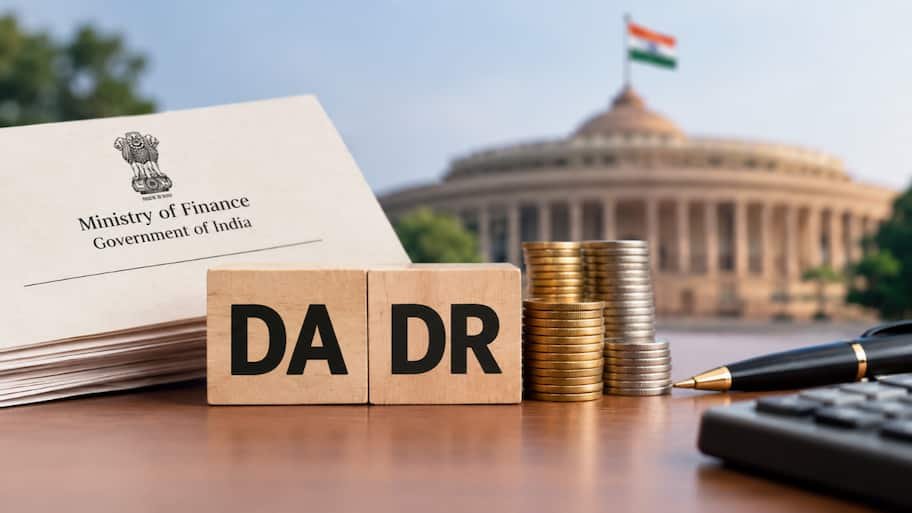
New Delhi. Before the upcoming festive season of Dussehra and Diwali, the eyes of more than one crore central employees and pensioners of the country are fixed on the much-awaited decision of the Central Government. In view of the rising retail inflation and the pressure of household expenses during festivals, employee organizations have raised a demand from the Department of Expenditure of the Finance Ministry to make a formal announcement of Dearness Allowance (DA) and Dearness Relief (DR) to be effective from July 1, 2026, as soon as possible. Based on the latest data of All India Consumer Price Index for Industrial Workers (AICPI-IW), this time an increase of 3 to 4 percent in DA of central employees is being estimated.
General Secretary of ‘Confederation of Central Government Employees and Workers’ M.S. Vengatesan’s letter to the government urged that the DA and DR proposal be placed before the competent authority (Union Cabinet) without any unnecessary delay. The employees say that they are not demanding any additional advance payment, but want timely announcement of installments due from July as per rules so that the revised salaries and arrears of previous months can be paid before the festivals along with the regular salary cycle.
Under the 7th Central Pay Commission, currently central employees and pensioners are getting 60 percent dearness allowance of their basic salary, which came into effect from January 1, 2026. The new rate is decided based on the 12-month average of the Consumer Price Index for Industrial Workers (AICPI-IW) released by the Labor Bureau of the Ministry of Labor and Employment:
-
3% increase (63% DA): The calculation, based on an analysis of the average index for the 12 months to June 2026, comes to 63.78 per cent, which is considered to be at least 63 per cent as per government rounding-down rules. This will increase the total DA from 60% to 63%.
-
4% increase (64% DA): The count has been recorded at around 64.38 percent after the index increased by 1.3 points to reach 153.2 in July. If the government takes this massive jump as the basis, then the DA of the employees can jump by 4 percent directly and reach the historical level of 64 percent.
Dearness allowance is calculated on the basis of basic pay of the employee. If the government approves the 4 per cent hike, the direct benefits in salaries at various pay matrix levels will be as follows:
-
Minimum Basic Salary (₹18,000): At the current rate of 60%, DA is available at ₹10,800. At 64%, it will increase to ₹11,520, which means there will be a direct increase of ₹720 every month.
-
Middle level basic salary (₹44,900): Currently, at the rate of 60%, one gets ₹ 26,940, which at 64% will become ₹ 28,736. This will increase the salary by ₹ 1,796 every month.
-
Senior level basic salary (₹56,100): With 64% DA, compared to the current ₹ 33,660, one will get ₹ 35,904, which means there will be an increase of ₹ 2,244 in the monthly salary.
(Note: If the 3 per cent hike is approved by the Cabinet, there will be a monthly increase of ₹540 on ₹18,000 basic pay and ₹1,683 on ₹56,100 basic pay.)
Dearness Allowance is revised twice a year (January and July) by the Central Government. As per historical tradition, the DA, to be effective from July, is formally announced by the central government through a cabinet meeting, usually in the last week of September or early October.
Since this increase will be considered effective from July 1, 2026, employees and pensioners are expected to get the outstanding arrears of July, August and September—a total of 3 months—in lump sum along with October salary. This will increase the purchasing power of the employees during Diwali and Chhath Puja and will also give a new impetus to the retail demand in the market.