 look news india

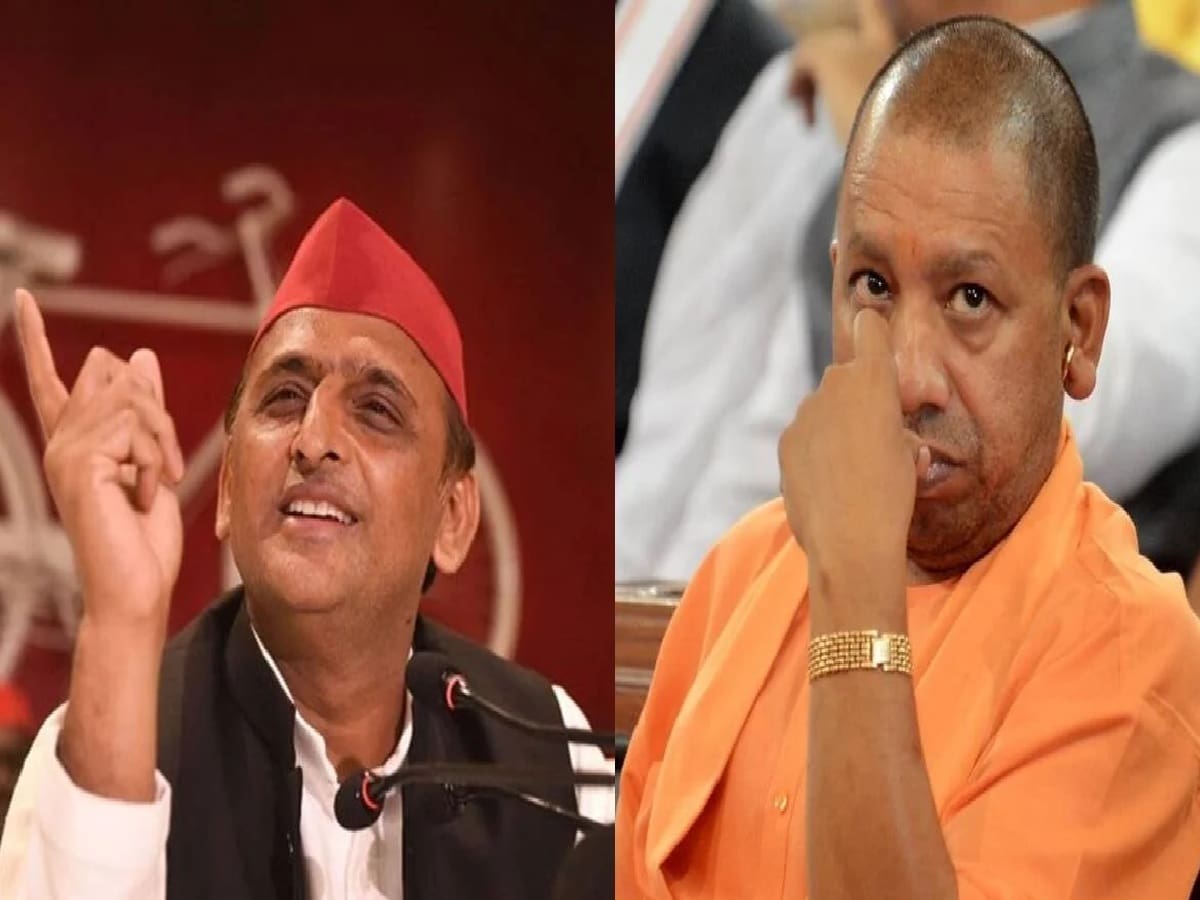
Amidst the buzz of upcoming assembly elections in Uttar Pradesh, the country’s largest and politically most important state, a big election opinion poll has come out. A comprehensive opinion survey conducted by News Leader and reputed survey agency Matterize on all 403 assembly seats of the state has exposed the current political mood of the state. Public opinion has come to the fore regarding the leadership of the Bharatiya Janata Party (BJP), which has been in power for the last nine years, and Chief Minister Yogi Adityanath. The results of this survey have once again predicted a huge majority and landslide victory for the Bharatiya Janata Party alliance.
According to the survey data, if assembly elections are held in the state today, the National Democratic Alliance (NDA) is seen forming the government for the third consecutive time with an absolute majority with a mammoth figure of 267 seats. At the same time, the alliance led by the main opposition party Samajwadi Party (SP) seems to be limited to only 132 seats. The position of Bahujan Samaj Party (BSP) and other small parties looks very weak, where Mayawati’s party is projected to get only 2 seats and other independents and non-alliance parties are predicted to get 2 seats.
In this survey of Materise, detailed details of the seats of the constituent parties within the NDA alliance have also been presented. The majority figure in the 403-member Uttar Pradesh Assembly is 202 seats, but according to the survey, the Bharatiya Janata Party seems to be in a position to win 246 seats on its own even without its allies. This data shows that contrary to the discussions of anti-incumbency wave, Chief Minister Yogi Adityanath’s administrative image and hold on development schemes still remain very strong among the voters.
Talking about other alliance partners, Anupriya Patel led Apna Dal (Sonelal) is expected to get 9 seats. In Western Uttar Pradesh, Rashtriya Lok Dal (RLD) is likely to get 3 seats, Sanjay Nishad’s Nishad Party is likely to get 4 seats and Om Prakash Rajbhar’s Suheldev Bharatiya Samaj Party (Subhashpa) is likely to get 1 seat. This alliance balance shows that from eastern Uttar Pradesh to the Jat belt of western UP and Rohilkhand, the NDA seems to be successful to a great extent in keeping its social equations united.
On the other hand, this survey is presenting a very disappointing picture for the alliance led by the main opposition party Samajwadi Party. According to the survey, SP alliance seems to be getting only 132 seats across the state. If the election results remain as per this survey, then it will prove to be a big political blow for Akhilesh Yadav, because after 2017 and 2022, he will have to stay out of power in Uttar Pradesh for the third consecutive time. The Samajwadi Party, which ruled the state from 2012 to 2017, is projecting to win 125 seats alone this time, which is certainly a slight increase from the 111 seats in the last 2022 elections, but is far from the threshold of power.
Whereas SP’s main ally Congress Party is expected to get only 7 seats under the alliance. As the elections approach, the internal tussle between the leaders of SP and Congress regarding seat sharing and local influence has also started becoming public. Congress MP from Saharanpur Imran Masood is continuously making vocal statements, to which many SP leaders including SP MP from Kairana Iqra Hasan are responding in a sharp manner. This ground conflict between the two parties is affecting the coordination of the grassroots cadre, the direct effect of which is clearly visible in the survey data.
Along with the number of seats, vote share is considered the most authentic parameter in electoral politics. According to Materise’s survey, the Bharatiya Janata Party alliance is expected to get 44 percent votes in entire Uttar Pradesh. On the other hand, Samajwadi Party alliance may get around 38 percent votes. There seems to be a huge gap of 6 per cent between the two main rivals. In a state like Uttar Pradesh with huge and multi-cornered politics, a vote difference of 6 percent is considered enough to make a world of difference in the results.
At the same time, this survey presents an existential crisis for the Bahujan Samaj Party (BSP), which was once the pivot of Uttar Pradesh politics. The vote share of Mayawati’s BSP seems to be falling to just around 0.8 per cent, which clearly shows that the traditional cadre of the party has shifted towards other options. Other parties and independents are expected to get around 10 per cent vote share, which may make the contest triangular on some seats at the local level.
If we understand the recent electoral background of Uttar Pradesh, in the 2022 assembly elections, BJP had won 255 out of 403 seats and its vote share was 41.3 percent. In that election, its ally Apna Dal (S) got 12 seats and Nishad Party got 6 seats. Samajwadi Party had won 111 seats and 32.1 percent vote share, while BSP was limited to just 1 seat and 12.9 percent vote share and Congress could win only 2 seats.
Earlier, in the 2017 elections, amid the Modi wave, BJP had registered a historic victory by securing 312 seats and 39.7 percent vote share. At that time SP had got 47 seats, BSP had got 19 seats and Congress had got 7 seats. That means, between 2017 and 2022, BJP’s seats had decreased by 57, but its vote share had increased by about 1.6 percent. In contrast, SP had increased its seats by 64 and its vote share had jumped by about 10 percent. According to the latest 2026 survey, BJP seems to be increasing its vote share from 41.3 to 44 percent, due to which the number of seats seems to reach 267 again.