 look news india

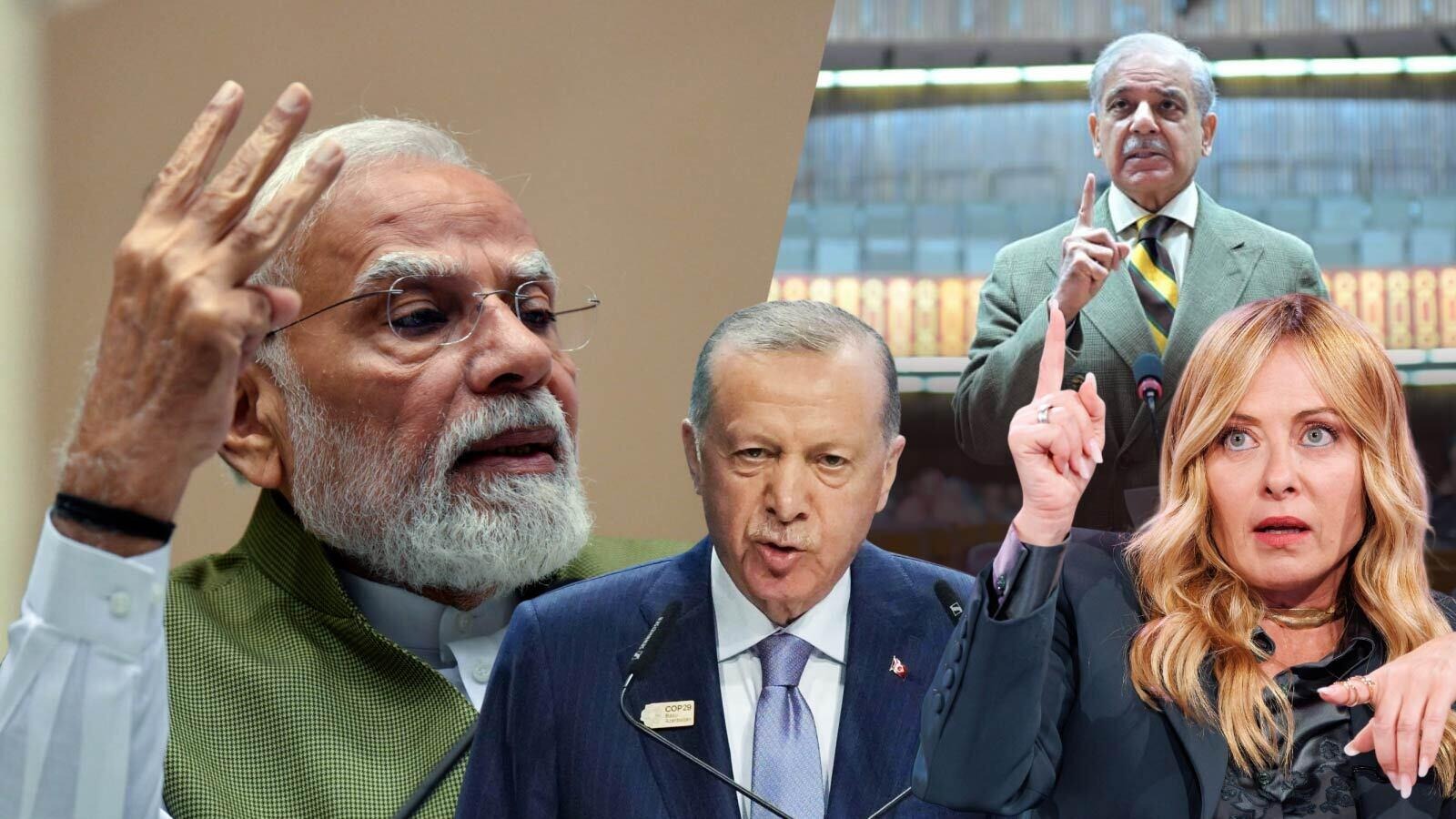
The demand for reform and expansion of the United Nations Security Council (UNSC) has been echoing in international forums for a long time. On one hand, India, Brazil, Germany and Japan (G4 countries) are strongly presenting their claim for permanent membership in UNSC, while on the other hand, a secret and influential group of some countries is continuously opposing this expansion. The world knows this group as ‘Coffee Club’ or ‘Uniting for Consensus’ (UfC). During the session of the United Nations General Assembly (UNGA), this group has once again openly opposed the addition of new permanent seats in the Security Council, after which the excitement in global diplomacy has increased significantly.
The current composition of the UN Security Council reflects post-World War II geopolitical realities, with only five countries, the US, Britain, France, Russia and China, being permanent members and having veto power. India, being the world’s largest democracy, emerging economic superpower and the largest troop contributor to UN peacekeeping missions, is a strong contender for a permanent seat. However, the ‘Coffee Club’ led by countries like Pakistan, Turkey and Italy is adamant that no new country should be given permanent membership in the Security Council, as it will further widen the inequality and privilege gap among the member countries.
What is ‘Coffee Club’ and the real diplomatic reasons for its opposition?
The foundation of the ‘Coffee Club’ i.e. ‘Uniting for Consensus’ group was laid in the 1990s, in which countries like Italy, Pakistan, Egypt and Mexico participated in the initial phase. Presently this group includes more than 12 active countries, in which mainly countries like Italy, Pakistan, Turkey, Spain, Argentina, Canada and South Korea play a major role. The main objective of the formation of this club is to neutralize and stop the proposals for permanent membership presented by the G4 countries (India, Brazil, Germany and Japan).
Pakistan’s opposition to India’s candidature stems from its long-standing geopolitical rivalries and concerns about regional dominance. On the other hand, Italy is strongly against its regional rival Germany getting a permanent seat in the UNSC, so that the balance of power in Europe does not get disturbed. Apart from this, leaders like the President of Türkiye have also been continuously raising the demand on global forums to completely abolish the veto power system or limit its scope. The Coffee Club argues that instead of increasing permanent seats, only the number of non-permanent (temporary) seats should be increased, which should be elected on a regional basis for a fixed period of time (轮 rotational manner).
Opposition to Veto Power and Future Global Challenges
This group of Coffee Club not only opposes the expansion of permanent seats, but is also openly against the most controversial weapon of the Security Council i.e. ‘Veto Power’. The group clearly believes that the veto power held by the current five permanent members is against the principle of international justice and equality. Recently, Turkey and other member states have again raised the issue that in serious circumstances such as large-scale crimes against humanity or war crimes, the use of the veto should be immediately restricted or it should be abolished altogether.
On the other hand, India and the G4 group take a strong position that comprehensive reforms of the UNSC are necessary to reflect the realities of the modern world. If contemporary global powers do not get proper representation in the Security Council, the relevance and credibility of the United Nations will continue to be seriously questioned at the international level. India has been consistently explaining through diplomatic channels that it is unjust for a country representing more than one-third of the world’s population not to be given a place at the top of the global security architecture. However, due to strong opposition from the Coffee Club and the veto issue, the Inter-Governmental Negotiation (IGN) process at the United Nations has still failed to reach a solid consensus, and this contest of global diplomacy is likely to become more intense in the coming days.