 look news india

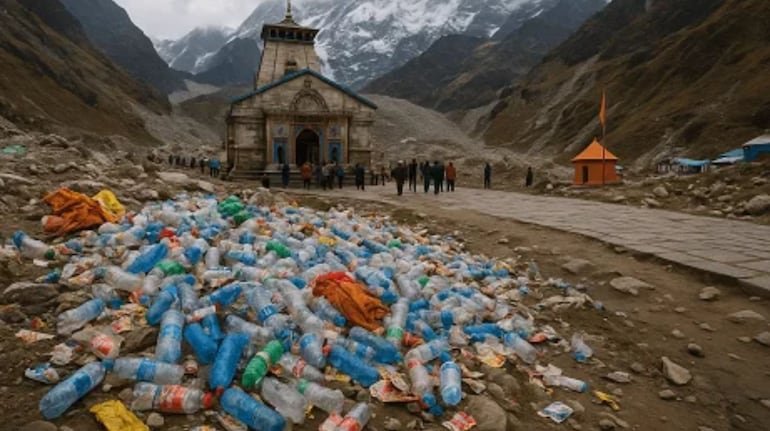
Amidst the flood of faith in Kedarnath Dham, the 11th Jyotirling located near the picturesque valleys of the Himalayas and the origin of the Mandakini River, a very frightening and worrying picture has emerged. Within the first 5 months of Chardham Yatra, more than 50 tonnes of solid waste has been collected from Kedarnath Dham, walking route and base camps. According to data from official monitors and environmental activists, the garbage collected this year is about 2.5 times more than the same period last year. The growing pile of plastic, packaged food wrappers and tin cans in this highly sensitive ecological zone, situated at an altitude of more than 3,584 meters above sea level, is raising serious alarm bells for the glaciers, local biodiversity and the Himalayan environment.
This 50 tonnes of garbage has been found in the campaigns conducted by cleaning agencies and District Panchayat in a radius of about 16 to 19 kilometers on the Kedarnath walking route (from Gaurikund, Jangalchatti, Bhimbali, Lincholi to Kedarnath Base Camp).
If we compare the figures, about 20 tonnes of garbage was recorded in the same period last year. This time, due to record influx of pilgrims, surreptitious sale of single-use plastic and indiscriminate consumption of packaged drinking water, this figure unexpectedly increased by two and a half times to cross 50 tonnes. More than 70 percent of these are empty single-use plastic bottles, multi-layer wrappers of chips and biscuits, thermocol cup-plates, raincoats and tin containers, which do not decompose naturally for hundreds of years.
-
Record influx of pilgrims and over-tourism: As soon as the doors of the Yatra open, more than 20 thousand devotees are reaching the Dham every day. The massive crowding has put immense pressure on basic waste-management infrastructure.
-
Illegal shops and dhabas on footpath: Hundreds of temporary kiosks and stalls between Gaurikund and Kedarnath sell packaged food without proper dustbins and disposal arrangements. Many times the remaining garbage is dumped directly into deep ditches and drains.
-
Lack of strict ban on plastic packaging: Despite checking at the check post, the unhindered arrival of plastic bottles and foils on the travel route exposes the shortcomings of administrative monitoring.
According to environmental scientists, due to low temperature in the high Himalayan regions, even bio-degradable waste does not decompose easily, whereas plastic remains completely immortal. This plastic waste accumulating in Kedarnath is gradually breaking into microplastics and getting absorbed into the surrounding glaciers and snow layers.
Black and colored plastic pieces reduce the ability of ice to reflect sunlight, causing glaciers to melt faster than normal. Additionally, the waste trapped in drains and natural water bodies during rains and snowfall is flowing into the Mandakini River, polluting the water in the plains below, which is devastating to both the local ecology and human health.
The Rudraprayag district administration and local municipal bodies had implemented the QR code-based ‘Digital Deposit Refund System’ (DDRS) for waste management, under which an additional Rs 10 is charged on a water bottle and the money is refunded if the empty bottle is returned. Despite this, thousands of pilgrims throw the bottle down the hills instead of taking back the Rs 10.
To compact the waste, Baling Machines have been installed in Kedarnath and Sonprayag, where the waste is bundled and sent down through trucks and mules to the recyclers in Haridwar and Rishikesh for recycling. However, compared to the rate at which waste is being generated daily, the pace of recycling transport is slowing down.
Protecting the divinity and purity of nature of the holy place is not only the responsibility of the administration but also the moral duty of every devotee:
-
Carry your water bottle: Instead of buying single-use plastic bottles again and again, bring refillable steel or copper bottles and fill water from RO water points located on the way.
-
Put trash in your bag: Instead of throwing empty wrappers of snacks or medicines eaten on the way on the way or in ravines, keep them in your backpack and put them in the dustbins located at the base camp.
-
Adopt local and natural food: Prefer local hot fresh food and traditional beverages instead of packaged junk food.