 look news india

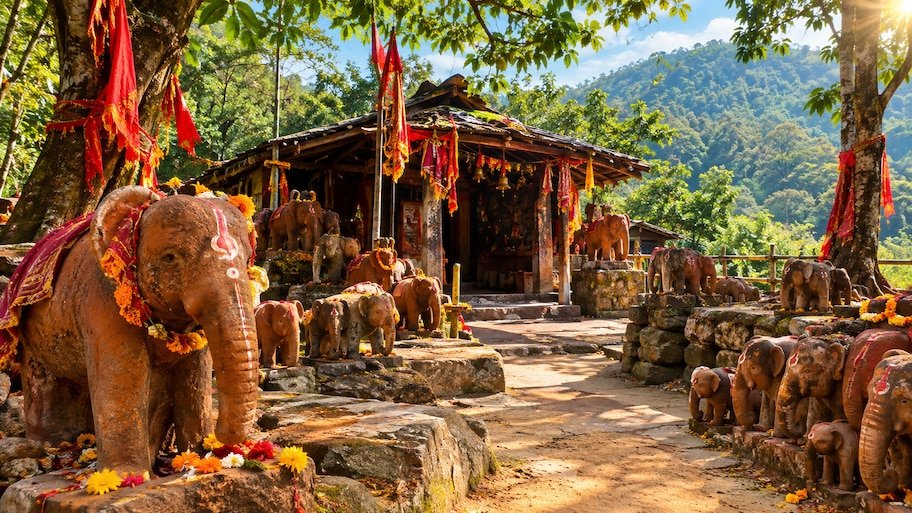
Located in the foothills of the picturesque Dalma hills (Bodam/Patamada block) of Jamshedpur, the iron city of Jharkhand. Hathikheda Baba Temple (Hathikheda Mandir) It is such a center of faith, folk beliefs and unique beliefs that everyone is surprised to hear its rules. In this approximately 300 years old historical temple, ‘Hathikheda Baba’ is worshiped in the form of Lord Shiva and Gajraj (elephant).
Lakhs of devotees from Jharkhand, West Bengal and Odisha reach here with their wishes. It is believed that every wish made here is fulfilled. But the deeper the belief of this temple, the more strict and astonishing are the rules here. There are two rules regarding the Prasad offered in this temple that have been in place for centuries, which no one dares to violate – first, the temple Prasad cannot be taken outside the temple limits or home under any circumstances, and second, this main offering/Prasad cannot be consumed by women.
Very strict customs have been made regarding the distribution and consumption of Prasad in the Hathikheda Baba Temple complex:
-
Taking Prasad outside the temple limits is completely prohibited: Whatever food the devotees prepare in Baba’s court (be it kheer, khichdi or the sacrificial prasad given on fulfillment of vows), it has to be cooked and eaten within the designated area of the temple. It is considered prohibited to take even a single particle of this Prasad outside the perimeter of the temple. If someone tries to take Prasad home by mistake or intentionally, then according to popular belief, there is a possibility of something untoward happening to him.
-
If the remaining Prasad is immersed in the premises itself: If food or Prasad is left, instead of throwing it away or taking it outside, it is buried by digging a pit in the soil of the temple premises as per the rituals, so that it cannot be taken out of the limits by any living creature.
-
Prasad Prohibition for Women: The main ritual offerings of the temple are strictly prohibited from being given to or consumed by women. Women can come to the temple and worship, bow their heads and offer general worship material, but they can neither touch nor eat the Mahaprasad associated with the main sacrifice or tarpan.
According to local folklore and villagers, this tradition has centuries-old beliefs behind it:
-
Rural belief and tantric method: The priests and elders of the temple say that Hathikheda Baba is worshiped as the village deity and forest protector. The rituals here are linked to ancient tribal and tantric systems. Due to the intense flow of energy and the rules of rigorous sadhana, women are kept away from consuming this special indulgence, so that there is no adverse effect on them.
-
Tradition of offering clay elephants on fulfillment of vows: The temple was named ‘Hathikheda’ because wild elephants reside in the forests of Dalma and they are considered messengers of Baba. When the devotees make a wish here, then after their wish is fulfilled, they offer small and big elephants made of clay or terracotta to Baba in the temple premises. Today thousands of colorful clay elephants can be seen throughout the temple premises.
Every day hundreds of devotees reach Hathikheda temple carrying food items (rice, pulses, flour, spices) as per their vow. The male members of the family prepare food and offerings with their own hands under the open sheds and trees around the temple.
After offering bhog to Baba, all the men and children sit together and take the prasad in a queue. The female devotees who come for darshan take the blessings of Baba and take only normal dry fruits or fruits etc. and the main Mahaprasad is finished there only by the men.
In view of the increasing number of devotees, the administration and the local temple committee have made elaborate arrangements for cleanliness, drinking water and security in the premises. Even in this era of modernity, the unwavering adherence to these age-old traditions makes this Dham completely different and mysterious from other temples of the country.