 look news india

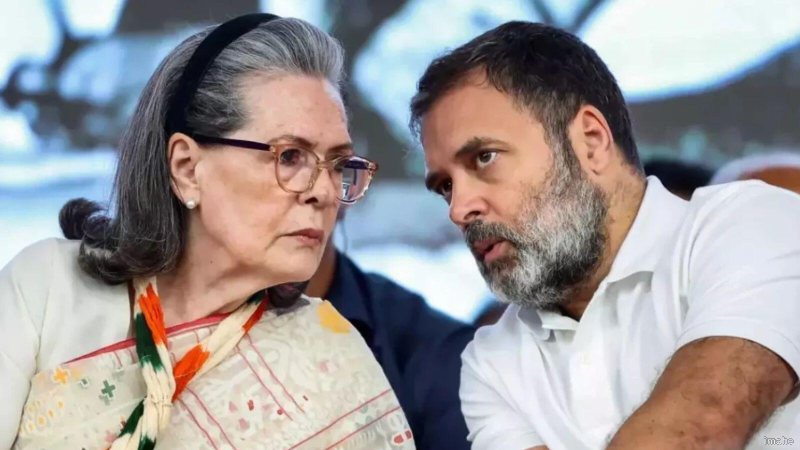
The National Herald case, which is one of the longest and most talked about legal disputes in Indian politics, has once again raised the political and legal temperature. Congress Parliamentary Party chairperson Sonia Gandhi and Leader of Opposition in Lok Sabha Rahul Gandhi have made a very sharp and strong rebuke to the new petitions and proceedings filed by the Enforcement Directorate (ED) in the Supreme Court or High Courts. The replies and statements filed by the Gandhi family have clearly alleged that the Central Investigation Agency (ED) is being used for political vendetta and the supreme legal processes of the country are being blatantly misused. After this sharp confrontation, the political activity between the Congress Party and the Central Government has once again intensified, and the discussion of this high-profile case has once again come to the center stage in the political circles across the country.
Background of National Herald case and ED’s increasing legal action
This entire matter related to the financial transactions of National Herald newspaper and its associated company Associated Journals Limited (AJL) and the acquisition of Young Indian Company has very old roots. The Enforcement Directorate has been investigating allegations of money laundering and financial irregularities in this case for the last few years. The investigating agency has been claiming that in this entire process, there has been large-scale financial manipulation in the acquisition of properties and transfer of shares, the links of which connect to the top leadership of the party. In this connection, from time to time many senior Congress leaders including Sonia Gandhi and Rahul Gandhi have been interrogated at length. Recently, the controversy has deepened once again after the new petitions and steps taken by ED to tighten the legal noose in this case.
Sonia and Rahul Gandhi’s sharp retort, allegation of misuse of legal process
Giving a befitting reply to the actions of the Enforcement Directorate, Sonia Gandhi and Rahul Gandhi have made it clear through their lawyers that all the allegations leveled against them are completely baseless, politically motivated and malicious. He says that the entire fabric of National Herald and AJL was created to save and revive the heritage of the country’s freedom struggle, and not to earn any kind of personal commercial gain. The Gandhi family has strongly alleged that the current ruling party is openly misusing the central investigative agencies to suppress opposition voices and tarnish their image. He also argues that a systematic political conspiracy is being carried out to mentally torture opposition leaders by distorting legal procedures and provisions.
Aggressive stance and political strategies of Congress Party
On this high-profile legal dispute, not only the Gandhi family, but the entire Congress party has come out openly from the streets to the Parliament in support of its top leadership. Starting from the National President of the party, all the senior leaders have said in one voice that they are not going to bow down to this dictatorship and pressure politics of the Central Government. Congress strongly believes that this entire action of the investigating agencies is just an act of political vendetta, the aim of which is to break the morale of the country’s oldest political party and its top leaders. In the coming days, the Congress Party will not only fight this legal battle strongly in the court, but has also made full preparations to corner the government on the political front by taking it among the public.
Big debate on Indian democracy and independence of central investigating agencies
The National Herald case and this latest political controversy over it is not limited to just a financial matter, but it raises a big question mark on the impartiality and autonomy of central investigating agencies (like ED, CBI, IT) in Indian democracy. While on one hand the government and the investigating agencies maintain that no one is above the law and it is their constitutional duty to check financial transparency, on the other hand the opposition and a section of legal experts are expressing concern that if the agencies start being used selectively only against political opponents, it will seriously jeopardize the credibility of the country’s democratic institutions. This entire case is going to prove to be a milestone in the pages of Indian judiciary and political history in the times to come, on which every citizen is keeping a close eye.