 look news india

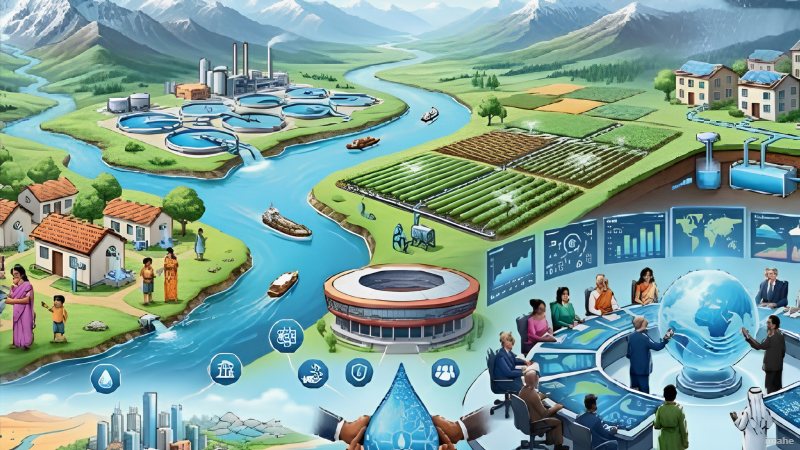
Water is the biggest basis for the existence of life on earth, but in today’s era, due to climate change, rapidly decreasing groundwater level and increasing population, water crisis is taking a severe form. To deal with this serious challenge, traditional methods alone will no longer work, but a strong triangle of science, cutting-edge technology and public participation will have to be created. Taking this vision forward, India is going to present a new and revolutionary model of water conservation and management on the global platform of the upcoming ‘International Water Week’. Experts around the world agree that if future generations are to be saved from water crisis, then India’s model can prove to be a milestone. Let us know how India is going to present its water management strategies to the world in this much-awaited event.
Today the whole world is facing the ill effects of climate change, due to which the weather cycle has become completely unbalanced. Sometimes extreme floods and sometimes severe droughts have become common in different parts of the country and the world. In a developing country like India, where agriculture is the main source of livelihood for a large area, the cost of every drop of water is very high. Due to indiscriminate exploitation, the ground water level is continuously falling, which is not only creating a crisis of drinking water but is also posing a big threat to food security. In such a situation, making a concrete strategy for the conservation of water sources and their scientific management has become the biggest demand of the time.
Along with the restoration of traditional water sources like ponds, wells and lakes, use of modern technology has now become essential in water management. The Government of India and various scientific institutions are jointly preparing such smart solutions which are proving effective in preventing wastage of water. Water distribution systems are being monitored using Internet of Things (IoT) based sensors and AI (Artificial Intelligence) to find out how much water is leaking in an area or where it is needed more. Apart from this, emphasis is being laid on efficient utilization of every drop of water through drip irrigation, micro irrigation systems and wastewater recycling plants.
No matter how good technology and policies are made, it is impossible to bring change at the grassroots level unless ordinary citizens are involved in the campaign. ‘Jal Jeevan Mission’ and various local campaigns have proven that when people themselves consider water conservation as their moral responsibility, the results are amazing. Awareness campaigns are being run to make rainwater harvesting a mandatory habit of every home and every institution. A new public awareness is being created towards proper use of water in rural and urban areas by linking Panchayats, local bodies and women self-help groups with water management committees.
During the upcoming International Water Week, India will showcase these successful experiences, technological innovations and models of community participation on the global stage. Water scientists, policy makers and delegates from around the world will study how a country with a huge population has taken unprecedented steps in the field of water security despite limited resources. This platform will not only position India as a leader in global water diplomacy, but will also provide a practical and exemplary guide to other developing countries to tackle water crises in their own countries.