 look news india

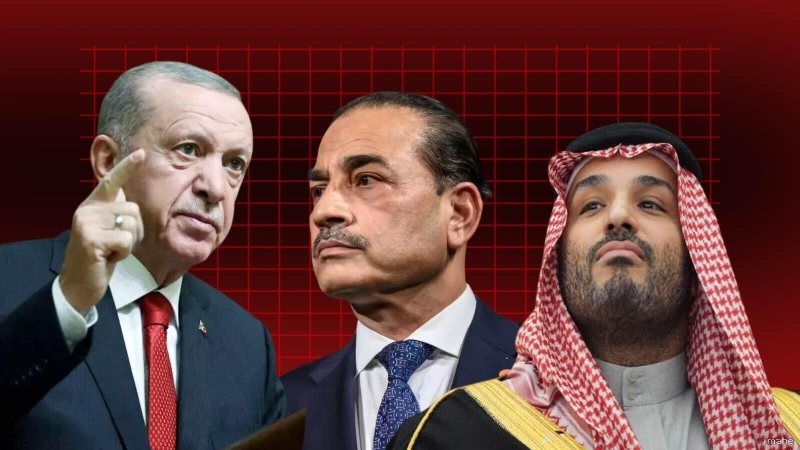
The market of discussions has become heated in the corridors of global diplomacy regarding the much talked about ‘Makkah Pact’ which has recently started from the land of Mecca, the most sacred and influential center of the Islamic world. Major analysts of defense and foreign affairs have now started openly raising questions about this new diplomatic equation being created under the leadership of Saudi Arabia in the name of regional stability, economic development and mutual cooperation. The way Pakistan, which is struggling with deep economic crisis and political instability, is being included as an important partner in this multi-purpose and ambitious agreement of the Gulf countries, has deeply worried the experts of international politics. History is witness to the fact that whenever such big agreements have been imposed in West Asia and the Middle East at the behest of America and Western powers, their fate has turned out to be completely opposite to expectations. Just as the historic ‘Abraham Accords’ was promoted as the new sun of peace in the Middle East but seemed to be losing its luster on many fronts due to regional complexities and ground realities, in the same way it is now feared that the future of the Mecca Pact may also turn out to be similarly painful and unsuccessful. Over-reliance on an unplanned and terrorism-ridden nation like Pakistan in its diplomatic strategies by an economic superpower like Saudi Arabia could prove to be a big and strategic mistake for Riyadh in the times to come.
In the last few years, Saudi Arabia’s visionary and young leadership has taken a historic decision to free its economy from oil dependence and turn it towards modernity and global investment under Vision 2030. Under this ambitious vision, Saudi Arabia is making new diplomatic moves to further strengthen its regional security and geopolitical hold, a major part of which is coming in the form of the Mecca Pact. Through this pact, the Saudi rulers want to forget the mutual differences between Islamic countries and create a strong economic and political axis, so that the leadership of the Muslim world at the global level can remain firmly in the hands of Riyadh. However, diplomatic experts believe that when the foundation of a multilateral agreement is laid on unstable and unreliable pillars, then its castle does not last long. Saudi Arabia’s giving priority within the scope of this pact to those countries which are themselves struggling with situations like internal strife, misgovernance and civil war, puts a big question mark on the credibility of this entire plan. Riyadh’s strategists need to understand that regional stability cannot be achieved through grand conferences and paper agreements alone, rather it requires solid and fair-minded partners on the ground, the dearth of which is clearly being felt in the Saudi camp at the moment.
The decision by Saudi Arabia to give a central role to Pakistan in the Mecca Pact or other regional agreements is being considered the most controversial and dangerous. Defense experts and geopolitical strategists around the world are surprised at how Riyadh can play such a big bet on a country whose economy is completely dependent on the crutches of the International Monetary Fund (IMF) and foreign loans, whose internal security is completely in ruins due to terrorism, religious fanaticism and political interference by the military. The history of Pakistan has been a witness to the fact that it has always resorted to dual policies to fulfill its strategic interests and Saudi Arabia has in the past also given billions of dollars in the name of economic help to Pakistan, in return for which Riyadh has often got disappointment and strategic non-cooperation. Today, Pakistan’s army and its government are facing opposition from its own citizens, severe inflation and shortage of foreign exchange reserves. In such a situation, instead of playing the role of a strong and helpful partner in any regional peace agreement, it may itself emerge as a burden and security risk. Saudi Arabia’s thinking that Pakistan will bring any positive change in the Muslim world through this pact is nothing more than a mere imagination, because a country which is unable to handle its own internal crises can never be a guarantee of regional stability.
The Mecca Pact is currently being compared to the much talked about ‘Abraham Accord’, and this comparison is completely logical as behind both the agreements, diplomatic posturing and superficial strategies seem to be more prevalent. When the US-brokered Abraham Accords were signed, it was claimed that the agreement would forever end the decades-old tension in the Middle East and usher in a new dawn of lasting peace between Israel and the Arab countries. However, the reality on the ground is that the artificial agreement, created in complete disregard of the real and humanitarian issues of Palestine, has deepened rather than reduced the polarization of the region, resulting in the recent conflicts and horrific violence witnessed by the entire world. Similarly, if the Mecca Pact moves forward only as an alliance of rulers on paper, ignoring the regional realities, ground struggles and public sentiments, then it is sure to meet the same fate as the Abraham Accords. It has been an incontrovertible truth in the history of diplomacy that pacts made without public support and lasting solutions are like a wall of sand that crumbles like a pack of cards in the first ideological or strategic storm, and Saudi Arabia’s strategists must not make the mistake of ignoring this historical lesson.
If Saudi Arabia does not review its current foreign policy and strategic agreements, it may have to face very serious and far-reaching consequences in the future. It is extremely important for Riyadh, which is emerging as a responsible and superpower in international politics, that it chooses its allies with great care and foresight, and not just on the basis of emotional or traditional equations. Including an unstable and hollow country like Pakistan in its biggest strategic projects can also jeopardize the bright future of Saudi Arabia which it is diligently carving out under its Vision 2030. To maintain peace, security and economic prosperity in the Gulf countries, it is imperative that the Saudi leadership rise above the politics of flattery and posturing and accept the harsh ground truth. If this weak link of the Mecca Pact is not removed in time, then this agreement will be recorded as one of the biggest failures of Saudi Arabia’s foreign policy, due to which Riyadh’s regional influence will weaken instead of strengthening and its adversaries will be able to take full advantage of this weakness.