 look news india

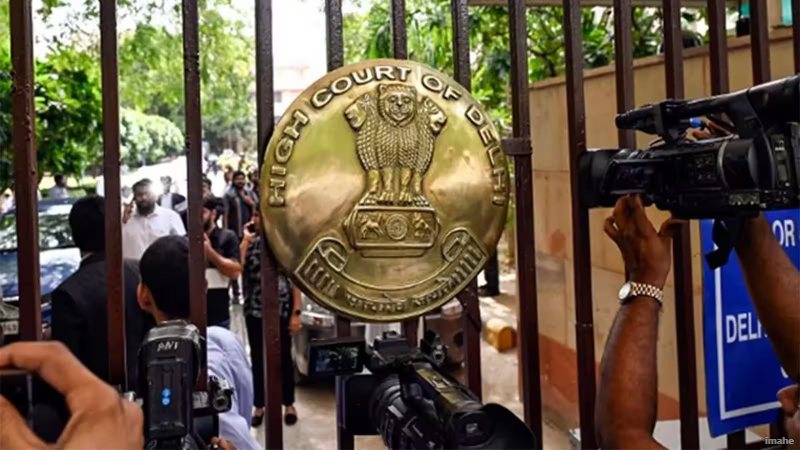
The Indian education system and administrative system sometimes becomes victim of such strange and ridiculous mistakes, which are enough to jeopardize the future of any student. One such shocking case has come to light recently, where a student had chosen the subject ‘Punjabi’ as his third language as per his own wish and as per the prescribed rules, but due to the gross negligence and arbitrariness of the school administration, he was suddenly given the subject ‘Sanskrit’ during his studies. It reached such an extreme that there was not even a single qualified teacher present in the school to teach that language, and despite this, pressure was put on the students to take the examination forcibly. The student did not give up against this injustice and approached the court in the hope of justice, where the Punjab and Haryana High Court has given a historic decision giving great relief to the student in the examination, which has created a sensation in the administrative corridors.
In today’s time, when the right to education and quality education is talked about in every corner of the country, then this negligence of schools at the grassroots level exposes the claims of the education system. When a student enrolls in school and chooses subjects to lay the foundation of his future, he assumes that the educational institution will provide him all the facilities and resources which come within the scope of the rules. But this case has completely exposed how serious the situations become when the school management starts playing with the careers of the students to hide its inefficiency. Let us know how justice prevailed in this entire incident and how the court has given a new lease of life to the broken dreams of the student.
What was the whole matter: Ignoring the student’s choice, the school imposed another language
According to the information received, this entire controversy started when the student had officially selected Punjabi language as the third language under his academic curriculum. According to the rules, the student had full right to choose the language of his choice and he started his studies accordingly. But after some time, the school administration, without any prior notice or valid reason, changed the language chosen by the student and instead ordered him to study Sanskrit language and take the examination. When the student and his family protested against this, the school authorities flatly refused to listen to them and, in a display of administrative arrogance, said that the school neither had the teachers nor the resources to teach Punjabi, hence the student would have to study Sanskrit only.
Forcing the student to appear in an examination of a subject which he had never studied and for which no faculty was even available in the school, was sheer mental harassment and violation of his fundamental rights. This attitude of the school administration proves that instead of improving the shortcomings of their system, many institutions put the entire burden on the shoulders of innocent students. When the student raised his voice against this dictatorial attitude, the school management even threatened to stop him from appearing in the upcoming examinations. In such a situation, the student and his family were left with no other option but to approach the court, as this matter was directly related to his entire academic year and future direction.
Strong rebuke from High Court: Historic decision in favor of fundamental rights of students
When this matter reached the Punjab and Haryana High Court, the court took a very serious stance on it. During the hearing, when the fact came before the judge that the school administration changed the student’s language without any legal basis and put pressure on the student to study without a teacher, the court scolded the school authorities. The High Court in its decision clearly said that no educational institution has the right to suffer the consequences of its administrative failure or shortage of teachers by sacrificing the future of any student. The court, while granting interim relief, allowed the student to appear in the examination on the basis of the language of his choice and strongly reprimanded the school administration.
Legal experts believe that this decision of the High Court is a strong message for educational institutions across the country. It is often seen that there is a huge shortage of subject teachers in government and private schools of the country, and when students choose that subject, the school administration puts pressure on them and forces them to change the subject. This decision has made it clear that the academic freedom of students is paramount and the school administration cannot shirk its responsibilities. After this just order of the court, the student and his family have heaved a sigh of relief, and now the student has started preparing for his further examinations with full energy and confidence.
Need for reform in the education system: Why do students have to suffer the consequences of administrative lapses?
This entire incident is not just a dispute between a student and a school, but it highlights a major anomaly in the basic education system of our country. Even today, there is a huge shortage of trained teachers of various languages and subjects in many of our government and semi-government schools. When governments or education boards announce the inclusion of regional languages or modern subjects in the curriculum, they should also ensure at the ground level that qualified teachers are available in every school to teach those subjects. Playing with the future of students in the name of teacher shortage should not be acceptable under any circumstances. This case has once again forced educationists to think whether our educational institutions are really prepared for the all-round development of students.
Apart from this, there is a need to increase awareness among parents and students about their rights. Many students succumb to such administrative excesses and silently bear the pressure of the system, which further demoralizes the schools. But this case has proved that if a student and his family muster the courage to fight a legal battle against injustice, the judiciary of the country is always ready to protect their rights. Every section of the society should appreciate how an ordinary student stood up against the helplessness of the system and ensured his victory and set a strong example for other students in the times to come.
Lessons for the future: Will the functioning of schools change now?
After this strict and clear decision of the High Court, it is expected that the school administrations of other parts of the country including West Bengal or Haryana will also become more alert and responsible. Schools should understand that they cannot be run like a commercial shop, where rules can be bent as per their convenience. The future of every student is priceless and protecting his educational rights is the first and foremost duty of educational institutions. If schools are unable to improve their system, then they should provide transparent information about this at the time of admission of students so that no child becomes a victim of misunderstanding.
In the end it can be said that this case has ultimately emerged as a victory for truth and justice. The support given by the court to the student who chose Punjabi language has once again strengthened the confidence of the general public in the judiciary of the country. These institutions, known as the temples of education, now need to introspect that they provide a transparent, supportive and student-friendly environment instead of imposing their administrative shortcomings on the students. It is hoped that after this historic decision, no school administration will be able to muster the courage to do such arbitrariness with the future of any student and the level of education will actually move towards improvement.