 look news india

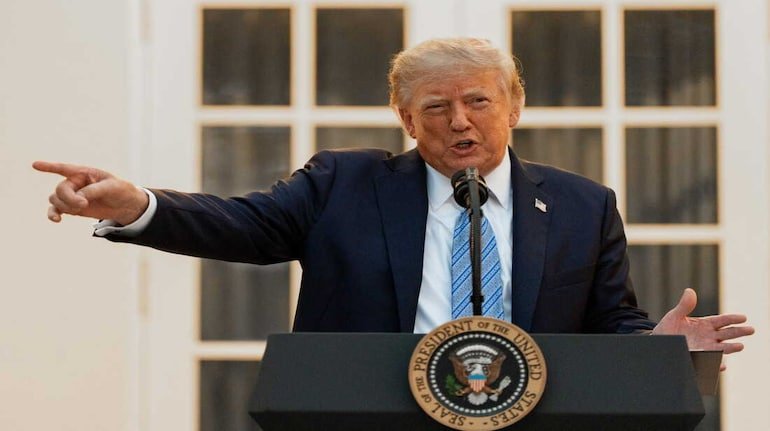
Amidst the ongoing heavy military tension and conflict in West Asia, the world once again seems to be standing on the brink of the Third World War. On one hand, there are indications of deadly military action and very tough policy decisions on Tehran from US President Donald Trump, while on the other hand, Iran has made it clear that if America wants to return to the negotiating table, it will have to accept its seven conditions. Secretary of Iran’s Supreme National Security Council (SNSC) Mohsen Rezaei has bluntly warned that nothing will be achieved from threats and if America rejects the conditions, Iran is fully prepared for a “decisive war” of any level.
Iran’s top security strategist Mohsen Rezaei has confirmed in talks with international media and on social media that Tehran has conveyed its official position to Washington through Qatar’s mediation. Rezaei said that Qatar has submitted these conditions to the US administration and Iran is now waiting for a formal response from President Donald Trump. He wrote that if Washington wants to safely get out of the quagmire of its own making, it has no other option but to accept Iran’s sovereign rights and conditions.
Among the 7 conditions put forward by Tehran, the major demands have been made public:
-
The ongoing military aggression and war on all fronts should be ended immediately.
-
All Iranian financial assets and funds frozen abroad should be released immediately and unconditionally.
-
The US naval blockade imposed against Iran in the Persian Gulf and international waters should be immediately removed.
-
Respect for Iranian sovereignty, non-interference in internal affairs and a complete ban on foreign support to opposition groups.
According to White House and US Defense Establishment (Pentagon) sources, President Donald Trump is considering adopting a more aggressive stance against Iran. Trump’s stance has been clear that either there will be a very strict and effective agreement with Iran or there will be no agreement. There is strong talk in military circles that America may decide to launch large-scale targeted strikes on Iran’s strategic or nuclear infrastructure in the coming days.
Iranian Security Council Secretary Mohsen Rezaei also acknowledged that the possibility of another US attack is “very much on the cards” in Tehran’s military assessment. He said that Iran has made radical changes in its defensive planning after previous conflicts. Now the primary focus of the Iranian military is on precise interdiction of US naval assets, aircraft carriers and warships deployed in the Persian Gulf, the Gulf of Oman and the Arabian Sea. Iran has also recently claimed to have successfully tested a multi-warhead anti-ship missile near a US warship.
Rezai also clarified the situation on the growing threat to global energy supplies on strategic waterways such as the Strait of Hormuz and Bab al-Mandeb. He said that Bab al-Mandeb is an internal matter related to Yemen and the Houthi movement. At the same time, the draft of a security agreement between Iran and Oman regarding the Strait of Hormuz was almost ready, which can be made public after regional consensus.
On the question of nuclear program, Rezai reiterated that Iran has not yet taken a formal decision to withdraw from the Nuclear Non-Proliferation Treaty (NPT) and the country’s nuclear doctrine is still limited to peaceful purposes. However, he warned that if the US imposed additional unilateral sanctions or abused the Security Council, Iran would be forced to take drastic measures such as withdrawing from the NPT.
At present, Qatar and Pakistan are trying to keep diplomatic channels open between the two sides, while this crisis remains at the center of global politics even during the session of the United Nations General Assembly.