 look news india

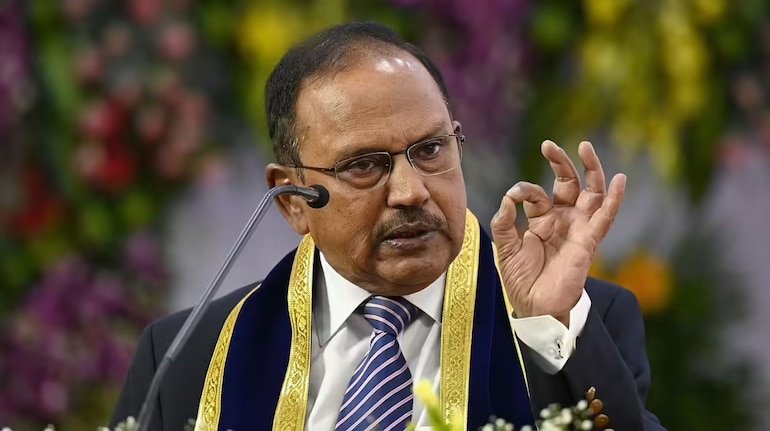
India’s National Security Advisor (NSA) Ajit Doval is considered the most accomplished ‘mastermind’ in the country’s strategic and intelligence history. From being undercover for years in Pakistan to breaking the back of separatism in Mizoram, Punjab and Kashmir, he has many historic intelligence operations to his credit. But in this world of behind-the-scenes espionage, not every mission is straightforward or easy. Many times there come such moments when a small mistake puts the entire mission as well as life and career at stake.
Recently, Ajit Doval shared one such hair-raising memoir related to his early service period and a very sensitive mission in the North-Eastern border. Recalling that dreadful period, he said that there came a time when the Indian field agents prepared by him were caught red-handed by the Chinese Army and insurgent elements from across the border. At that moment Doval felt that now his entire career and reputation was over forever.
This entire incident took place at a time when the North-Eastern region of India was facing serious challenges of extremism and foreign interference. At that time, fighters of rebel groups used to cross the border of Myanmar and China for weapons training and infiltrate into the Indian border with huge cache of weapons. Ajit Doval, as a young and dynamic field officer of the Intelligence Bureau (IB), was given the top-secret assignment of reconnaissance of this entire cross-border syndicate and tracking their supply lines.
Doval took months of effort and risk to include in his network some people from the local border areas who could access the training camps in China and Myanmar. These ‘assets’ (intelligence informants) were sent across the border after being given full briefing so that they could gather accurate information about the meetings of rebel commanders with Chinese military officials, the types of weapons and their route mapping.
The mission was proceeding according to plan, but in intelligence operations on foreign soil, unexpected dangers always loom. Doval’s agents were recording suspicious movements across the border when Chinese People’s Liberation Army (PLA) patrols and local militant cadres became suspicious of their activities.
Within a few hours, the Chinese security apparatus surrounded and detained those Indian agents. Inputs and radio signals coming from across the border suddenly stopped. When the headquarters received the intelligence message that the field operatives sent by them had been captured by the Chinese Army and their intensive interrogation had begun, the top officials of the security agencies were shocked.
Recalling that stressful incident, Ajit Doval said that it was the longest and scariest night of his life. The biggest setback for an intelligence officer is the capture of his source or agent by the enemy. If those agents had broken out during interrogation and the operations of the Indian intelligence network had been exposed, it could have created a major international diplomatic row.
Doval said, “At that moment only one thing was flashing in my mind – I felt that my career was completely over. Not only was my job and years of hard work at stake, but also the lives of those who had risked their lives at my behest were in danger. That fear of failure shook me to the core.”
In such difficult situations, most people get scared and retreat, but instead of accepting defeat, Ajit Doval immediately prepared a risky ‘counter-plan’. He employed a parallel psychological strategy using local tribal contacts, internal differences within border rebel groups, and his deep contacts.
They activated their backup channels to ensure that the captured persons identified themselves only as ordinary local traders or guides and that the name of India’s official intelligence was not revealed at any cost. Along with this, such an environment was created at the local level which would make the Chinese authorities believe that the arrested people were not part of any major espionage, but were local villagers who unknowingly lost their way and reached the restricted area. Back-channel contacts and keen diplomatic acumen ultimately led to the safe evacuation of those agents without any serious harm.
This anecdote narrated by Ajit Doval is not just an old memory, but it is a big mirror to understand the complexities of India’s national security and intelligence system in the present. From strategists at the Central Command in Lucknow, the capital of Uttar Pradesh, to South Block in New Delhi, defense and intelligence experts always underline that balancing intelligence on China’s borders is one of the toughest tasks in the world.
The current security stability in the North-Eastern states (Assam, Nagaland, Manipur, Arunachal Pradesh) has been the backbone of decades of such unspoken and risky operations by officers like Doval. In the current times when there is tension and military standoff with China along the Line of Actual Control (LAC), Doval’s experience teaches the new generation of military commanders and intelligence officers how to maintain restraint and strategic patience even in the darkest moments of crisis.
This memoir of Ajit Doval proves that the ‘Doval Doctrine’ which is discussed all over the world today, was not coined while sitting in an air-conditioned room. Behind this are the fear of failure at the grassroots level, fears of loss of career and dozens of bitter experiences of coming back from the jaws of death.
While giving a message to the youth and future officers, Doval made it clear that those working in the field of national security have to keep the national interest paramount, leaving aside the worries of personal gain, position or career. Unless you are prepared to take big risks, the strategic advantage that protects the country’s borders cannot be achieved.