 look news india

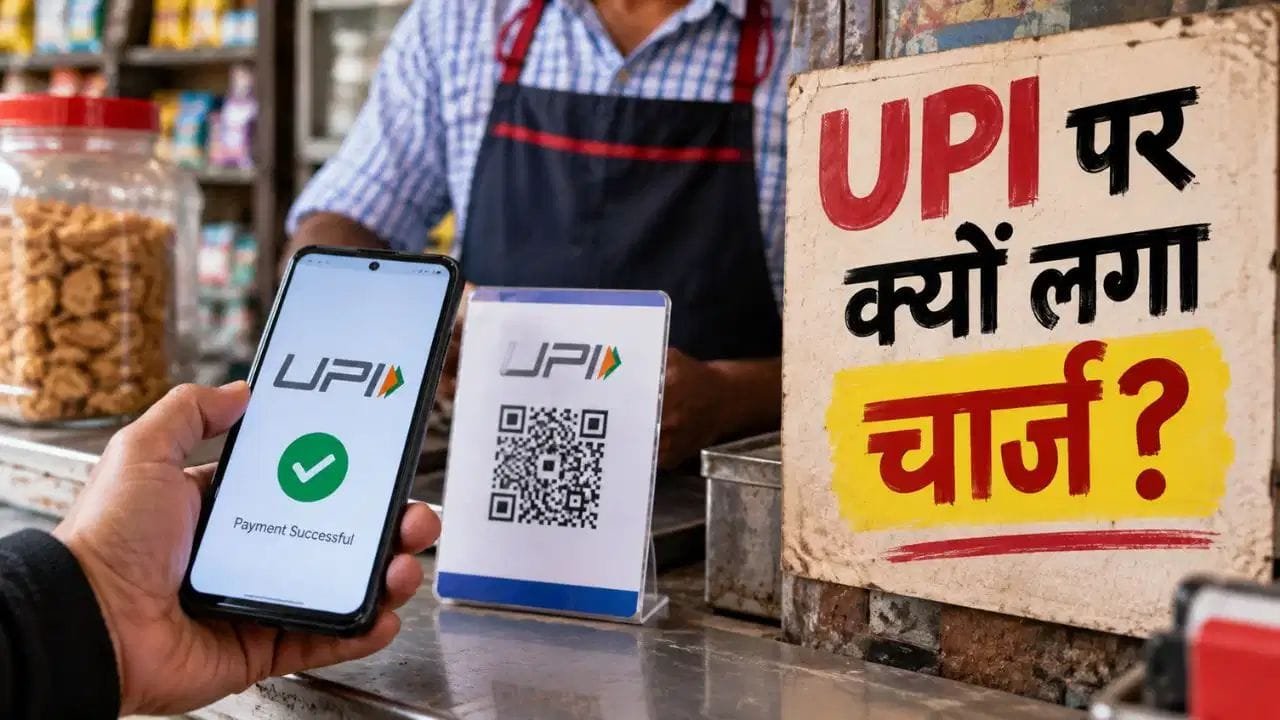
The decision by the National Payments Corporation of India (NPCI) to implement Merchant Discount Rate (MDR) on UPI-based merchant transactions (P2M) from October 15 has created confusion in the minds of investors and common users. There are rumors floating on social media that now monthly SIP in mutual funds, transfer of funds to buy shares in bank fixed deposit (FD) and demat account will become expensive. But the reality is completely different from these claims. As per the official guidelines of the Government and NPCI, there will be no additional financial burden on the pockets of common retail investors.
According to the NPCI circular, a standard MDR of 0.4 per cent is being implemented on select person-to-merchant (P2M) payments above Rs 2,000 from October 15, capped at a maximum of Rs 300.
MDR (Merchant Discount Rate) is the cost that payment gateways, banks and service providers charge for the facility of accepting digital payments from a merchant. The most important rule is that this fee is not deducted directly from the consumer or investor’s account, but is borne by the service provider or merchant. No bank or UPI app is allowed to charge additional fees or surcharges from the user.
If you deposit mutual fund SIP every month through UPI AutoPay or Recurring Mandate, there is no change for you:
-
UPI AutoPay is completely free: NPCI has clarified that no MDR will be applicable on recurring transactions under autopay mandate. Therefore, whether your SIP is Rs 500 or Rs 25,000, only the fixed investment amount will be deducted from your bank account.
-
One-Time Lumpsum Investment (Capital Market Rate): If an investor pays more than Rs 2,000 through normal UPI to invest a lump-sum in a mutual fund, it is placed in the ‘capital market category’. For this, instead of the standard 0.4%, the minimum concessional rate has been fixed at only 0.02% (only Rs 20 per Rs 1 lakh). This cost will also be handled at the system level by the Asset Management Company (AMC) or platform and not deducted from the investor’s account.
The rules for share trading or transferring funds to a demat account (Zerodha, Groww, Angel One etc.) are also completely transparent:
Stock brokers and securities dealers have been kept in the special scope of capital markets. When you transfer money from your bank account to the trading wallet via UPI, the charge of 0.02% applicable is the internal settlement cost between the broker and the payment aggregator. Investors will not have to pay any additional transaction fees from their own pocket to buy shares.
When you transfer money through your own savings account or through net banking/UPI to make an online FD (Fixed Deposit) in banks, it comes under ‘self-transfer’ or internal account adjustment, on which no scope of MDR is applicable.
Other than this:
-
P2P transfer completely free: Sending money from one person to another person’s bank account through UPI will remain 100% free as before, no matter the amount.
-
Free merchant payments up to Rs 2,000: There will be zero MDR on payments up to Rs 2,000 made to everyday retail spenders, vegetable-fruit vendors, grocery stores and small traders.
-
Flat charge on utility and insurance: On payments above Rs 2,000 for electricity bills, railway tickets and insurance premiums, a flat MDR of just Rs 5 will be applicable on the merchant side, instead of percentage.
The conclusion for common investors is that the MDR mechanism being implemented from October 15 is a backend model designed to strengthen the financial stability of the digital payment ecosystem and the infrastructure of banks. For retail investors, SIP, share purchase or FD will remain as transparent and free as before.