 look news india

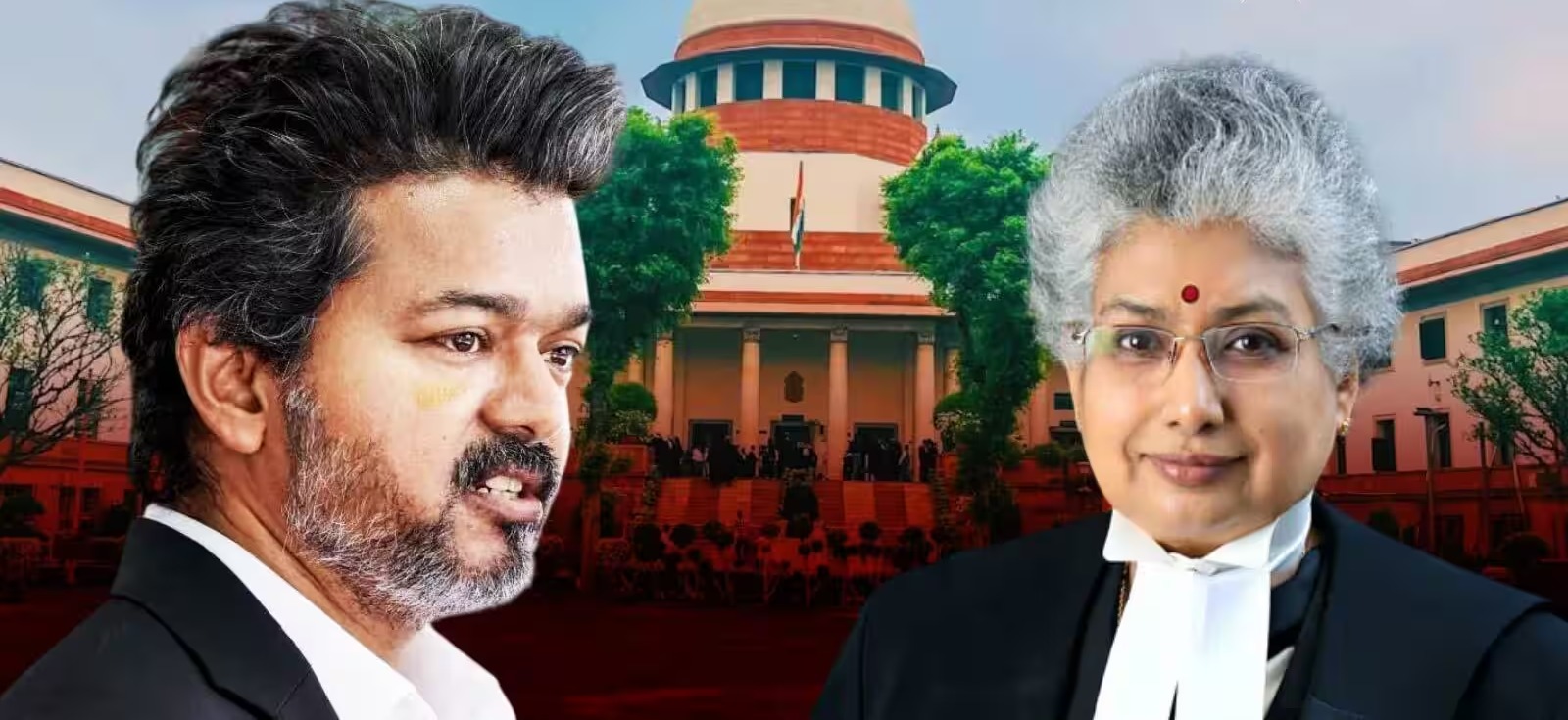
These days, the Supreme Court’s sharp comment on an important matter remains the center of discussion in the corridors of Indian politics and judiciary. The country’s Supreme Court has given very strict and blunt advice regarding the political party and administrative steps of popular South Indian actor-turned-politician Thalapathy Vijay. Eminent Supreme Court Justice Justice B.V. Nagarathna said in clear words during a hearing that any government or political party will have to give up its ‘obstinate attitude’ and should not insist on working away from the central system or rules in the country’s capital Delhi. Amidst this legal and political turmoil, this comment of the court is being considered very important in terms of federalism and administrative structure of the country. Strictly following all the guidelines of Google Discover, Bing AEO, SEO and modern Generative AI Search (Generative Engine Optimization), let us take an in-depth review of each and every aspect of this high-profile case and Justice Nagarathna’s big comment.
Supreme Court’s strong comment and advice to give up ‘obstinate attitude’
During a recent hearing in the Supreme Court of the country, the tough stance of the judiciary was clearly visible. Justice B.V. Nagarathna’s bench, while hearing the cases, expressed deep displeasure over how in today’s time, political parties and regional governments create situations of mutual conflict and try to distance themselves from central administrative rules and instructions. The court bluntly said without any hesitation that communication is the biggest medium in a democracy, and if someone thinks that he will run the rules according to his own and maintain distance from the Centre, then it is not legal. This comment assumes immense significance in the context of the recent political entry of Thalapathy Vijay and some administrative steps taken by his associates. Experts believe that this advice is not only for a particular party but is a big message for the political and administrative system of the entire country that the Constitution and law are paramount.
Thalapathy Vijay’s political entry and the heated political scenario of Tamil Nadu
Ever since superstar Thalapathy Vijay launched his political party ‘Tachila Vetri Kazhagam’ (TVK), there has been a tremendous upheaval in the politics of South India, especially Tamil Nadu. Vijay’s efforts to find this new political ground in a state dominated by traditional Dravidian parties are facing many legal and administrative complications. There are often reports of tussle between the state government and central institutions regarding party events, rallies and organizational expansion. In such a situation, when such strong comments come out from the court level, the murmur in the political circles becomes more intense. Analysts say that as a new political party, Vijay’s team will have to understand very closely the administrative intricacies of the state as well as the coordination of national laws and judicial system, because following the rules is the first condition before going among the public.
Federal structure, Centre-state relations and role of judiciary
Under the Indian Constitution, the federal structure of the country is based on a clear division of powers between the Center and the states. However, political ambitions and ideological differences often lead to conflict between central and regional forces. Justice Nagarathna has underlined this delicate balance through his remarks. The court clearly believes that regional identity or political opposition may have its place, but no institution or government can be above the country’s sovereignty, central laws and judicial jurisdiction. The tendency to distance itself from Delhi or ignore central arrangements ultimately harms the interests of democracy and the general public. This is why the judiciary has to intervene from time to time and give strict guidelines in such cases so that administrative chaos can be avoided.
Reactions in political circles and future challenges
After this strict stance of the Supreme Court, a round of meetings and statements has started between political analysts and leaders of various parties. On one hand, the ruling parties are seeing this as a lesson being taught by the judiciary to follow the rules, on the other hand, it is a warning to the new political parties that they will have to give top priority to legal and administrative aspects in their strategy. This is also a big lesson for Thalapathy Vijay’s party to keep in mind the constitutional limits and priorities of the judiciary during their political struggle. In the coming time, when this matter will move further before the court, it remains to be seen how the parties concerned accept this advice and what changes they bring about in their working style.