 look news india

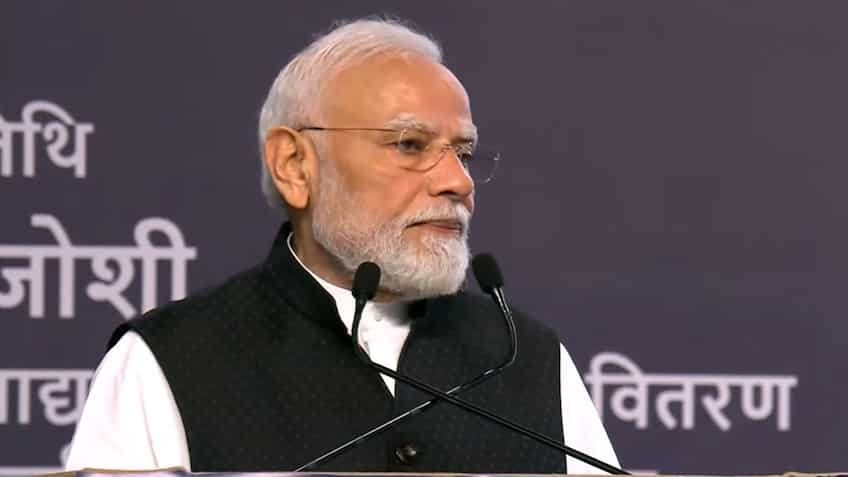
India is stepping into the next phase of its semiconductor mission with a resolve to make the country a global chip manufacturing hub. Just before the formal inauguration of the three-day grand international conference ‘SEMICON India 2026’ at ‘Yashobhoomi’ in New Delhi, Prime Minister Narendra Modi held a special roundtable meeting with the Chief Executive Officers (CEOs) of the world’s leading semiconductor and technology companies. During this high-level dialogue, the Prime Minister extended an open invitation to global players to actively participate and invest heavily in the new phase of India’s semiconductor ecosystem, ‘Semicon 2.0/ISM 2.0’.
PM Modi stressed that the semiconductor journey in India has now moved beyond basic preparations and has entered a period of large-scale expansion and opportunities. He told global tech leaders that India has strong infrastructure, a vast pool of skilled young talent and an unwavering commitment to innovation. These capabilities, combined with decades of global industry experience, can make India the hub of the world’s most reliable semiconductor supply chain.
In this round table meeting with the Prime Minister, the leadership of SEMI, the world’s largest semiconductor consortium, along with representatives of global giants participated. Senior officials of leading companies like Micron Technology, Intel, AMD, ASML, Tokyo Electron, Applied Materials, Infineon, Lam Research, Foxconn, Rapidus, Merck, Fujifilm and Tata Electronics were present in the meeting.
During the meeting, the heads of all the companies appreciated the progress of the FAB and OSAT/ATMP units being set up in India under the first phase. It is noteworthy that the semiconductor plants being established in Sanand and Dholera in Gujarat as well as Morigaon in Assam are already taking shape rapidly. The CEOs expressed full confidence in the vision of India Semiconductor Mission 2.0 (ISM 2.0) and the efforts of the Government to provide policy stability.
The Prime Minister clarified that the scope of Bharat Semiconductor Mission 2.0 is not limited to just assembling and testing of chips, rather the government wants to establish the entire supply chain in India. The main thrust of ‘Semicon 2.0’ with a package of ₹1.27 lakh crore approved by the Central Government is on six core areas:
-
Advanced Fabrication and Foundry: Establishment of high-end silicon wafer fabs.
-
Machines and specific raw materials (Equipment & Chemicals): Chemicals, gases and tools used in chip manufacturing.
-
Advanced Packaging and Testing: Modern technologies like 3D packaging and system-in-package.
-
Chip Design and Intellectual Property (IP Core): Making India’s home-grown design startups globally competitive.
-
Emerging Technologies: Silicon Photonics, Power Semiconductors and Quantum Computing.
-
Skilled Workforce Development: Special training in chip manufacturing to lakhs of youth.
PM Modi said that technology is changing rapidly in the modern world, so India aims not just to follow today’s technologies, but to become an ‘early global leader’ in next generation technologies like Artificial Intelligence (AI) and quantum computing.
The backbone of technological progress is skilled human resources. In this context, the Prime Minister mentioned the ambitious target of his government under which 1 crore people in India are to be trained in Artificial Intelligence (AI) and modern digital skills. He appealed to the semiconductor industrialists to establish joint courses and research labs with educational institutions, universities and research laboratories of India.
The PM said that when youth in India will get world-class training in chip designing and fabrication, this talent will not only power India’s domestic industries but will also bridge the shortage of semiconductor engineers across the world in the coming decades.
Reassuring foreign and domestic investors, Prime Minister Narendra Modi reiterated that the Government of India is fully committed to maintaining a predictable, transparent and responsive policy environment for the semiconductor sector. He directly sought suggestions from industry leaders for administrative reforms and making policies more accessible and assured that the government will incorporate their inputs in the upcoming policy-making.
India currently imports more than 90% of its chip needs, which costs around $30 billion every year. The domestic electronics and chip market is expected to cross $200 billion by the year 2030. Given this huge market demand, government subsidies and strategic security, this is the most opportune time for global tech giants to set up their manufacturing units in India.