 look news india

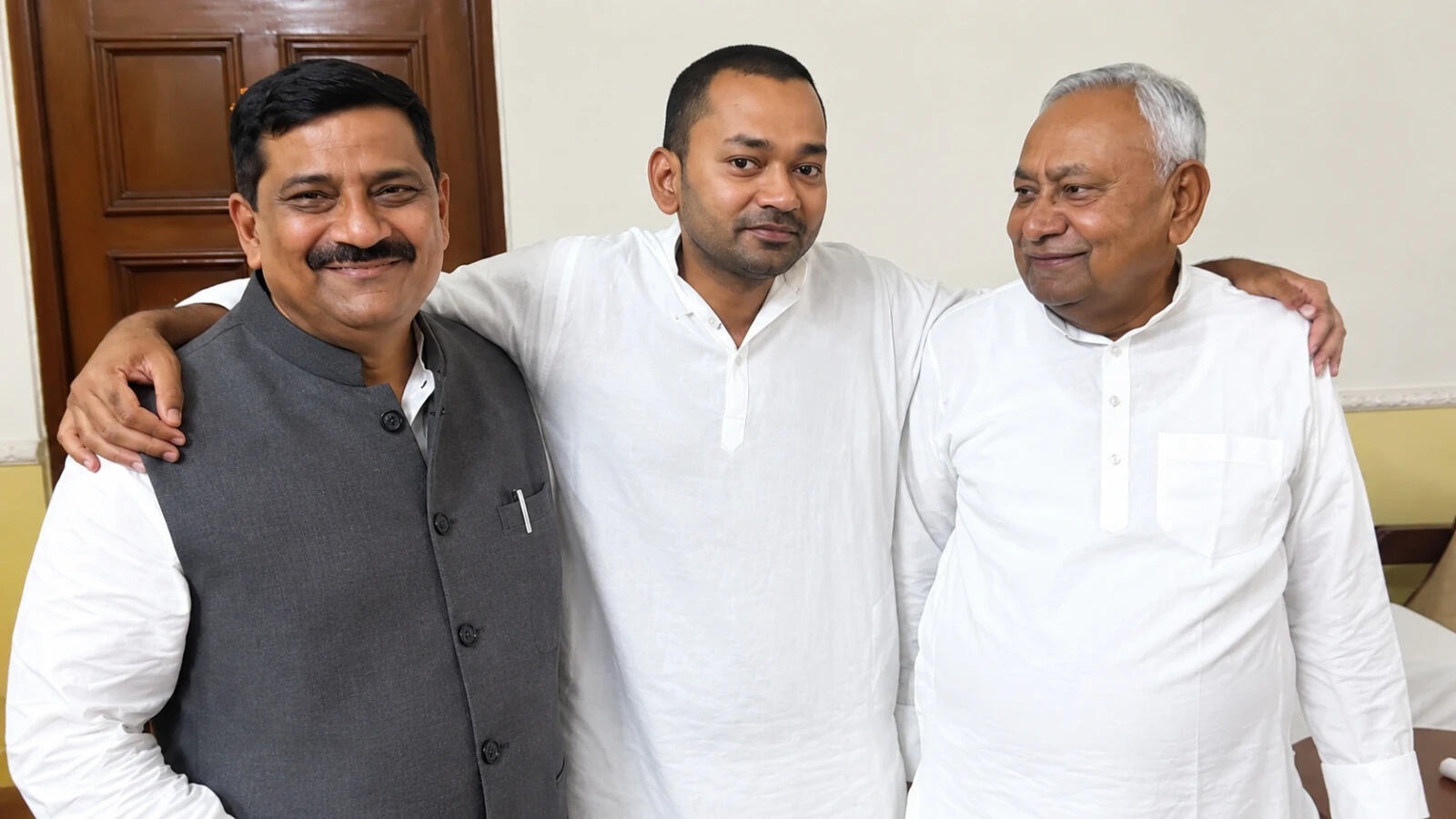
These days, such a murmur and discussion has gained momentum in the corridors of politics of Bihar, which has suddenly made the political temperature of the state very hot. Political analysts have started making new speculations regarding the ongoing developments within Chief Minister Nitish Kumar’s party Janata Dal United (JDU), one of the most seasoned and experienced players of Indian politics. It has often been said within the party that ‘Nitishification of JDU’ i.e. keeping Nitish Kumar’s face and his policies paramount in every unit and every decision of the party is the only strategy, but according to inside reports, this is only a political excuse or curtain. Discussions are spreading rapidly among experts and political circles that the real and far-reaching objective behind this entire strategy is to prepare for the political debut of Chief Minister Nitish Kumar’s son Nishant Kumar i.e. ‘Nishant Uday’. If these speculations prove to be true, then in the coming days a new and very big chapter of dynasty and family political succession may begin in the politics of Bihar, on which the eyes of not only the state but the entire country are fixed.
From the inception of Janata Dal United (JDU) till today, the entire structure and identity of the party has revolved directly around the personality of Nitish Kumar, his image of good governance and his administrative track record. Party leaders and workers have been reiterating from every platform that JDU means Nitish Kumar and Nitish Kumar means JDU, which has been called ‘Nitishkaran’ in political language. However, the kind of strategic meetings and statements being seen inside and outside the party for some time now clearly indicate that this slogan is now being used not just to pursue current politics, but to prepare the ground for handing over the command of the party to a new and universally accepted face in the future. Political experts believe that when such ideological and organizational preparations begin in regional parties, there is often a well-thought-out blueprint hidden behind it to bring a successor of the family into the mainstream.
Chief Minister Nitish Kumar’s son Nishant Kumar has always kept himself away from active politics, administrative frills and media glare and is known to live a very simple and quiet lifestyle. He never showed any direct interest in any political platform after completing his higher education, and that is why whenever there is talk of his entry into politics, people look at it with disbelief for once. Despite this, in the last few months, many senior JDU leaders, workers and ministers have been continuously demanding that Nishant Kumar should now come into active politics and take command of the party and society. A large section of party workers believe that if Nishant Kumar enters politics, he can prove to be the best option to carry forward the agenda of clean image, honesty and development like his father, due to which the morale of the workers will always remain high.
Dynastic politics has been an issue in the politics of Bihar on which the opposition parties have always been attacking, and Nitish Kumar himself has strongly advocated throughout his political career that he is strictly against dynastic politics. This is the main reason why he never allowed any member of his family to get close to any political position like ministerial post, MLA or MP, which is also considered to be his biggest USP. In such a situation, if any plan of ‘Nishant Uday’ is implemented, then the biggest challenge before the party will be to answer the traditional allegations of nepotism made by the opposition parties, against which Nitish Kumar himself has been raising the flag for years. The party strategists understand very well that if Nishant Kumar is brought into politics, it will have to be presented in the form of huge demand of workers and public pressure rather than family succession, so that any kind of political loss can be avoided.
There is also discussion in the political circles that if everything continues as per the plan, then in the coming time, a major reshuffle can be seen in the organizational structure of JDU, in which Nishant Kumar can be given a big responsibility in the party. The politics of Bihar has always oscillated between caste equations, desire for youth leadership and slogans of good governance, with each party looking for its future chief ministerial face or star campaigner. It is being quietly accepted within JDU that to keep the party strong at the national and regional level in the future, there will be a need for a face who can bind all the factions together. This entire fabric of ‘Nitishkaran of JDU’ seems to be a part of the script of this future, whose main climax may come in front of the people of Bihar in the coming days in the form of ‘Nishant Uday’ and will decide in which direction the next sun of the state’s politics will rise.