 look news india

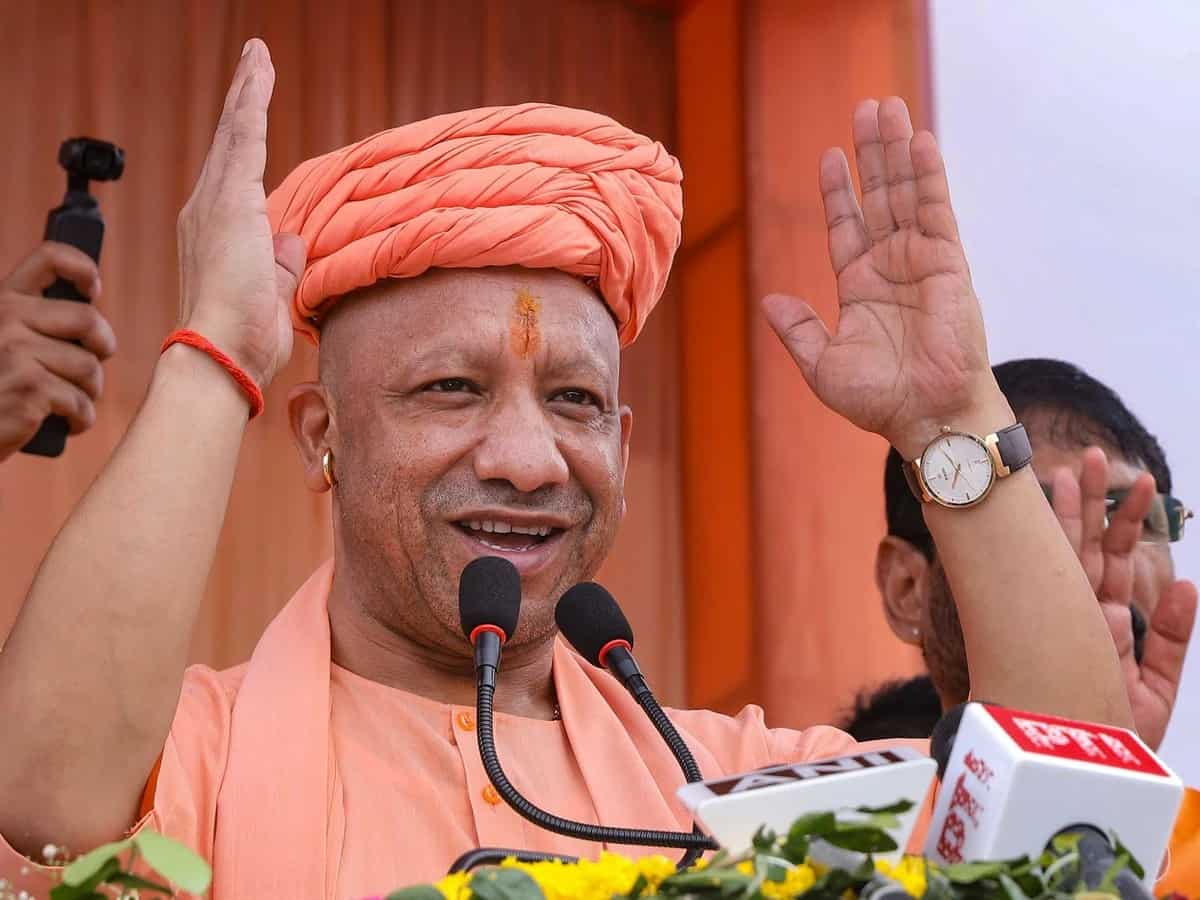
The strategic chessboard for the 2027 assembly elections has started in Uttar Pradesh, the country’s largest and politically most sensitive state. After running a government with full majority for two consecutive terms, the ruling Bharatiya Janata Party (BJP) faces the historic challenge of returning to power for the third time. Recent political developments, growing resentment among students and youth competing for employment, dissatisfaction within upper castes regarding UGC equity rules and caste mobilization have put pressure on BJP strategists. Internal surveys and a large section of the party are continuously alerting about the dissatisfaction of the youth at the grassroots level. Amidst all these storms and political challenges, the biggest relief for the saffron party is that the personal acceptance and public appeal of Chief Minister Yogi Adityanath remains intact even today. The Chief Minister himself has taken the entire command of turning the political environment in favor of BJP.
Opposition parties are continuously adopting an aggressive stance regarding unemployment and delay in recruitment processes in Uttar Pradesh. Sensing the anger of the youth, Chief Minister Yogi Adityanath has increased direct administrative interference. According to a detailed ground report by The Indian Express, the Chief Minister has taken several policy decisions to address the concerns of the youth and make employment generation in government and non-government sectors transparent.
To root out the contracting practice and exploitation in outsourcing, the Yogi government has formed ‘Uttar Pradesh Corporation for Outsourcing Services’ (UPCOS). The main objective of this corporation is to protect the legal rights of salary, EPF, ESI and service security of 3.5 lakh outsourced employees working in various departments across the state, so that their families can get economic and social security. The government is trying its best to convey the message that it is sensitive to the demands of temporary workers.
Chief Minister Yogi Adityanath has publicly clarified from various forums that in the last nine and a half years of his tenure, his government has given appointments in government jobs to more than 9.3 lakh youth without any corruption and nepotism. In view of the upcoming election year, special time-bound campaigns are being run on a large scale in the State Home and Education Department for the recruitment of constables, sub-inspectors and basic-secondary teachers.
To promote self-employment and startup culture, ‘Mukhyamantri Yuva Udyami Vikas Abhiyan’ has been implemented at the grassroots level in the state, under which youth are being given capital assistance to set up micro industries without interest or at minimum interest rates. Also, paid internship schemes in government departments and industrial units have been started for meritorious college students. To ensure social justice, the government has also introduced ‘Centralized Family Card’ system. Through this, such families are being accurately identified in which not a single member of the household has permanent employment in the government or private sector, so that they can be given first priority in welfare schemes and self-employment programs.
Recent days have seen murmurs of resentment among a large section of the upper caste (Brahmin, Rajput, Vaishya and Kayastha) community, considered the core vote bank of the BJP. The controversy had deepened over the ‘equity rules’ made by the University Grants Commission (UGC) to prevent alleged caste discrimination in higher educational institutions. Although the Supreme Court banned these controversial rules, even after this the flame of discontent among upper caste students and social organizations did not subside.
Recently, the heavy presence of upper caste youth in the ‘Remove Reservation Movement’ organized at Jantar Mantar in Delhi has alerted the think-tank of the ruling party. The upper caste believes that such provisions in higher education limit opportunities for general category students. In a state like Uttar Pradesh, where upper caste voters decisively influence election outcomes, this resentment could lead to a dent in the party’s traditional vote bank ahead of the upcoming assembly elections. Opposition parties are also looking to capitalize on this dissatisfaction.
Despite political turmoil, student movements and the tug of caste equations, Chief Minister Yogi Adityanath’s biggest strength is his ‘tough administrator’ image and law and order record. ‘Mafia-free Uttar Pradesh’ and the ‘zero tolerance policy’ adopted by the Yogi government regarding the safety of women have created a strong protective shield among the general public, especially women voters.
Prime Minister Narendra Modi’s central government’s welfare schemes (Ujjwala, Awas Yojana, Jan Dhan accounts) and Chief Minister Yogi Adityanath’s ‘Mission Shakti’ program have together created a dedicated ‘silent women vote bank’ in the state. This women class is seen rising above the boundaries of caste and community and standing with Yogi in the name of law and order. Political analysts estimate that before the upcoming assembly elections, the Yogi government is going to announce many big populist schemes for socio-economic empowerment of women, security pension and self-help groups (SHG), which will prove to be the most sure shot weapon of BJP in penetrating the caste maze of opposition parties.
