 look news india

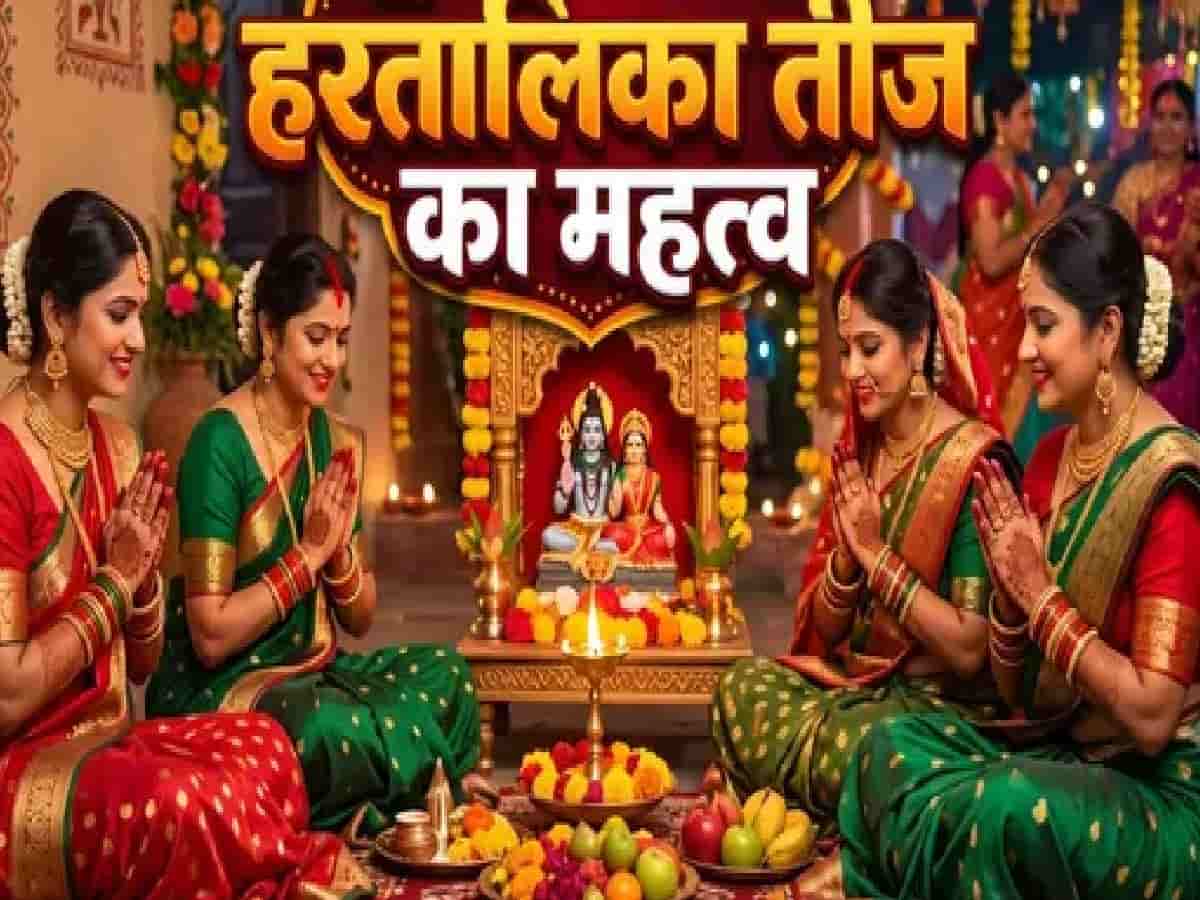
Festivals have a different and unique place in the cultural diversity of India, which not only keep our ancient traditions alive but also work to bind the society together. Among the festivals falling in the months of Sawan and Bhadrapada, the festival of ‘Teej’ is considered to be the most special for women. Teej is celebrated in different forms in different corners of the country, but when it comes to Uttar Pradesh (UP) and Bihar (Bihar), the splendor and religious significance of Hartalika Teej here is completely different and unique. The enthusiasm and devotion that is seen regarding this festival in every home of these two states is really amazing. On this auspicious occasion, married women offer special prayers to Lord Shiva and Mother Parvati and pray for their unbroken good fortune and long life of their husbands.
While ‘Hariyali Teej’ is celebrated mainly as a festival in many parts of the country, in most areas of Uttar Pradesh and Bihar, the festival of ‘Hartalika Teej’ holds the most special place in the hearts of women. In the cultural background of these two states, this fast is considered a symbol of the stability of married life and the strength of the sacred relationship between husband and wife. The entire focus of this day is completely focused on the worship of Devadhidev Mahadev and Mother Parvati. According to mythology, Mother Parvati had performed rigorous penance to get Lord Shiva as her husband, and remembering the same great penance, married women observe this fast with full devotion. Since India is a country of diversity, the ways, food and folk traditions of celebrating this festival may be slightly different in different districts and areas of Uttar Pradesh and Bihar, but the central point of everyone’s faith is the same.
The biggest and most difficult feature associated with the fast of Hartalika Teej is its being ‘waterless’. In many traditional families of UP and Bihar, married women observe a complete Nirjala fast on this day. This simply means that the fasting women do not consume even a single drop of water, leave alone food, for the entire day and for the stipulated time period. This fast shows the immense love, dedication and mental strength of a woman towards her husband. Although there may be slight variations in the rules for observing the fast depending on health conditions or family traditions, Nirjala fasting is considered the most sacred and fruitful in most of the households. Women complete this difficult fast with a smile, without any complaint and wish for happiness, peace and prosperity in their married life.
As soon as the evening falls on the day of Hartalika Teej, the atmosphere of the houses starts looking like a grand festival. One of the most attractive aspects of this festival is the doing of ‘Solah Shringaar’. On this day, women of Uttar Pradesh and Bihar start adorning themselves from the morning itself. Traditional silk or Banarasi sarees, tinkling glass bangles in the hands, vermillion in the hair, kajal in the eyes, waistband, toe rings and beautiful jewelery are important parts of this makeup. Along with this, deeply applied Mehndi on hands and feet adds to the beauty of this festival. According to folk beliefs, this Solah Shringar done by married women is considered to be a symbol of long life of their married couple and protection from every evil that may come in their married life. When women get ready and sit for puja, the whole house glows with supernatural energy.
The most enjoyable and important moment in the entire ritual of Hartalika Teej is when all the women gather at one place in the evening and listen to ‘Teej Katha’. After a day of strict waterless fasting and all the preparations for the puja, the group devotion begins at sunset. During this time, all the married women of the locality or family sit together and listen to the mythological story of the reunion of Mother Parvati and Lord Shiva. In this traditional ritual, the elderly women and mothers-in-law of the house teach the intricacies of folk customs, songs and rules of fasting to their daughters-in-law and the younger generation. This collective gathering strengthens mutual love and sisterhood among women and becomes an excellent medium for exchange of cultural knowledge between generations.
Any festival of Indian culture is considered incomplete without delicious dishes, and even on Hartalika Teej, the aroma of traditional dishes comes from every house. Various types of sweets and dishes are prepared in homes on this special occasion in both rural and urban areas of Uttar Pradesh and Bihar. Specially made on this day are Rasbhari Gujiya, Khaja, Thekua, and at many places traditional sweets prepared from roasted rice flour, pure ghee and sugar. These dishes are first offered to Lord Shiva and Mother Parvati as bhog, and then all the family members and friends consume it as prasad. This food tradition further increases the sweetness of the festival.
The biggest reason why Hartalika Teej remains so relevant and attractive even today is its regional diversity. In different villages and cities of Uttar Pradesh and Bihar, every family celebrates it in its own unique style. At some places special importance is given to charity and at other places the tradition of distributing clothes and wedding material is followed. In the race of modernity, there may have been a lot of change in people’s lifestyle and lifestyle, but faith, family relationships and cultural memories still keep people together. For the families of UP-Bihar, Hartalika Teej is not just a day in the calendar, but it is a vibrant celebration of their rich cultural heritage and eternal love, giving a message to the coming generations to stay connected to their roots.