 look news india

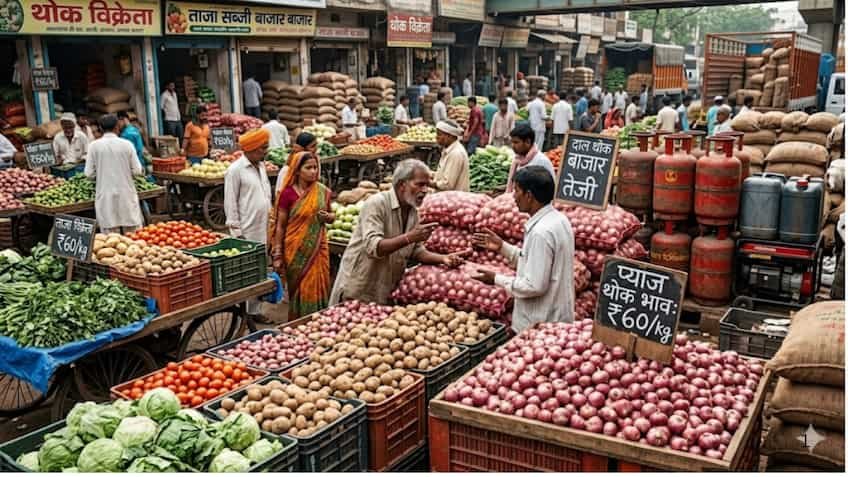
The month of September is going to prove to be decisive for the stability of food prices and household budget of the common man in the Indian economy. Latest reports from Union Bank of India and leading economic research institutes have warned that if the rains in the last phase of south-west monsoon i.e. September remain weak and El Niño conditions strengthen, then the country’s Consumer Price Index (CPI) based retail inflation may reach the level of 5.5 percent or more in the current financial year 2026-27 (FY27). Although improvement in sowing of Kharif crops has been recorded, normal September rainfall is considered essential for crop maturity, yield and the upcoming Rabi season.
According to data till the last week of August, the overall level of south-west monsoon across the country remains about 13 per cent below the long period average (LPA). Although the situation is stable in Central India, regional deficit in major agricultural states remains a matter of concern. Rainfall deficiency of about 10 percent has been recorded in the north-western regions and up to 22 percent in the southern states. At the same time, in the eastern and north-eastern parts this loss is more than 27 percent. Major producing states like Andhra Pradesh and Bihar have recorded deficient rainfall of 40 to 42 percent, increasing the risk of direct impact on the production of paddy, pulses and oilseeds.
About 64 per cent of the total storage capacity is available in the 176 major reservoirs monitored by the Central Water Commission (CWC), which provides immediate relief but is about 18 per cent less than the same time last year. If there is no good monsoon rain in September, the backup of reservoirs will remain limited. This will have a direct negative impact on soil moisture and the sowing and irrigation of upcoming Rabi crops – especially wheat, gram and mustard. Reduction in production in the post-harvest period can directly reduce the arrival of food commodities in the mandis.
The share of food and beverages in India’s Consumer Price Index (CPI) is around 46 percent. Whenever adverse weather conditions like irregular rains or drought occur, the prices of pulses, edible oils, vegetables and grains jump sharply. Analysts believe that if this monsoon deficit persists at more than 10 per cent, food inflation could rise by an additional 250 to 300 basis points, which would directly push the headline CPI beyond 5.5 per cent. If international crude oil prices remain around $90 per barrel, input costs and transportation expenses can also fuel inflation.
Weak monsoon and high food inflation have a double impact on the purchasing power of rural India. A large part of the total budget of Indian rural households is spent on food. On one hand, low production of crops can limit the real income of farmers, while on the other hand, inflation of essential commodities can reduce rural demand. This may have a direct impact on tractor bookings, two-wheeler sales, daily consumer goods (FMCG) and retail business during the festive season.
As part of its monetary policy, the Reserve Bank of India (RBI) has set the baseline estimate of retail inflation for financial year 2027 at 5.0 percent. The central bank has been adopting a cautious approach for a long time to achieve the 4 percent inflation target. If retail inflation turns out to be 5.5 percent or above due to weak rains in September, then the scope for RBI to cut interest rates will be completely eliminated. In case of high food inflation continuing for a long time, the pressure to maintain status quo in rates till the end of the financial year or to tighten policy rates if necessary may also increase.