 look news india

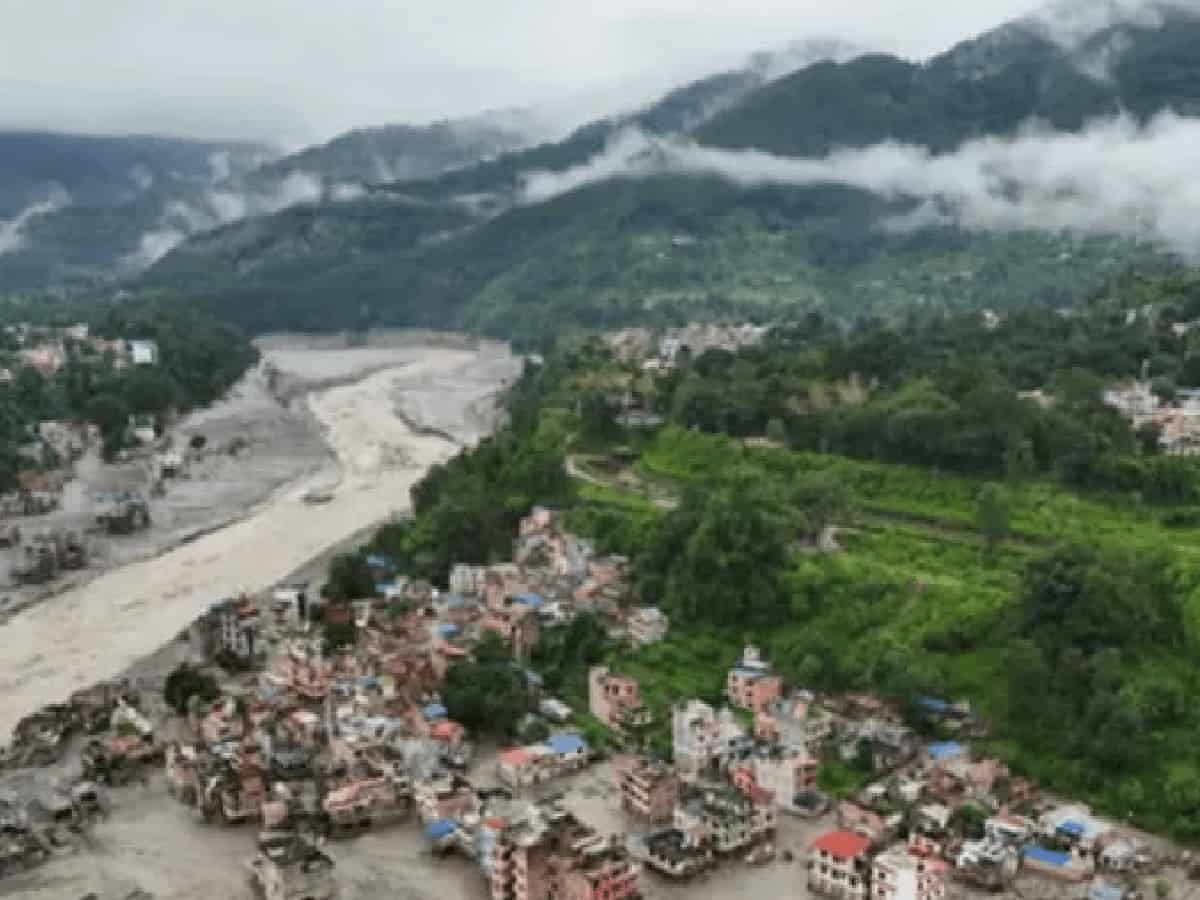
To treat Nepal’s recent tragedy as just a routine glacier break would be to ignore the larger threat posed by geological and climatic changes. This incident clearly indicates that the weather patterns in the Himalayan region are changing rapidly. The surprising thing is that now the average total monsoon rainfall is being recorded in many hilly areas, but when it rains, it becomes excessive and destructive in a very short time. Due to this uncertainty, the risk of disasters like flash floods, massive landslides and strong debris flows is continuously increasing.
Why are Himalayan rivers going out of control even with less rainfall?
According to experts, the biggest threat to the Himalayan region now is the sudden and intense rainfall more than the total amount of rainfall. When very heavy rainfall occurs in the mountains within a few hours, massive landslides begin soon thereafter. Due to these landslides, rivers often become naturally blocked and heavy water pressure builds up behind them. When this natural debris or dam suddenly breaks, the flood of water, mud and large rocks moves very fast towards the plains and lowland areas. One disaster is giving birth to many other small and big disasters, whose serious impact is being seen from the mountains to the plains below.
What do experts say about this new pattern of weather?
This major change has also been confirmed in the recent data and assessments of private weather forecasting agency ‘Skymet’. The agency has predicted that the country will receive about 85 percent of normal rainfall during the entire monsoon season of 2026, while there is a possibility of about 80 percent rainfall in the month of September also. Despite this, there remains a strong possibility of extremely intense rainfall in some hilly areas. Meteorologist Mahesh Palawat says that due to the continuous increase in global temperature, the pace of melting of glaciers has increased significantly. Rising temperatures in the Himalayan regions are not only affecting the snow and glaciers, but the natural internal stability of the mountains is also weakening.
Himalayan temperature increased by one degree in two decades
This serious crisis of climate change has also been underlined in a report of IIT Kharagpur. According to the report, the temperature in the Himalayas and many surrounding areas has increased by about one degree Celsius during the last two decades. Scientists estimate that if global warming continues at this pace, then about 65 percent of the ice in the Himalaya-Karakoram region may melt in the coming 70 years. In this situation, the nature and quantity of water flow in the rivers will completely change, due to which the risk of both water crisis and floods may increase in future.
The need for hyper-local forecasting and vigilance
To anticipate these threats of changing weather in time, the India Meteorological Department (IMD) is now laying special emphasis on ‘hyper-local’ forecasting. With the help of modern radar, space-based satellites, automated weather stations and Artificial Intelligence (AI), technology is now being developed to issue accurate warnings to very small and specific geographical areas. Experts believe that it is no longer enough to assess the safety of an area based on total rainfall data alone, but disaster management systems will have to be made more sophisticated to deal with cloud bursts and sudden disasters at the local level.