 look news india

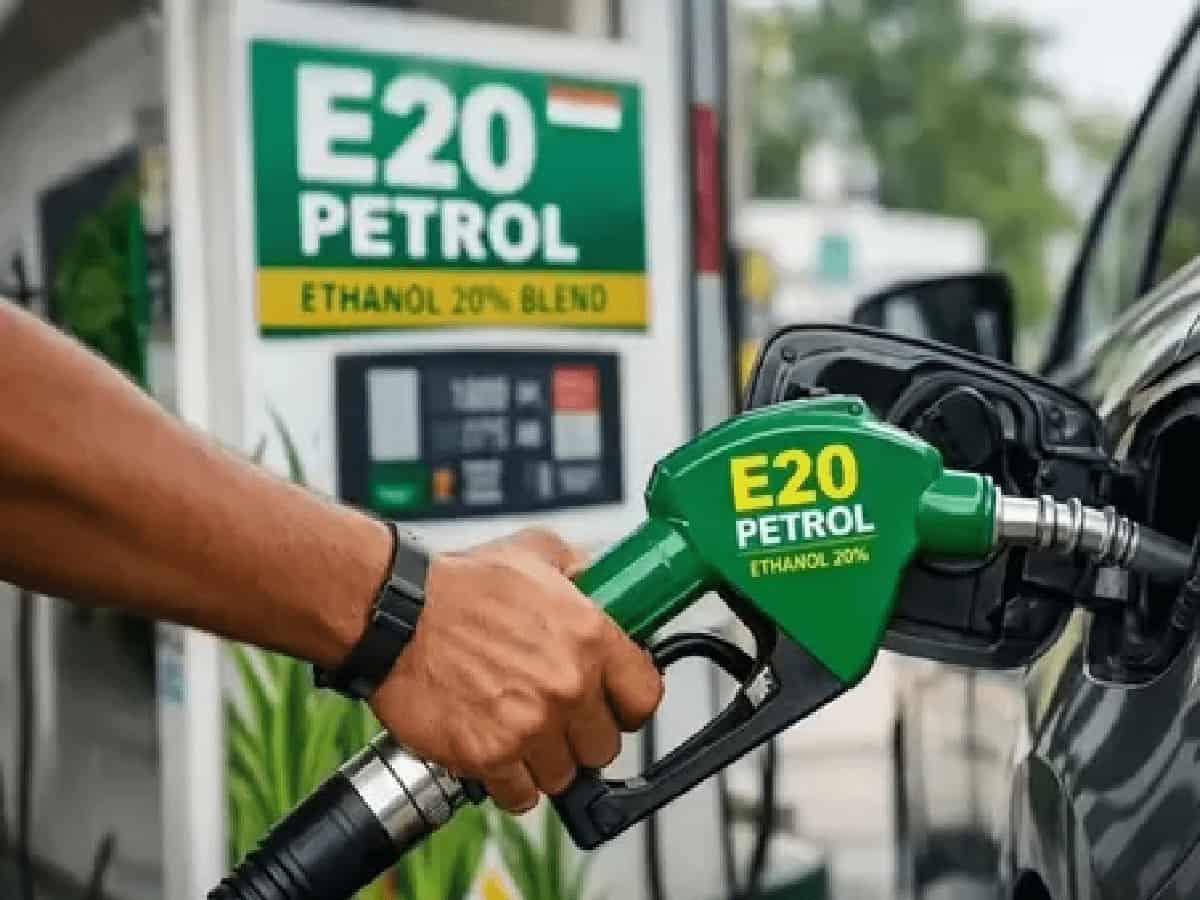
These days various discussions are going on at petrol pumps across the country regarding the effect of E20 petrol on the engines of old vehicles. Meanwhile, the country’s second largest government oil company ‘Bharat Petroleum Corporation Limited’ (BPCL) has completely made its position clear on all these speculations. The company has clarified that no official decision has been taken yet to completely remove E20 petrol and bring back E10 petrol. The only discussion going on between the government and oil companies is whether drivers of older vehicles can be given an alternative to fuel with lower ethanol blends.
“We never said that E20 will be replaced by E10”
BPCL Chairman and Managing Director Sanjay Khanna refuted these rumors while talking to the media after the company’s Annual General Meeting (AGM). He clearly said that he never said that E20 petrol will be changed back to E10. This does not at all mean that E20 will be completely eliminated from the market. According to Khanna, no final order or policy decision has yet come from the government regarding any change in the ethanol blending policy. However, if in future the government at the policy level directs to return to the old format i.e. E10, then there will not be a huge technical hurdle at the infrastructure level for the oil marketing companies.
The real challenge: supply of two different grades of fuel
Although technological change may be possible, the real practical problem is one of logistics and supply chain. The BPCL chief explained that completely phasing out E20 and introducing E10 is a separate process, but making E10 simultaneously available as an ‘option’ along with E20 at thousands of petrol pumps in the country is extremely complex. Supplying two different grades of petrol through separate tanks and pipelines in the country’s vast retail fuel network can prove to be a huge logistical challenge for companies.
Why did this debate about E10 and E20 start?
It is noteworthy that from April 1, consumers are getting only E20 fuel (i.e. a mixture of 20 percent ethanol and 80 percent petrol) at most of the petrol pumps in the country. The main objective of implementing this policy is to reduce the country’s dependence on crude oil imports and control environmental pollution. However, since the implementation of this system, some vehicle owners and people associated with the automobile sector had expressed concern that this petrol with high ethanol mixture can damage the engine parts of old vehicles and especially old two-wheelers. However, the government and regulatory bodies have been rejecting these claims.
Chief Economic Advisor’s suggestion and government’s stance
This whole debate intensified when recently Chief Economic Advisor V. Ananth Nageswaran and Economic Affairs Advisor Akash Pujari had advocated through an article that keeping in mind the technical problems of old vehicles, low ethanol fuel (E10) should also be made available in the market parallelly. His suggestion was that even though there is no concrete data on engine damage caused by E20, it may be better to keep the option open for older vehicles. On the other hand, the Petroleum Ministry has already clarified that it is practically very difficult and expensive to ensure separate supply of normal petrol, E10 and E20 at every single fuel station.