 look news india

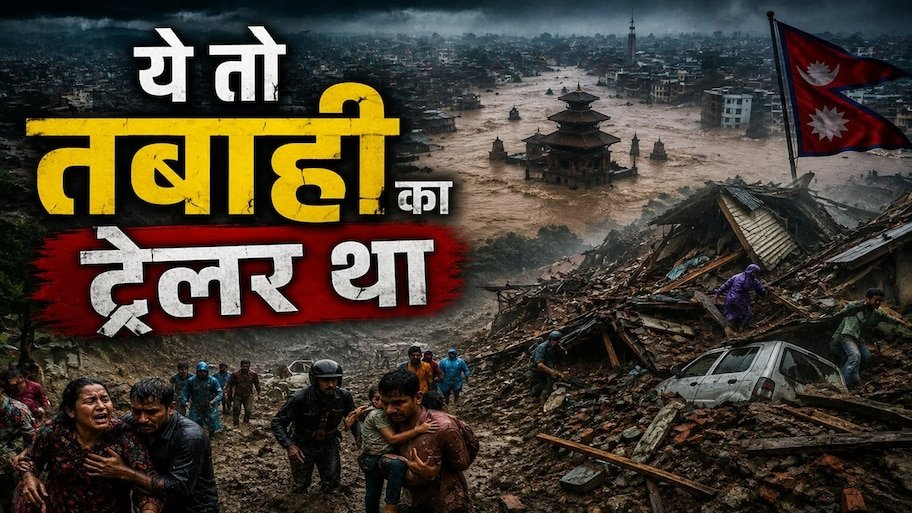
Once again, clouds of a major natural disaster are looming over the high mountains of Nepal situated in the lap of the Himalayas. Due to global warming and rapidly rising temperatures, the huge glaciers present in the high Himalayan regions of Nepal are melting at a record pace. Due to these melting glaciers, hundreds of dangerous artificial lakes have been formed on the mountains, which scientists are considering as ‘ticking time bombs’. If these lakes burst their natural embankments, they could wreak havoc in Nepal and the downstream Indian plains.
Increased risk of glacial lake outburst floods (GLOF)
According to environmental scientists, the biggest threat is from ‘Glacial Lake Outburst Flood’ (GLOF). When glacier ice melts due to extreme temperatures or seismic activity, water pressure suddenly increases on natural dams made of stones and debris. When the dam breaks, millions of gallons of water, along with mud and heavy boulders, flow into the valleys below at tsunami-like speed. Major glacial lakes of Nepal like Imja, Cho Rolpa and Thulagi are currently in the critically endangered category.
Deadly impact of climate change and rising temperatures
Reports from the International Center for Integrated Mountain Development (ICIMOD) show that the Hindu Kush Himalayan region is warming twice as fast as the rest of the world. In the last few decades, thousands of small and big glacial lakes have been formed in Nepal, out of which more than 20 lakes are considered extremely sensitive. Due to continuous avalanches and rockslides, the banks of these lakes can break at any time, due to which the low lying residential areas will not even get a chance to recover.
The impact is also looming on the border states of India.
Major rivers like Kosi, Gandak and Karnali originating from Nepal directly enter the plains of Bihar, Uttar Pradesh and West Bengal of India. If there is a major deluge in the highlands of Nepal, its direct impact will be in the form of flash floods, destruction of infrastructure and submergence of agricultural lands in the bordering Indian states. For this reason, disaster management agencies of both the countries are emphasizing on intensifying satellite monitoring of Himalayan water areas.
Early warning system and rescue preparations
Experts believe that this danger cannot be completely avoided, but the damage can be minimized through modern technology. The Nepal government, with international cooperation, is trying to reduce the water level in sensitive lakes through siphon method. Also, automatic sirens and early warning systems are being installed in low-lying areas so that in case of emergency, local villagers can be immediately evacuated to safe places.