 look news india

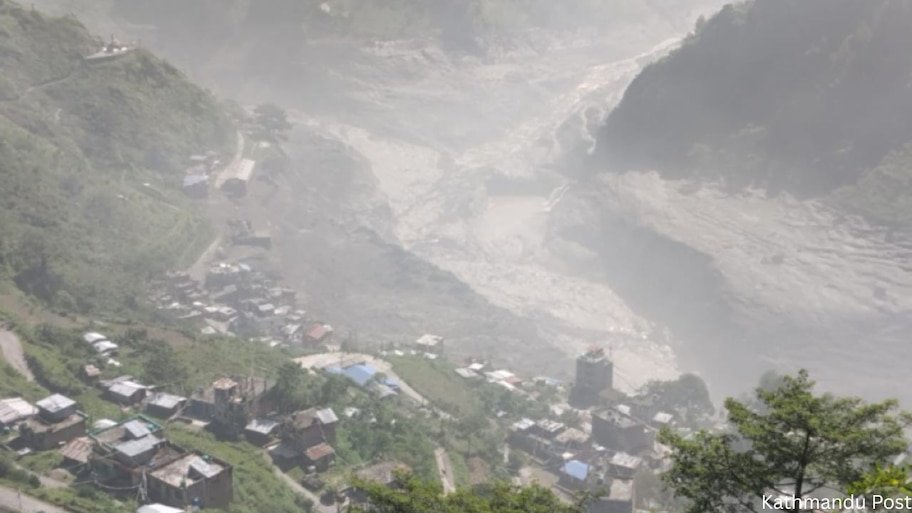
The swollen rivers in Nepal, razed houses and mountain roads turning into debris are once again testifying to the same tragedy which once shook India’s Uttarakhand. This scene of deluge in Kathmandu Valley and surrounding inaccessible hill districts is exactly the same as was seen in Kedarnath in June 2013 and Rishiganga Valley of Chamoli in February 2021.
Geologists and environmental experts believe that Nepal’s current disaster is not a fluke, but a repeat of the same Himalayan ecosystem imbalance and hydrological pattern that has been a serious warning for the entire South Asia for the last decade.
A deadly combination of cloudbursts, extreme rainfall and narrow valleys
The biggest similarity between Kedarnath (2013) and the current disaster in Nepal is the extreme precipitation and cloud burst incidents.
-
Heavy water flow in short time: After the clouds hit the mountains, the fall of hundreds of millimeters of rain in a very short time gives uncontrolled speed to the flow of water.
-
Velocity of narrow valleys: The deep and narrow valleys of the Himalayas do not allow water to spread, due to which the water level suddenly rises manifold and moves forward like a tsunami.
-
Mixture of debris and silt: Water flowing down steep slopes carries with it huge quantities of boulders, soil and uprooted trees, which becomes a debris flow many times more destructive than pure water.
Boulder dam like Chamoli and danger of sudden flash flood
In the year 2021, flash floods in Rishiganga and Dhauliganga due to breaking of glacier and massive landslide in Chamoli, Uttarakhand had caused huge devastation. The exact same geographical process has been repeated in Nepal:
-
Formation and bursting of temporary lakes: Debris falling from mountain slopes often forms temporary natural dams, blocking the mouths of narrow rivers.
-
Glacial Lake Outburst Flood (GLOF): When the water pressure on these natural or glacial lakes becomes unbearable, they suddenly break. After this, the flood that comes downstream creates tremendous velocity like the breaking of Chaurabari lock of Kedarnath or the incident of Chamoli.
Himalaya’s fragile structure and uncontrolled human interference
The Himalayas are geologically one of the youngest and most unstable mountain ranges in the world. Its rocks and soil are already in a sensitive state due to constant tectonic movements.
-
Encroachment on river banks: As in Kedarnath and Mandakini valley, in Nepal too, construction of concrete in the natural flow areas and floodplains of the river blocked the natural drainage of water.
-
Unplanned Drainage System: Neglect of drainage systems during the construction of hill towns and highways allowed rainwater to seep into the surface, weakening the slopes and causing major landslides.
-
Double blow of climate change: Due to the continuous increase in temperature, the moisture holding capacity of the atmosphere has increased, due to which the trend of sudden heavy torrential rains instead of normal rainfall has increased in the Himalayan regions.
Lessons from history: need for early warning systems and strict land regulations
The devastation of Kedarnath, Chamoli and now Nepal makes it clear that the boundaries may differ in the Himalayan region, but the geographical and scientific character of the disasters is exactly the same. Keeping human settlements at a safe distance from river banks, satellite monitoring of glacial lakes and establishment of real-time Early Warning System (EWS) can only minimize the loss of life and property due to such catastrophic events in future.