 look news india

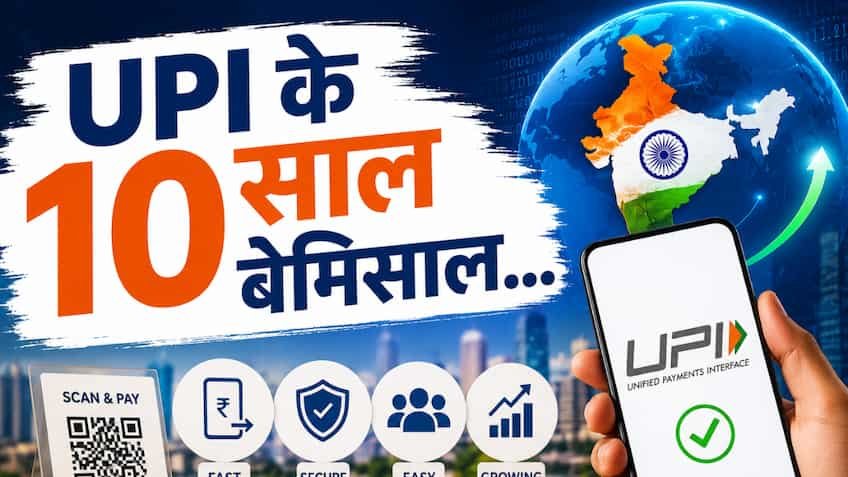
In 2016, when the National Payments Corporation of India (NPCI) and the Reserve Bank of India (RBI) started an experimental pilot project of ‘Unified Payments Interface’ (UPI) with just 21 member banks, perhaps no one thought that this Indian innovation would forever change the way digital transactions are conducted across the world. In its journey of 10 glorious years, UPI has not only become an alternative to cash, but has also emerged as the global backbone of India’s Financial Inclusion and Digital Public Infrastructure (DPI). From roadside tea stalls to big malls and international airports, UPI has left its indelible mark on the world map.
From zero to top: UPI’s historic journey of 10 years in numbers
UPI’s growth journey is not just an example of data growth but also of trust and technical strength of common citizens:
| Scale (Metric) | Year 2016 (early phase) | Year 2026 (after 10 years) | range of growth |
| monthly transaction volume | ~10 lakh to 20 lakh | 15 billion to 16.5 billion | 8000+ times jump |
| monthly transaction value | ₹3 crore to ₹50 crore | ₹20 lakh crore to ₹23 lakh crore | record breaking levels |
| live member bank | only 21 banks | More than 600+ banks | entire banking network |
| Global Real-Time Share | less than 1% | ~48% of total real-time payments in the world | global number-1 |
India dominates the world’s digital payments: UPI becomes global leader
According to reports from global financial institutions (such as the World Bank and IMF), almost half of the total real-time digital transactions in the world today are processed through India’s UPI network alone. Major payment networks in China, the US and Europe have also lagged behind UPI in terms of transaction speed and zero-cost user experience.
This indigenous payment architecture of India has now become an open-source global benchmark, which many developed and developing countries are entering into bilateral agreements with India to implement.
UPI expanding globally: Indian QR running in these countries
With the efforts of the Government of India and NPCI International Payments Limited (NIPL), the limitations of UPI are no longer limited to India:
-
Singapore (PayNow-UPI Linkage): First direct real-time linkage for cross-border remittance.
-
United Arab Emirates (UAE): Direct payments through PhonePe, Google Pay and BHIM UPI on ‘MasharREQ’ and major retail outlets.
-
France (Europe): UPI acceptance from ticket counters at the Eiffel Tower to major luxury retail stores.
-
Mauritius, Sri Lanka, Nepal and Bhutan: Facility to pay directly from Indian bank accounts by scanning QR code in local currencies in neighboring and friendly countries.
-
Gulf and South-East Asia: Rapidly growing UPI network in countries like Qatar, Oman and Malaysia.
How has the UPI ecosystem changed in 10 years? New features gave new speed
UPI has continuously upgraded itself over time, making it extremely accessible to every class of user:
-
1. RuPay Credit Card on UPI: Facility to link credit card to UPI and make payment directly on any merchant QR even if there is no balance in the bank account.
-
2. UPI Lite and Offline Payments (UPI Lite & Lite X): A system to complete small value transactions (up to ₹500) in the blink of an eye, without internet connectivity and without entering a PIN.
-
3. Autopay (UPI AutoPay): One-click recurring payments for OTT subscriptions, mutual fund SIPs, electricity bills and EMIs.
-
4. UPI 123Pay: IVR and missed-call based secure payment system for general feature phone users without smartphone and no internet.
The backbone of the economy and the revolution towards a cashless society.
UPI has brought about a banking revolution by connecting India’s informal economy with the mainstream financial system. Small street vendors and grocery shopkeepers have started getting digital business loans (Micro-Credit) easily on the basis of their UPI transaction history.
This historic journey of 10 years proves that when indigenous technology, visionary government policies and public participation come together, India can build the world’s strongest and most modern digital empire.