 look news india

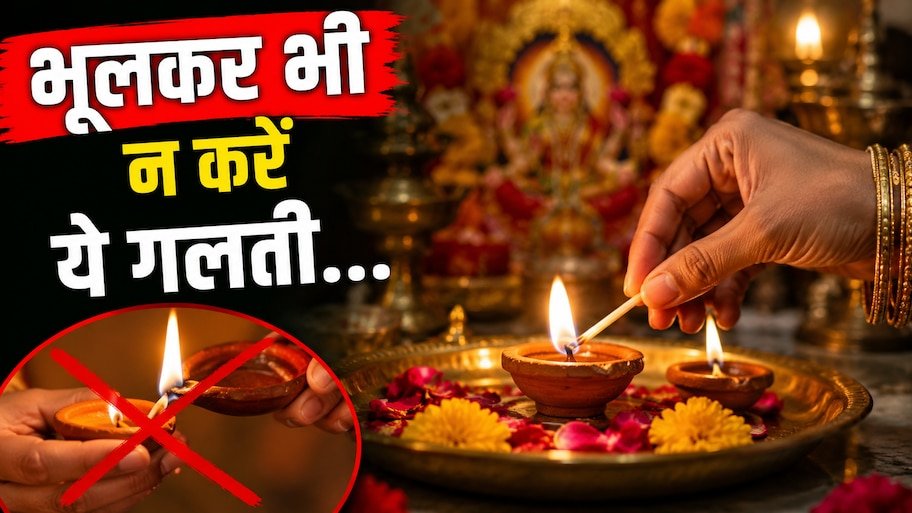
In Sanatan Hindu religion and worship, lighting the lamp is not just a ritual but is considered a symbol of positive energy, knowledge, brilliance and manifestation of God. In the scriptures, Agni Dev is considered to be a direct deity and ‘Havyavahan’, who conveys our prayers and offerings directly to God. Often people light lamps with full devotion during morning and evening puja, but unknowingly they make some subtle mistakes due to which instead of getting the auspicious results of the puja, negativity, poverty and Vaastu defects start arising in the house. Many strict rules for lighting lamps have been mentioned in the religious scriptures, Garuda Purana and Vastu Shastra, out of which one mistake is considered the biggest fault.
Lighting a lamp with a lamp: The biggest prohibited act in the scriptures
The most common and serious mistake that people make during puja or aarti is ‘Lighting another lamp from one burning lamp’.
-
Strict instructions of the scriptures: There is a clear mention in the scriptures that if a person uses the flame of a burning lamp to light another lamp or incense sticks/incense sticks, then that worship is considered faulty.
-
Causes of poverty and disease: According to Padma Purana and Bhavishya Purana, lighting a lamp increases financial difficulties, debts and physical ailments among family members.
-
Insult of fire: Every lamp has its own independent place, purpose and resolution. When you light another lamp from one lamp, the energy and purity of the first lamp gets fragmented. Therefore, every new lamp should always be lit with a match or a separate burning matchstick.
Never use a cracked or broken lamp
While using an earthen lamp, ensure that it is not cracked, broken or rough anywhere:
-
Entry of inauspicious energy: Burning a broken lamp by adding oil or ghee causes Vaastu defects and Goddess Lakshmi becomes displeased.
-
Cleaning Metal Utensils: If you use a brass, copper or silver lamp, then relight it every day after cleaning and washing it thoroughly. Putting a new wick in a stale or broken lamp is considered prohibited.
Wick rules: Right choice of round wick vs long wick
There is also a scriptural explanation for the wick used in the lamp, about which people often remain confused:
-
Long Wick (Standing Wick): Long wick is always used in the worship of Goddess Lakshmi, Goddess Durga, Saraswati and Kuldevi. Long wick is considered to be a factor for wealth, fame and lineage growth.
-
Round Wick (Phool Baati): Round wick is used in the worship of Lord Shiva, Shri Hari Vishnu, Hanuman ji and Batuk Bhairav. It provides stability, self-confidence and peace.
-
Number of Wick: In any auspicious event, one should never burn two different types of oil/ghee or broken wicks by mixing them in the same lamp.
Different directions and places for ghee and oil lamps
According to Vastu Shastra, it is mandatory to keep the lamp in the right direction and on the right hand side:
-
Pure desi ghee lamp: Always have a ghee lamp with you when you stand before God. Left Hand It should be towards the right hand side of God.
-
Sesame or mustard oil lamp: oil lamp always yours Right Hand It should be kept towards the left hand side of God.
-
Direction of lamp flame:
-
East direction: Increases health, lifespan and positive thoughts.
-
North direction: Brings financial gain, business progress and happiness and prosperity.
-
South direction: The flame of the puja lamp should never point towards the south (this is only for lamps lit for Yama and the ancestors).
-
Never keep the lamp directly on the ground: It is important to give ‘Asana’
There is a rule in the scriptures that never keep the lamp directly on the floor or ground. Agni Dev should always be provided with a ‘seat’. Before installing the lamp, place some Akshat (whole rice), flower petals or a small plate under it. A lamp kept without a seat increases the temperature of the earth and the virtuous results of worship remain incomplete.