 look news india

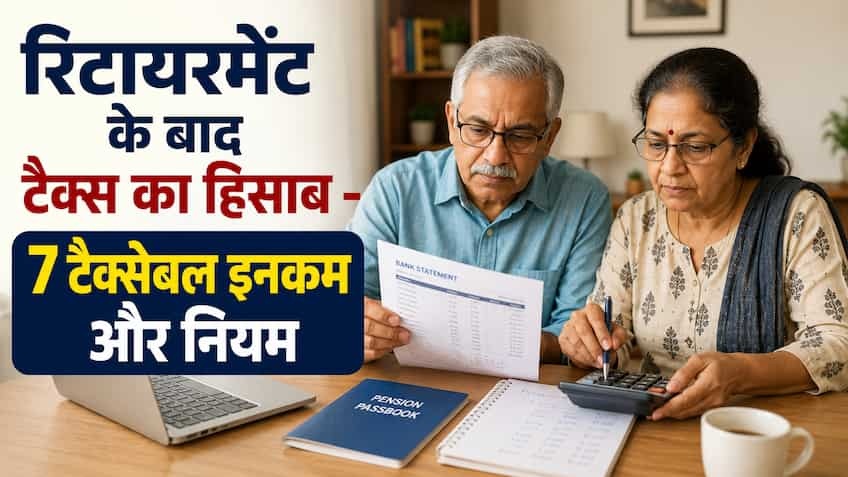
It is a big and common misconception among employed and working people in India that after completing 60 years of age and retiring, all their earnings become tax-free. According to the rules of the Income Tax Department, turning 60 or 80 years of age does not end your tax liability, but only changes the Basic Exemption Limit and the scope of some deductions. If a senior citizen’s total annual income from various sources exceeds the taxable limit, they are required to mandatorily pay income tax and file ITR. Often, due to lack of accurate knowledge of tax rules, many elderly people unknowingly miss paying tax, due to which they later have to face demand notices from the Income Tax Department with heavy fines and interest. If you or someone in your family is a senior citizen, it is very important to understand the 7 major sources of income after retirement on which the government collects tax.
1. Monthly and uncommuted pension: Fully taxable under the head ‘Salary’
Regular monthly pension (Uncommuted Pension) coming into the bank account every month after retirement is considered as ‘Income from Salary’ under the Income Tax Act. Whether the pension is being received from the Central Government, State Government or a private sector employer, it is fully taxable as per the respective tax slab of the senior citizen.
However, it is a matter of relief that pensioners also get the benefit of Standard Deduction like employed people. On the contrary, if an employee had commuted a part of his pension at the time of retirement, it is completely tax-free for government employees and partially tax-free for non-government employees under gratuity rules. Whereas the family pension received by the dependents of the deceased employee comes under the ambit of tax under ‘Income from other sources’.
2. Interest on bank FD, RD and savings account
The most important and secure sources of income for senior citizens are Fixed Deposit (FD), Recurring Deposit (RD) and Savings Account. Many elderly people assume that the interest received from the bank is completely tax-free, whereas it is not so.
Under the Old Tax Regime, Section 80TTB of Income Tax gives special tax exemption to senior citizens (60 years or more) on all interest from banks, co-operative banks and post offices up to a maximum of ₹ 50,000 in a financial year. If the total interest earned in the entire year exceeds even ₹1 by ₹50,000, the extra amount gets added to your total income and is taxable. Additionally, if the interest in the bank crosses the limit of ₹50,000, banks automatically deduct TDS at the rate of 10%. If your total income is less than the taxable limit, it is mandatory to submit ‘Form 15H’ to the bank at the beginning of the financial year to avoid deduction of TDS. Exemption under Section 80TTB is not available in the new tax regime.
3. Senior Citizen Savings Scheme (SCSS) and Post Office Schemes
‘Senior Citizen Savings Scheme’ (SCSS), National Savings Certificate (NSC) and Post Office Monthly Income Scheme (POMIS) run by the Central Government for senior citizens provide attractive and safe returns on investment.
Under the old tax regime, investment made in SCSS is eligible for exemption of up to ₹ 1.5 lakh under Section 80C, but the quarterly interest received from it is fully taxable. Post offices or banks deduct TDS on the interest received under this scheme if it exceeds ₹50,000 for a senior citizen. This entire interest amount is added to the total income of the senior citizen as ‘Other Sources’.
Income tax calculation after retirement: Understand the remaining 4 important income and tax rules
4. Rental Income from property and house
Many senior citizens earn regular income after retirement by renting out their second property, shop, commercial space or a part of the house. This rental income is directly taxable under the head ‘Income from House Property’.
The government provides some relief to the landlord while calculating the rental income. A direct ‘Standard Deduction’ of 30% is available on the net amount remaining after deducting Municipal Taxes from the total rent received, which is considered for the maintenance and repair of the house. After this, the senior citizen has to pay tax on the remaining 70% rental income as per his tax slab.
5. Capital gains from mutual funds, stock market and sale of property
When elders sell their old investments—like equity mutual funds, shares, gold or any immovable property (land/house)—to meet medical expenses, children’s marriage or any other need after retirement, the profit earned on it is called ‘capital gains’ and is heavily taxed:
-
Equity Mutual Funds and Shares (LTCG): Long-term capital gains up to ₹1.25 lakh in a financial year are tax-free on selling shares or equity funds held for more than 12 months. Any profits above this are taxed at a flat rate of 12.5%.
-
Short-Term Capital Gain (STCG): Profits on equity funds and shares sold before one year are taxed at a flat 20%.
-
Real Estate and Property: Long-term capital gains tax is payable at the rate of 12.5% on sale of land or house without indexation benefit.
6. Regular annuity received from NPS and insurance companies
In the National Pension System (NPS) or any insurance company’s retirement/pension policy (Annuity Plans), when a person retires at the age of 60, it is mandatory to invest at least 40% of the total deposited fund in buying annuity.
60% of the lump sum amount withdrawn from NPS is completely tax-free, but the 40% amount which goes to the annuity service provider (insurance company) and in exchange for which ‘annuity pension’ is received every month or every quarter for life, that amount is completely taxable. This annuity payout is added to your income every year and income tax is deducted on it as per the applicable tax slab.
7. Consultancy, part-time work and gifts from non-relatives
Many senior citizens, based on their expertise and experience, instead of sitting idle even after retirement, serve in a company as an advisor, legal/technical consultant, board member or part-time freelancer.
The fees or honorarium received for this work are taxable under ‘Profits and Gains from Business or Profession’ (PGBP). Under Section 194J, companies pay this by deducting 10% TDS. Additionally, if a senior citizen receives any cash gift or valuable gift exceeding ₹50,000 from any outside friend or acquaintance other than his immediate relatives (parents, siblings, spouse, children) in a financial year, the entire gift amount is taxable under the head ‘Income from Other Sources’.
3 big special reliefs for senior citizens in income tax
-
Exemption from ITR filing under Section 194P: Super senior citizens above 75 years of age, whose source of income is only pension and interest from the same bank account, are not required to file ITR. The concerned bank itself calculates and deducts their tax.
-
Complete exemption from advance tax: Senior citizens above 60 years of age who do not have any professional or business income are exempted from paying advance tax installments four times a year. They can deposit self-assessment tax at the end of the year.
-
Deduction on medical insurance and treatment (80D and 80DDB): Senior citizens can claim tax deduction of up to ₹50,000 under Section 80D on their health insurance premiums and medical expenses and up to ₹1,00,000 on treatment of critical illnesses under Section 80DDB.
To remain financially secure and worry-free after retirement, it is important that you maintain correct details of all your income, submit Form 15H on time and if the total income exceeds the taxable limit, then file your income tax return as per rules.