 look news india

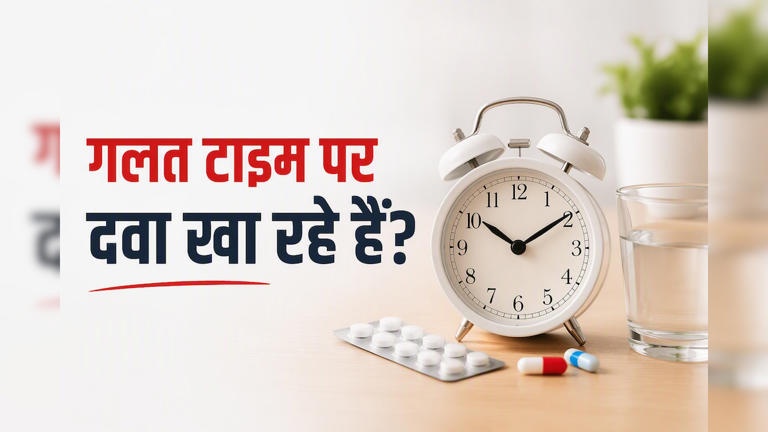
Whatever be the disease, the medicine given by the doctor proves to be completely effective only when it is taken at the right time, in the right way and at the right interval. Often people ignore the instructions written on the medicine prescription and take the pill at any time as per their convenience. According to medical science and pharmacology, every medicine has a specific mechanism of action. Taking medicine at the wrong time not only reduces its effectiveness but also increases the risk of stomach gas, ulcers, acidity or other serious side effects. Let us know when and how it is considered best to take the major commonly used medicines.
Medicines to be taken on an empty stomach (as soon as you wake up in the morning)
Some medicines are best absorbed on an empty stomach, as nutrients or acids in food can block their effects.
-
Thyroid medicine (Thyroxine): Take it with a glass of plain water on an empty stomach as soon as you wake up in the morning. Do not have tea, coffee, or breakfast for at least 45 minutes to 1 hour after taking the medicine.
-
Acidity and gas medicine (PPIs like Pantoprazole, Omeprazole, Rabeprazole): It is most effective if taken 30 to 45 minutes before breakfast in the morning so that the secretion of acid in the stomach is controlled throughout the day.
Medicines taken with or immediately after food
Most medicines are recommended to be taken with or immediately after food to avoid damaging the stomach lining and for better digestion.
-
Painkillers and anti-inflammatory drugs (NSAIDs like Paracetamol, Ibuprofen, Diclofenac): Never take these on an empty stomach. Taking painkillers on an empty stomach increases the risk of acidity, burning sensation and ulcers in the stomach.
-
Diabetes medicines (Metformin etc.): Medications like metformin are usually taken between meals or immediately after eating to avoid gastric upset. Whereas insulin or some special medicines are taken just 10-15 minutes before meals so that the sugar level that increases after eating can be controlled.
-
Antibiotics: Most antibiotics are taken after eating to avoid nausea and vomiting. These should be taken only at specific time intervals prescribed by the doctor (e.g. 8 or 12 hours).
medicines taken before sleeping at night
According to the circadian rhythm of the human body, the symptoms of some diseases are more active at night, hence their medicines are given at night.
-
Cholesterol medications (statins such as Atorvastatin, Rosuvastatin): Cholesterol formation in the liver occurs mainly at night, hence taking these medicines after meals or before sleeping at night is considered most effective.
-
Blood pressure (BP) medicine: Some BP medicines are prescribed in the morning, while some are recommended at night to prevent sudden blood pressure spikes in the morning and the risk of heart attacks. Fix the time as per the doctor’s advice.
-
Anti-allergy medicine (Cetirizine, Levocetirizine): These medicines cause mild drowsiness or sleep, so it is better to take them before sleeping at night.
Right time for multivitamin, calcium and iron supplements
-
Calcium and Vitamin D: Take calcium tablets after lunch or dinner.
-
Iron Tablet: It is best to take iron on an empty stomach or with orange juice (vitamin C).
-
Caution: Never take calcium and iron tablets together, because calcium prevents the absorption of iron. Keep a gap of at least 2 to 3 hours between the two.
Always keep these basic rules in mind while taking medicine
-
Take with water only: Always swallow the tablets with plain water. Avoid taking the medicine with tea, coffee, milk or cold drinks, as these may react with the chemicals in the medicine.
-
Complete the course: Especially do not leave the course of antibiotics midway even if you feel well.
-
Don’t decide yourself: Do not make any changes on your own in the time prescribed by the doctor or pharmacist.