 look news india

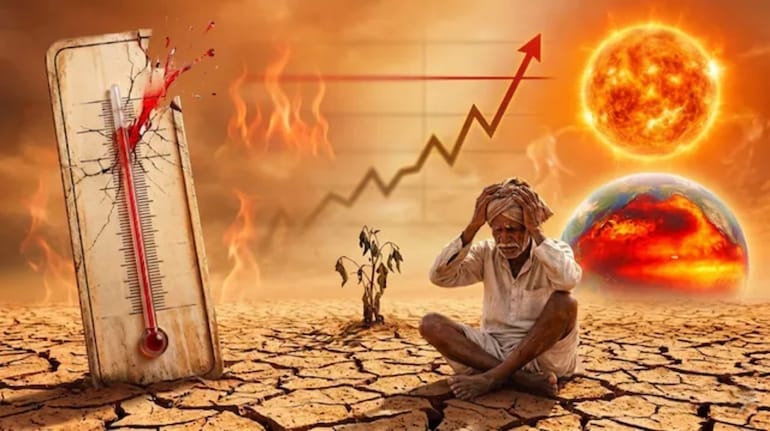
Meteorologists and climate scientists around the world are issuing serious warnings about the unusual weather movements occurring in the Pacific Ocean. According to the latest data from the US weather agency NOAA and the World Meteorological Organization (WMO), the sea surface temperature in the equatorial part of the Pacific Ocean has increased by more than 2 degrees Celsius above normal. This signal confirms the development of ‘Super El Niño’. Scientists believe that due to this dangerous combination of human-caused global warming and Super El Nino, the year 2026 may prove to be the Earth’s hottest year ever in the history of modern meteorology. This historic increase in temperature is expected to have a direct impact on global atmospheric circulation and India’s rainfall cycle.
The science of Super El Nino and record rise in global temperatures
El Nino is basically a natural oceanic and atmospheric phenomenon, which is considered to be the warm phase of the El Nino-Southern Oscillation (ENSO). When the surface of the Pacific Ocean becomes unusually warm, the trade winds weaken. Due to this, hot water spreads towards the east and a huge amount of heat is released into the atmosphere. When this warming combines with the effects of greenhouse gases already present, it pushes global average temperatures to new record levels. The intensity of El Nino in 2026 is predicted to be so extraordinary that it could surpass all historical records recorded since 1950. As a result, extreme weather events such as extreme heat waves and uncontrolled wildfires are becoming more widespread across large parts of Europe, North America, Africa and Asia.
Actual impact of El Nino on Indian monsoon and rainfall cycle
El Nino has always been a matter of great concern for an agricultural country like India. Historically, whenever a strong El Nino has developed in the Pacific Ocean, India has experienced rainfall deficit or drought during the Southwest Monsoon. According to assessments by the India Meteorological Department (IMD) and international weather models, El Nino displaces the Walker Circulation, thereby weakening the pressure of moisture-rich monsoon winds over the Indian subcontinent. Due to this, long ‘dry spells’ i.e. the period of pause in rain increases during monsoon. The distribution of rainfall becomes highly uneven, with some areas experiencing prolonged drought, while some local areas experience increased extreme events, such as sudden, extremely intense rainfall or cloudbursts.
Indian Ocean Dipole (IOD) and the possibility of relief for India
Although the threat of El Nino is great, the Indian weather system is not dependent only on the Pacific Ocean. The ‘Indian Ocean Dipole’ (IOD) formed in the Indian Ocean can act as a shield for India’s monsoon. When the western part of the Indian Ocean is warmer than the eastern part, it is called ‘Positive IOD’. The positive IOD draws sufficient moisture from the Arabian Sea and sends it towards India, thereby balancing the negative impact of El Nino to a great extent. Meteorologists estimate that positive IOD signals are emerging in the Indian Ocean in the last months of 2026, which may partially limit the adverse impact on the country’s aquifer levels and groundwater storage.
Long-term threats to agriculture, food security and the economy
If the effect of El Nino persists for a long time in 2026, its most profound impact can be seen on the sowing and productivity of both Rabi and Kharif crops. The fear of decline in production of crops like paddy, soybean, maize, pulses and sugarcane may increase pressure on the rural economy and retail inflation. Additionally, the unexpected surge in electricity demand due to the extreme heat and falling water levels in major reservoirs is also likely to have a major impact on drinking water supply. Experts are advising that farmers should prioritize drought-resistant crops and micro-irrigation systems to safeguard food security from this sharp shock of climate change.