 look news india

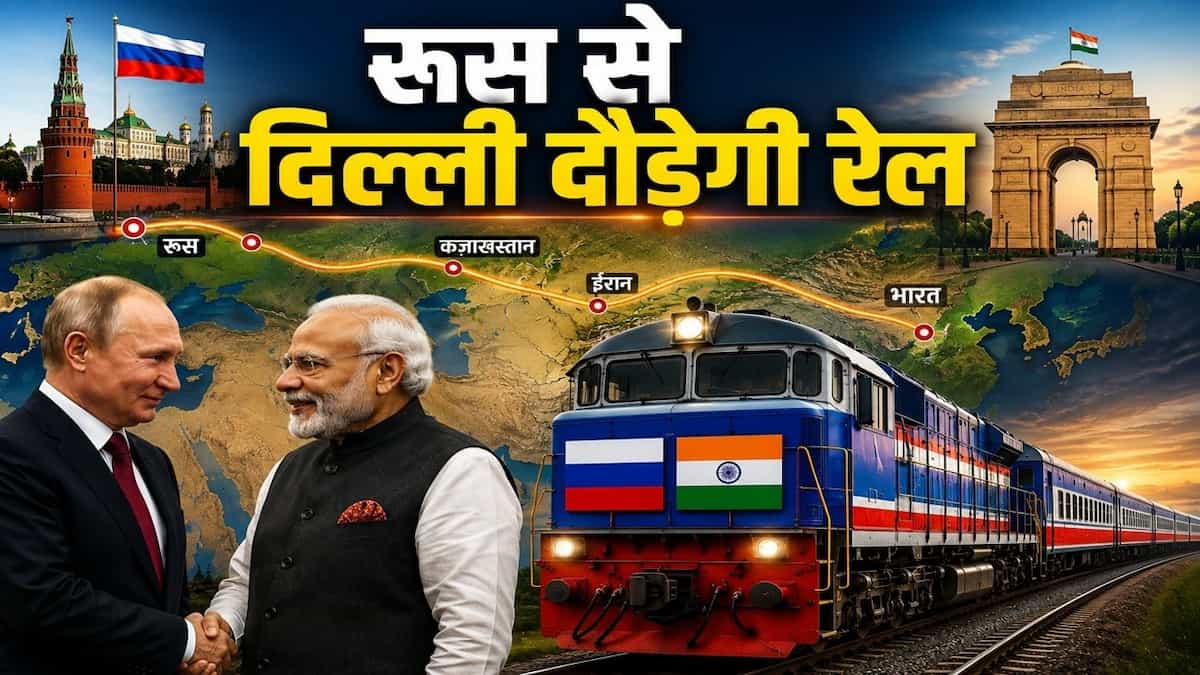
There has been a major earthquake in global politics whose echo is being heard from Washington to New Delhi. Amidst big talks about direct connectivity from Moscow to Delhi through rail network, the Taliban in power in Afghanistan has supported providing a large and secure corridor for India. After Russia considering this ambitious project and Taliban’s stance, the question has started to arise whether the dream of a ground train route between Russia and India will come true in the coming days?
Russia’s new bet: Plan to end dependence on sea routes
Russia has started working on an alternative and safe transit route to overcome the economic sanctions imposed on it around the world and the strategic siege of Western countries. Russia’s leadership believes that a land-based rail network is the best option to reduce dependence on traditional sea routes and sensitive straits (such as the Strait of Hormuz). In this context, a serious discussion is going on on the proposal of laying a rail corridor to transport goods from Russia to South Asia i.e. India via Central Asia, Iran and Afghanistan.
Taliban’s big step: support for India and Russia
The most shocking aspect of this entire incident has been the official statement of the Taliban. Representatives of the Taliban government have clearly said that they fully support this project connecting Moscow and New Delhi. This route passing through Afghanistan is considered to be the shortest and economical trade route. The Taliban believe that this project will not only create large-scale employment opportunities in their country, but will also give it a new identity and economic strength on the global stage.
What are its implications and challenges for India?
If direct connectivity is established between India and Russia through rail route, it will completely change the trade picture. At present, goods coming from Russia to India have to travel long distances by sea routes, which takes a lot of time and expense. This new geopolitical equation can give India direct and easy access to the markets of Central Asia. However, this project also faces major practical challenges in terms of security like terrorism, challenging hilly terrain and diplomatic consensus among regional countries. Despite this, this rumor has definitely created a stir in international diplomacy.