 look news india

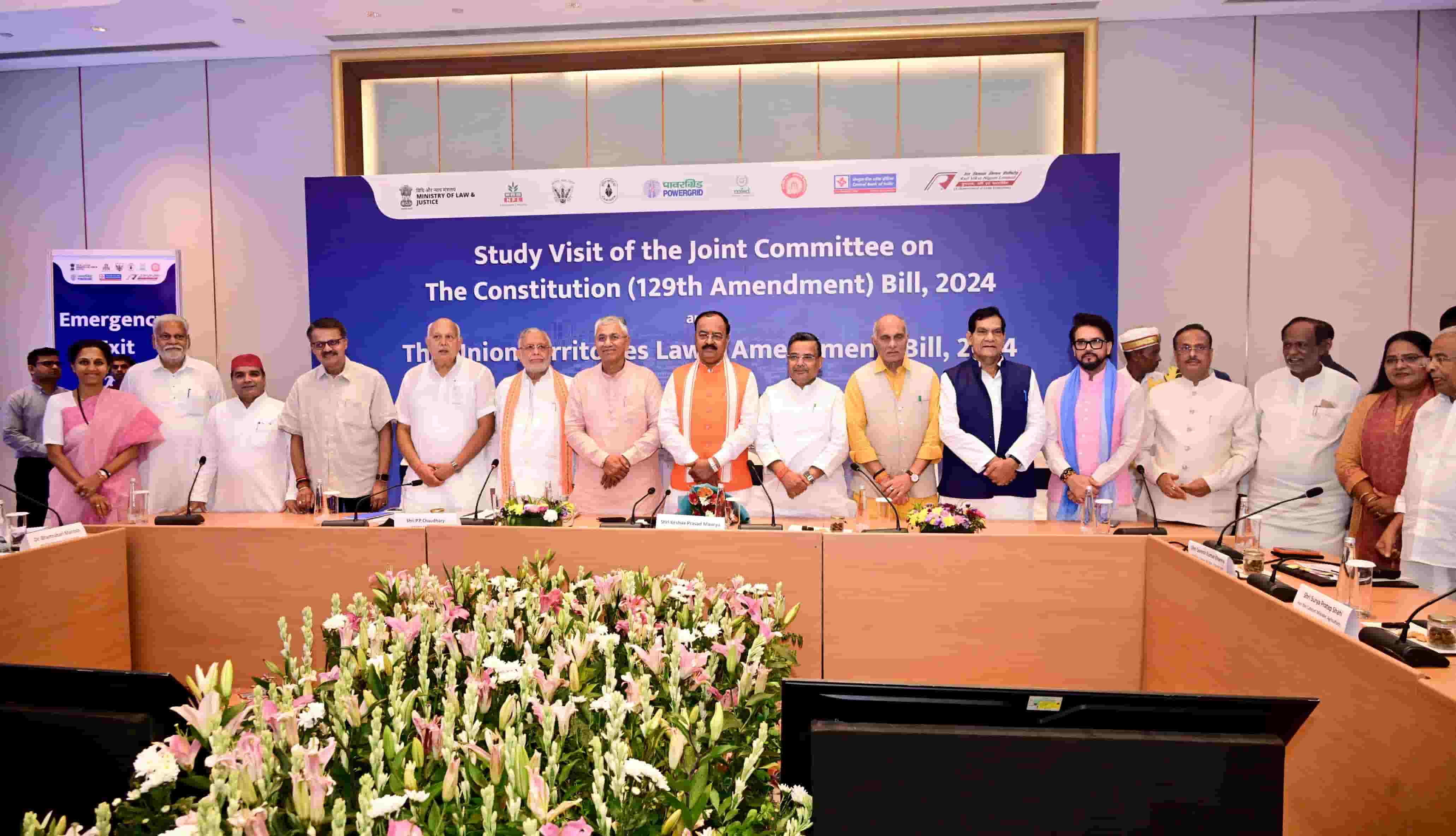
Keshav Prasad Maurya today participated in the discussions organized during the study tour of the Joint Parliamentary Committee constituted in connection with the Constitution (129th Amendment) Bill, 2024 and the Union Territory Laws (Amendment) Bill at Hotel Taj, Gomti Nagar, Lucknow. On this occasion, he fully supported the concept of “One Nation, One Election” before the committee, calling it a historic and visionary step in the direction of national interest, public interest and good governance.
He said that the Constitution (129th Amendment) Bill, 2024 and the Union Territory Laws (Amendment) Bill, 2024 are important constitutional initiatives towards implementing “One Nation, One Election”. Through Article 82A, the constitutional basis for holding simultaneous elections of Lok Sabha and State Assemblies has been prepared. Under this, the tenure of the Lok Sabha and the Legislative Assemblies will be adjusted from the “fixed date” decided by the President and the Election Commission of India will be given the right to conduct general elections simultaneously. If necessary, the Election Commission can also recommend holding elections for a particular assembly at a later date. Under the proposed amendments, a provision has also been made for changes in Articles 83 and 172, so that if the Lok Sabha or any assembly is dissolved prematurely, the newly formed House will function only for the remaining term. This will make it possible to maintain the election cycle again in future.
Shri Maurya repeatedly told about the losses caused by elections – a large number of teachers are put on election duty, due to which the teaching system in schools is affected. Election of police and security forces and other government officers and employees creates disruptions in law and order, delays development works and increases the financial burden on the states.