 look news india

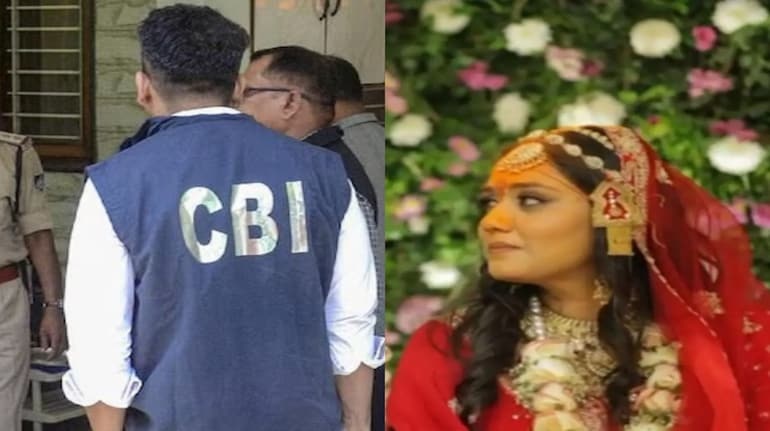
Twisha Sharma Case AIIMS Forensic Report: A very shocking and decisive scientific twist has come in the case of the suspicious death of actress and model Twisha Sharma. The expert medical board of Delhi AIIMS (AIIMS) has submitted its final forensic report to the Central Bureau of Investigation (CBI). This report has overturned many claims of the initial investigation.
The forensic report has strongly confirmed that the microscopic human skin tissue (skin particles) found on the gymnastics belt found at the crime scene, which was used to hang her, exactly matches the injury and ligature marks (marks of strangulation) on Twisha’s neck. As soon as it got hold of this solid scientific evidence, the CBI has intensified its demand for custodial interrogation of the main accused in the case, former judge Giribala Singh and his lawyer son Samarth Singh.
How does forensic science reveal the secrets of closed rooms?
Whenever suspected cases of hanging or strangulation come to light, forensic experts find out the truth mainly based on four scientific steps:
1. Identification of strangulation material (Ligature Material)
The medical board first measures the width, depth and pattern of the marks on the neck of the deceased at a microscopic level. This is then matched with the suspicious object (like a gymnastics belt in this case). In the test, it is seen whether the fibers of the belt, its stitching structure or its metal buckle/ring marks are imprinted on the skin or not.
2. Examination of skin tissue and post-mortem injuries
Histopathological examination is done by taking a small sample of skin from the affected part of the neck. If extravasation of blood or internal swelling is found under the skin, it proves that the injury ‘Antemortem’ That is, the wound was inflicted when the person was alive and his heart was beating. Also, DNA matching of biological samples of sweat and skin cells found on the belt is done.
3. Difference between the marks of hanging and strangulation (Ligature Mark Difference)
Forensic experts differentiate between murder and suicide by the direction of the marks:
-
Suicidal Hanging: In this, the mark made on the neck is usually oblique (V-shaped), which goes upwards towards the lump present in the ear or behind the head. This mark is on the upper part of the neck (above the thyroid cartilage).
-
Homicidal Strangulation: In this, the mark is absolutely horizontal and circular around the entire neck, because the rope is pulled from the back. This mark is often found in the lower part of the neck.
4. Knots and evidence of scuffle
Experts examine the texture of the knot in the noose without untying it. This tells us whether a person could have tied the knot himself or whether it was tied by someone else. If the marks do not match the ratio of body weight and gravity, or more than one different mark is found on the neck, then it clearly indicates a scuffle and struggle.
CBI’s allegations: Torture, forced abortion and conspiracy to destroy evidence
On the basis of this report of AIIMS, CBI has strongly opposed the bail of the accused in the court. The investigating agency has made several serious claims against the accused:
-
Dowry harassment: Since her marriage, Twisha Sharma was being mentally and physically tortured by her in-laws for demanding huge dowry.
-
Forced abortion: The biggest and shocking claim of CBI is that just a week before Twisha’s death, Forced Medical Termination of Pregnancy (Abortion) Was done.
-
Tampering with evidence: The influential accused are accused of deliberately destroying digital evidence, mobile data and important electronic evidence of the crime scene related to the case.
Why is this new evidence of AIIMS being considered very important?
The first post-mortem which was conducted in Bhopal immediately after the death of Twisha Sharma, the victim’s family and the CBI had raised serious questions on the investigation process. In fact, that gymnastics belt was not even presented before the doctors of Bhopal for examination, due to which they could not match the marks of the belt and the neck.
While the in-laws are initially calling it a suicide due to depression, the CBI says that deep wounds have been found on Twisha’s body, especially on her wrist and elbow, which were caused during a struggle just before she was hanged. Now this forensic report of AIIMS has made it clear that there was laxity in the initial investigation and this scientific evidence will make the prosecution’s case very strong in the court.