look news india

In the religion of Islam, the month of Muharram is considered very holy and sacred. This month has a special and historical significance for Muslims all over the world. According to the Islamic Hijri calendar, the month of Muharram is the first month of Islam, which simply means that the Islamic New Year begins from this holy month.
But despite being the beginning of the new year, the first 10 days of Muharram in Islam are not celebrated as celebrations, but as days of extreme sadness, mourning and mourning. This is the same time when centuries ago a historic and hair-raising battle was fought in the plains of ‘Karbala’ desert in Iraq. In this war, Imam Hussain, the beloved grandson of Prophet Mohammad, sacrificed his life along with his family and 72 companions while fighting against the army of the tyrannical ruler Yazid to protect rights and humanity.
When is Ashura in Saudi Arabia and India?
The most important and special days in the entire month of Muharram ‘Ashura’ Is considered. Ashura is said to be on the 10th of the month of Muharram, which is the main day of martyrdom. This year, due to the difference of one day in the time of moon sighting, Ashura is being celebrated today (June 25, 2026) in Saudi Arabia, United Arab Emirates (UAE) and other Gulf countries. At the same time, in the countries of the subcontinent including India, Pakistan and Bangladesh, Ashura tomorrow i.e. June 26, 2026 (Friday) Will be celebrated with full devotion and sombre atmosphere. On this day, large scale Tajiya processions will be taken out across the country.
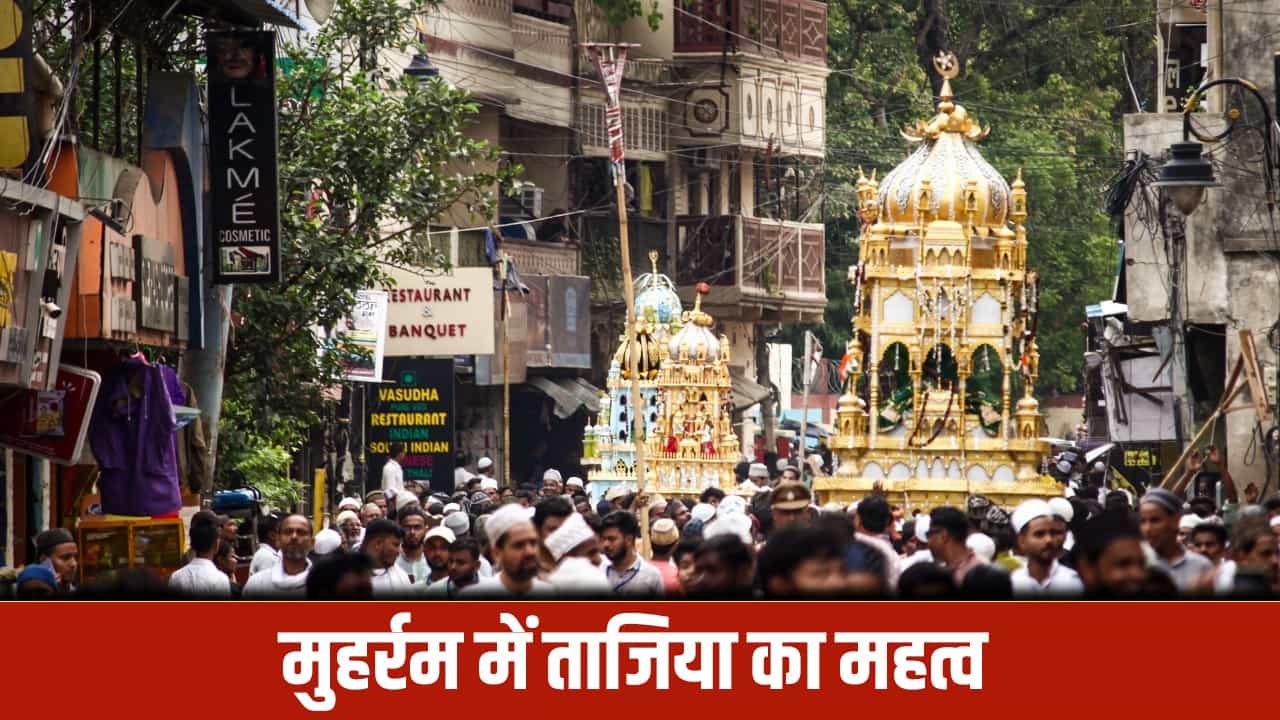
After all, what is ‘Tazia’?
‘Tazia’ is considered to be the most prominent and sacred symbol during the days of mourning and mourning of Muharram. Tajiya is not just a bamboo-paper structure or artefact, but it in itself tells a very long and vibrant story of Islamic history, sacrifice and unwavering faith.
Technically and religiously, Tajiya is considered to be a symbolic model (replica) of the holy tomb (Roza or Dargah) of Hazrat Imam Hussain located in the city of Karbala in Iraq. It is beautifully and intricately crafted by local artisans with the help of bamboo tiles, colorful bright papers, wood, fabric, precious metals and other decorative materials.
Generally, religious people install these Taazis with great respect in their homes, public Imambaras and Azakhanas (mourning places) with the sighting of the moon of Muharram i.e. on the first date or in the initial days. After this, they are looked after for 9 consecutive days and then on the 10th Muharram i.e. on the day of Ashura, they are taken out in a huge procession to the local Karbala or fixed places and buried with full religious rituals.
Why is Tajiya taken out in Muharram? Know the tradition behind it
The tradition of taking out tazia during Muharram in the historical cities of India like Lucknow, Delhi, Hyderabad and Kanpur is centuries old, in which every year lakhs of people from Hindu and Muslim communities come together and set an example of communal unity. Almost all the major rituals performed during Muharram revolve around this Tajiya:
-
Majlis and sentimental memories: As soon as Tajiya is established in Imambaras, daily religious condolence meetings (Majlis) begin there. In these majlis, Ulemas and Maulana Saheb mention the atrocities committed on Imam Hussain and his small children in the fields of Karbala and their thirst, hearing which the eyes of the people present there become moist.
-
Matam, Nauha and Sabeel: During the procession, people beat their chest and make resounding chants of ‘Ya Hussain-Ya Hussain’ and express their faith. During this time, painful Marsias and Nauhes (condolences) are recited in the grief of Imam Hussain. ‘Sabeel’ (free drinks) of water and sherbet are placed at various places for the passers-by and people participating in the procession, which reminds of the people martyred due to hunger and thirst in Karbala.
-
Collective Participation: Condolence programs are organized smoothly at different places for all sections of the society, where women and men wear black clothes with complete simplicity and offer their Nazrana-e-Aqidat (homage) to Imam Hussain.