 look news india

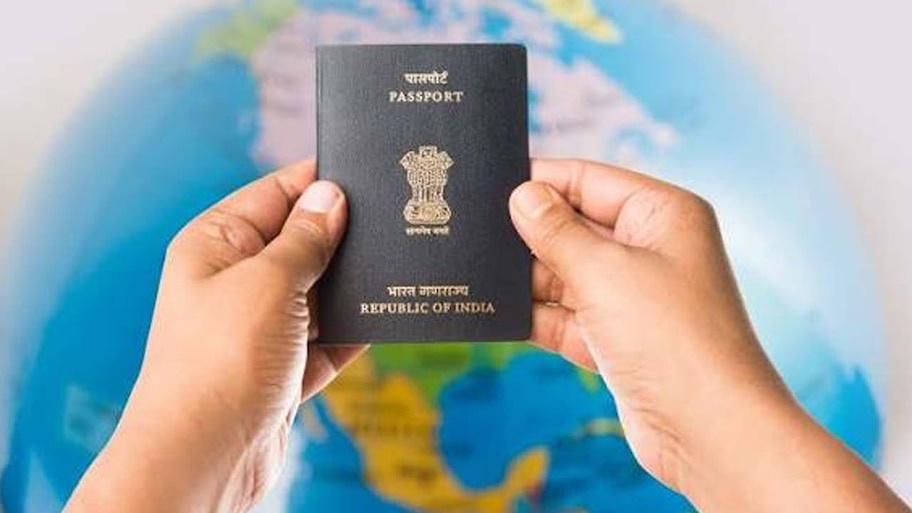
A big legal and constitutional question has arisen amidst the continuous news of illegal Bangladeshi and Rohingya infiltrators coming from different parts of the country. Recently many such cases have come to light where Indian passports have been recovered from these infiltrators. Now the Indian Ministry of External Affairs (MEA) has issued a big and important clarification on this sensitive topic.
The Ministry of External Affairs has made it clear in clear words that Passport cannot be considered as the final or infallible proof of Indian citizenship. According to the Ministry, passport is basically only a ‘travel document’ and on the basis of mere possession of it, no person can stake his final claim on the citizenship of the country. Earlier, the government had also made the same stand clear regarding Aadhaar and Voter ID card. In such a situation, a confusion has arisen in the minds of the general public that if these important documents are not the surest proof of citizenship, then which is the document that legally proves someone to be an ‘Indian’? Let us understand this in detail.
5 legal ways to decide citizenship in India
Citizenship of any person in India is not decided by any card or single document, but under the strict legal provisions of ‘Indian Citizenship Act, 1955’. According to this law, Indian citizenship can be acquired mainly in 5 ways:
-
By Birth
-
Hereditary (By Descent)
-
Registration (By Registration)
-
By Naturalisation
-
By Incorporation of Territory
It is important to understand the rules of this Act a little deeper. According to law, every person born in India before July 1, 1987 was considered a citizen of India by natural birth. But for people born after 1987, the rule was changed and the condition was imposed that at least one of the parents must be an Indian citizen at the time of birth.
Subsequently, the rules were further tightened on 3 December 2004. According to the current rules, at the time of birth of the child, both the parents must be Indian, or one of them must be an Indian citizen and the other must not be an ‘illegal migrant’. The Union Home Ministry has also clarified in Parliament that citizenship is a legal status which is decided case-by-case (depending on the circumstances), there is no universal document list for it.
Why Aadhaar, Voter ID and Passport are not proof of citizenship?
Courts and various ministries have time and again explained why these popular cards are not sufficient to prove citizenship:
-
Aadhaar Card: The Supreme Court and the Bombay High Court have ruled in many of their decisions that Aadhaar card is only a unique identity and proof of residence. This is not a citizenship document, because foreign citizens living legally in India can also get it made and sometimes infiltrators also obtain it through wrong means.
-
Voter ID: The Election Commission of India (ECI) issues it only for eligibility to vote. Although it shows the presence of name in the voter list, in many judicial decisions it has also not been considered as definitive and final proof of citizenship.
-
Passport: According to the Ministry of External Affairs and the Bombay High Court, it is an official document issued for international travels. Especially in the case of people born after 1987, a passport alone is not considered legally sufficient to prove citizenship.
Then what are the real documents that prove citizenship in India?
If ever a legal doubt arises over a person’s citizenship, the following chain of documents or specific certificates are required to prove it:
-
Citizenship Certificate: It is the most irrefutable and supreme document of citizenship in India. It is issued directly by the Union Home Ministry (MHA) of the country. It is usually granted to people of foreign origin who apply for citizenship of India by registration or naturalization and fulfill all the conditions.
-
Birth Certificate: It is considered a very strong basis for proving citizenship, provided it contains correct and authentic details of the parents. People born after 1987 may also have to provide evidence that their parents are Indians.
-
Domicile Certificate: This certificate issued by the respective state governments certifies that the person is a permanent resident of that state. In times of crisis, it can also be presented as supporting evidence of citizenship, although courts may scrutinize it more closely in case of a legal dispute.
Example of ‘Legacy Documents’ and Assam NRC
In India, officials take the help of ‘naturalization’ and old ‘legacy documents’ (documents showing continuity) to check the authenticity of citizenship. Under this, a whole series of old documents of your life are examined, such as:
-
Old school and college certificates (Matriculation Certificate)
-
Ancestral Land Records or Land Records
-
Decades old ration cards and government records
-
Citizenship documents of parents or grandparents
You can understand this entire process with the example of National Citizen Register (NRC) implemented in Assam. There people were asked for legacy documents before 1971, so that it could be proved that their ancestors were already living in India before that time. Although nationwide NRC is not implemented in the rest of the country, similar historical and legal documents can be sought in case of any confusion in future.
Do common Indian citizens need to worry?
After this statement of the Ministry of External Affairs, the common and genuine citizens of the country do not need to panic or get worried at all. About 99.99 percent of the people of the country are natural Indians and have been living here for generations.
Even if they do not have a separate ‘citizenship card’, they have an unbroken chain of birth certificate, school certificate, parents’ papers, land records and government documents, which automatically proves their Indianness. However, it is wise that every citizen should always keep his and his parents’ old and important documents safe and secure, so that there is no hindrance in any government or legal work in future.