 look news india

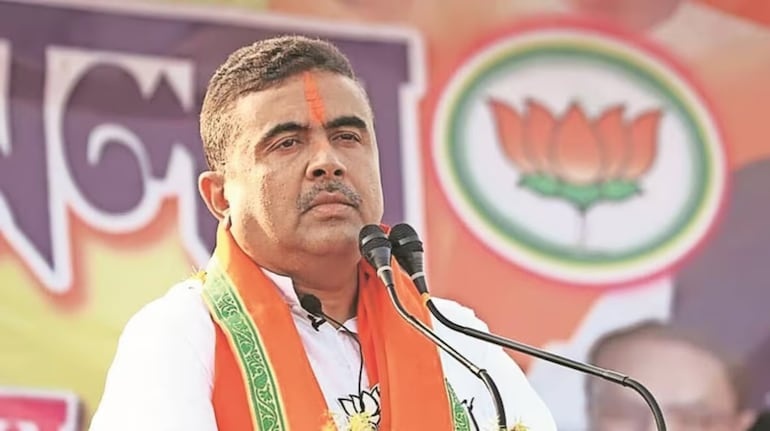
After the change of government in West Bengal, a new and big political controversy has arisen regarding the food served to children in schools. The rumor of removing eggs from the menu of ‘PM Poshan’ i.e. mid-day meal scheme in government schools of the state has heated up the political atmosphere.
This entire matter is being linked to the policy decisions of the global religious and social organization ISKCON and the newly formed BJP government of the state. The main opposition party Trinamool Congress (TMC) has opened a front against the government on this issue. TMC alleges that contrary to the culture of Bengal, attempts are being made to forcibly impose vegetarianism on children, which will adversely affect their daily nutrition and health. Let us understand in detail what is the root of this entire controversy and what are the arguments of different parties on this.
Real reason for controversy: Proposal to include ISKCON in the state government budget
This entire controversy started after the new budget presented by the West Bengal government. While presenting the state budget in the Assembly, Finance Minister Swapan Dasgupta had made a big announcement. He had told that the state government is hoping to take the help of ISKCON to prepare food under the mid-day meal scheme in government schools of Kolkata Municipal Corporation area and other districts, improve its quality and make the distribution system transparent.
Soon after this announcement, the claim started going viral on social media and political circles that since ISKCON is a purely vegetarian organization, eggs will now be completely removed from the school menu. Along with this, discussion also started that in the new menu prepared by ISKCON, to provide protein to the children, instead of eggs, completely vegetarian options from plants like paneer and soybean will be included.
TMC MLA Kunal Ghosh raised questions, said- “Children like eggs”
Senior Trinamool Congress leader and MLA Kunal Ghosh has expressed deep concern over these initial signals from the government. While talking to news agency ANI, he demanded the government to reconsider its decision.
Kunal Ghosh said, “ISKCON is a highly respected and sacred religious institution across the world, there is no doubt about it. But the practical problem is that in government schools, calling poor children to school regularly and feeding them nutritious food is a big challenge. Egg is something which school children eat with great relish and it also attracts them to come to school. It is also necessary for their better physical development. Since ISKCON has its own religious rules, they will completely stay away from onion-garlic and eggs. The children’s menu will be changed from non-vegetarian to completely vegetarian. We want the government to think again keeping in mind the nutrition of children.
Derek O’Brien’s sharp attack: “BJP is imposing vegetarianism on Bengal”
Trinamool Congress joint secretary and Rajya Sabha MP Derek O’Brien has directly targeted the thought process of the Bharatiya Janata Party on this issue. He alleged that the government was depriving children of their essential nutritional rights.
In his scathing post on social media platform ‘X’, O’Brien linked this controversy to the debates over food during the election campaign and wrote, “After the hypocrisy and political drama of ‘eating fish’ during the election campaign, the real face of Gujarat Gymkhana has finally been revealed. The new BJP government in Bengal has started working on its agenda as soon as it came to power. You may throw as many eggs at political opponents as you can, but do not deprive innocent children of proper nutrition by removing eggs from the mid-day meal menu. Vegetarianism is being forcibly imposed in Bengal and the people of Bengal completely reject this dictatorship.”
ISKCON Kolkata’s big clarification on social media claims
Amidst this increasing political tension and the alleged food chart going viral on the internet, ISKCON Kolkata Vice President Radharaman Das has clarified the official position. He has termed the alleged menu circulating on social media as completely fake and misleading.
Radharaman Das shared the post on ‘X’ and said, “It has come to my notice that some mischievous and political elements are sharing a proposed menu card for mid-day meal in Kolkata schools. I would like to clarify with full responsibility that no such list of food has been finalized yet nor has this alleged list been issued by us. We will announce the same as and when the official menu is finalized after consultation with the government. Please refrain from sharing such false and misleading information without verification.”
What are the rules of the Central Government’s ‘PM POSHAN’ (Mid-day Meal) scheme?
Under the ‘Pradhan Mantri Poshan Shakti Nirman’ (PM POSHAN) scheme under the Union Education Ministry, hot and cooked midday meals are provided to crores of children from Kindergarten to classes 1 to 8 in government and government-aided schools across the country. Following are the main legal and administrative rules of this scheme:
-
Complete freedom to decide the local menu: Under the guiding principles of the Central Government, all States and Union Territories have been given the statutory autonomy to decide their own daily menus as per their local geographical conditions, food culture and preferences while meeting the prescribed calorie and nutrition standards. This is the reason why in some states eggs and fruits are given in the mid-day meal, while in some states completely vegetarian food is provided.
-
Strict standards of quality and hygiene: The central government has made strict guidelines regarding food safety. This includes using only Agmark or FSSAI certified food items, periodic training of cooks and mandatory tasting and recording of food by School Management Committee (SMC) members and teachers at least half an hour before it is served to children.
-
Main responsibilities of implementation: The final and complete responsibility for smoothly implementing this national scheme at the grassroots level, properly allocating the budget and providing clean and nutritious food to children lies with the respective state governments and union territory administrations.