look news india

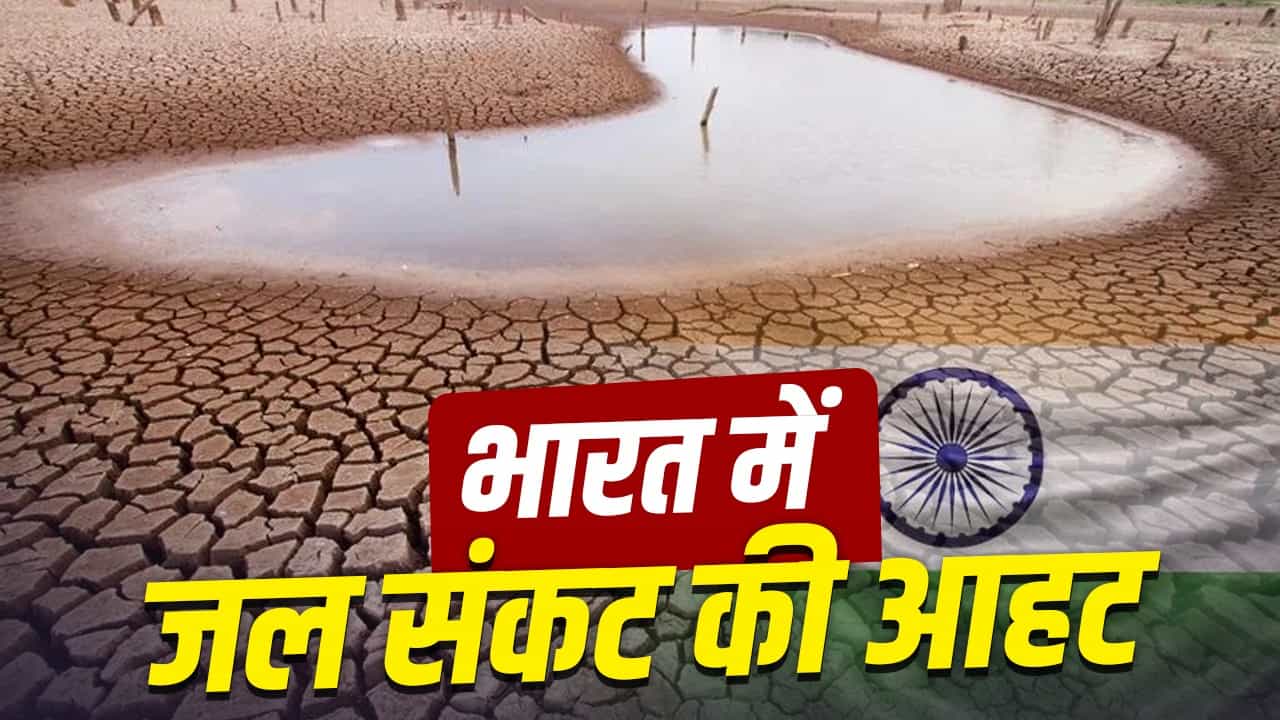
Global credit rating agency Moody’s Ratings has issued a very serious and scary warning regarding the rapidly deepening water crisis in India. Moody’s has described India’s current water management system as highly fragmented and low-resilience. The global agency says that the process of fair distribution of water among different sectors (agriculture, domestic and industry) in India is very slow, which is inviting this crisis more rapidly. Moreover, heavy subsidies on water and electricity in select areas continue to put financial pressure on the exchequer.
According to the report, about 80 percent of the total freshwater available in India is used in the agriculture sector alone. Since India’s water management falls under the federal structure, the responsibility for irrigation, drinking water supply and local water resources rests primarily with the state governments. Due to each state having its own separate water policy, there is no uniform and effective balance of water resources in the entire country.
After all, why are these 3 major reasons for water crisis arising in India?
Moody’s ratings and analysis of ground data reveal the three biggest causes of water scarcity in India:
-
Major flaws in distribution system and policies: Different priorities of different states prevent effective use of water resources. The situation is getting worse in areas where demand for water is high and availability is low. The redistribution of water from agriculture to domestic use is very slow.
-
Growing pressure from digital economy and AI industries: The digital economy in India is expanding very rapidly. Big data centres, cloud computing and Artificial Intelligence (AI) based industries are coming up in the country. For the cooling process, the servers of these high-tech centers require millions of liters of fresh water every day, which is putting additional burden on the limited water resources.
-
Climate change and indiscriminate exploitation of groundwater: Severe drought, flash floods, irregular monsoon, destruction of pipeline networks and excessive extraction of groundwater are directly leading to this crisis. In many states of the country the groundwater level has reached the dark zone.
Only one month of water left in the country’s financial capital Mumbai
The most dreadful and direct impact of the water crisis is beginning to be seen on the biggest metropolitan cities of the country. The country’s financial capital Mumbai is currently on the verge of craving every drop of water. The combined water stock of seven major lakes – Tansa, Vihar, Tulsi, Bhatsa, Upper Vaitarna, Modak Sagar and Middle Vaitarna – supplying water to Mumbai metropolis has reduced to just 9.33 percent. At the same time last year, there was 12.27 percent water in these reservoirs. According to BMC, now only one month’s stock is left in the lakes to quench Mumbai’s thirst, due to which there is a danger of huge reduction before the entry of monsoon.
People yearning for every drop in the country’s capital Delhi
On the other hand, there is a constant hue and cry over the availability of water in the country’s capital Delhi. In many VIP and residential areas of Delhi, there has been no tap water for the last 15 to 20 days and people are completely dependent on tankers. At present, a total of 948 to 950 MGD (Million Gallons per Day) water is being produced in Delhi by including all the water treatment plants, renewal wells and tube wells, which is about 50 MGD less than the demand on normal days. This huge gap between supply and demand is making Delhi yearn for every drop.
Relief for now in Chennai, but future challenge is big
Talking about Chennai, the major metropolis of South India, the main reservoirs here currently have safe drinking water for about 288 days (about 9-10 months), which can meet the needs of the city even if the monsoon is delayed. But it is a matter of concern that even in Chennai the groundwater level is falling rapidly. Also, Chennai is becoming a big hub of IT and digital economy, which will increase water consumption in industries manifold. According to Moody’s report, if Chennai does not improve the water distribution system now, then in the coming time, a situation like Mumbai and Delhi may be seen here.
Moody’s has warned in clear words that proper management of water resources has become very important not only for the environment but also for the economic and financial stability of India. Amid growing population and industrial expansion, India will soon have to take long-term and drastic measures.