 look news india

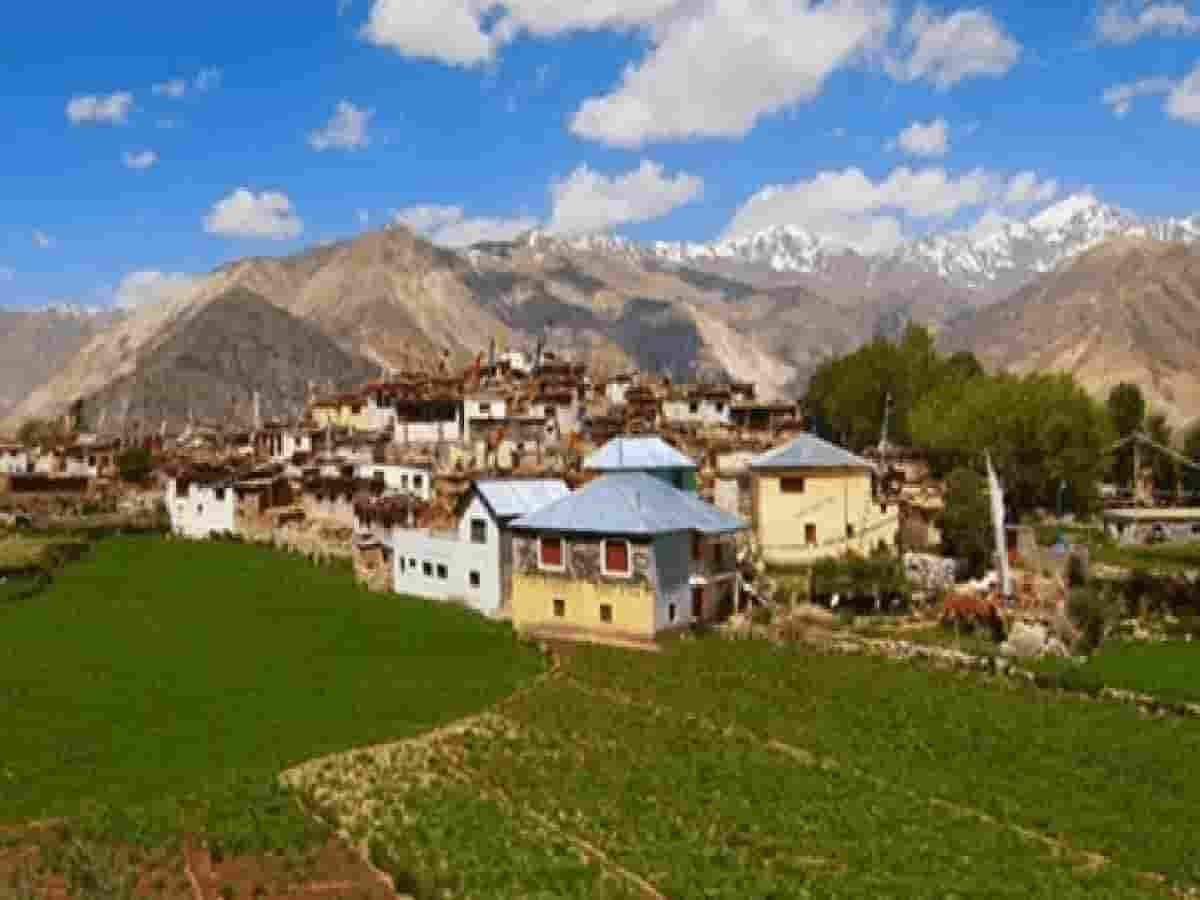
The Central Government has taken a very revolutionary and big decision towards changing the face of rural areas of the country and connecting them with modern technology. Now, on the lines of the cities of the country, the streets and roads within the villages will also have a unique identity of their own. The Union Ministry of Panchayati Raj has prepared an ambitious proposal to implement a unique code, digital identity and standardized classification system for all internal roads within every village in the country. This new and modern system has been named ‘Intra-Village Road Coding and Grading System’, under which systematic naming, coding and digital mapping of all internal roads in rural India will be done.
This special draft prepared by the Ministry will soon be made public for suggestions and feedback from the general public of the country. With this step of the government, access to logistics, e-commerce and emergency services will become very easy in the villages of the country.
Ambulance and postal services will get freedom from wandering, village roads will be divided into three categories
According to government officials, the work of connecting the remote villages of the country with the main roads has been done on a large scale through the Pradhan Mantri Gram Sadak Yojana (PMGSY), but till date no systematic documentation of the roads and streets inside the villages has been done. Due to this, many times emergency ambulance services, postal delivery, online delivery companies, government agencies and navigation platforms like Google Maps faced huge difficulties in finding the right route inside the villages. To eliminate this problem from its roots, the government is now going to divide the village roads into three categories like main road, cross road and link road on the basis of their width and connectivity.
The village will be equipped with Digipin and village map, QR code on the signboard will open the road map.
Under this new coding system, each road will be given a unique ‘alpha-numeric code’ (a mixture of letters and numbers) based on its exact geographical location from state to village level. This high-tech proposal also incorporates modern ‘DIGIPIN’ technology developed by the Indian Postal Department and ‘Gram Map’, the geospatial planning platform of the Ministry of Panchayati Raj.
A complete digital record of each road will be created by linking it with a unique geospatial identification number. The most important thing is that the signboards installed at village intersections will have special QR codes, which by scanning with mobile, any citizen will be able to immediately get complete information about the total length of that road, construction status, its maintenance history and live navigation. The responsibility of this entire process has been directly entrusted to the Gram Panchayats.
More than 26 thousand kilometers of rural roads will be built in the current financial year 2026-27, huge budget released
To make the country’s rural road network more strong and all-weather, the Central Government has taken another big leap in the current financial year 2026-27. The government has set a huge target of constructing a total of 26,474 km of roads this year under the Pradhan Mantri Gram Sadak Yojana and other rural connectivity projects. To implement this huge action plan, the government has allocated a huge budget of ₹18,907 crore. Its main objective is to connect those remote and leftist extremism affected areas of the country with the mainstream, which till now were completely deprived of the facility of paved roads.
Rural Development Department Secretary Rohit Kansal held a high level review meeting with the states.
The Ministry of Rural Development seems to be very serious in achieving this huge target within the time limit and ensuring the quality of roads. In this connection, a very important high-level meeting was organized in New Delhi to review the progress of Pradhan Mantri Gram Sadak Yojana (PMGSY) and Special Road Connectivity Project of Militancy Affected Areas (RCPLWEA).
This meeting was presided over by Rohit Kansal, Secretary, Rural Development Department. In this strategic meeting, senior administrative officials of more than a dozen states including Andhra Pradesh, Arunachal Pradesh, Bihar, Chhattisgarh, Jammu and Kashmir, Jharkhand, Madhya Pradesh, Maharashtra, Manipur, Meghalaya, Rajasthan and Telangana participated and prepared a roadmap to accelerate the work at the field level.