 look news india

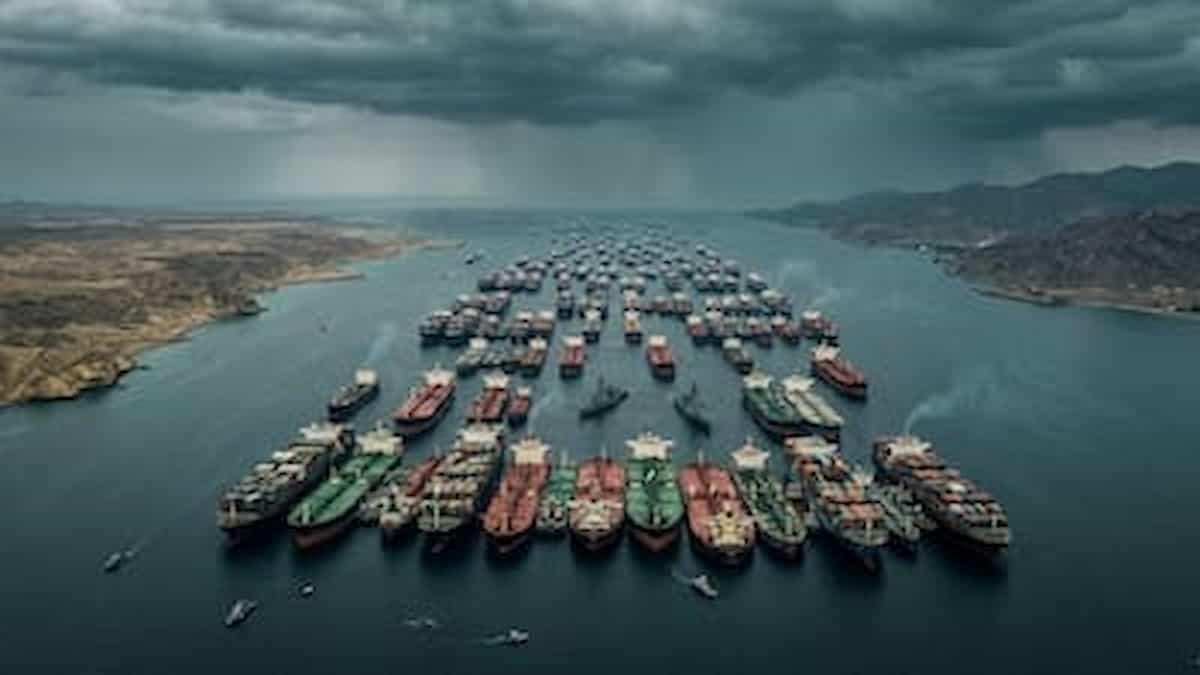
A very shocking news is emerging from the field of global trade and maritime transport. One of the world’s largest shipping and logistics companies has distanced itself from the Strait of Hormuz, one of the most important waterways for international trade. The most surprising thing is that after geopolitical tension, this sea route has been declared safe and open, yet this giant global company has flatly refused to take its ships from there. This decision has created a big concern and debate among the international market, global supply chain and crude oil business giants as to what is the fear there even after the opening of the road.
Why is the Strait of Hormuz very special for the world?
It is very important to understand why this sea route is so important for the whole world. The Strait of Hormuz, located between Oman and Iran, is the world’s busiest and strategically sensitive oil route. Nearly one-fifth (more than 20 percent) of the total seaborne crude oil trade in the world passes through this narrow waterway. Gulf countries like Saudi Arabia, United Arab Emirates (UAE), Kuwait, Iraq and Qatar send most of their crude oil and liquefied natural gas (LNG) to the markets of Asia, Europe and America through this route. In such a situation, any movement in this route directly affects global fuel prices.
Why are shipping companies scared even after the route is opened?
According to global shipping experts, the route may appear to be officially open, but the security scenario behind the scenes is still very serious. Drone attacks on ships in the region in recent months, attempted piracy and rising military tensions between regional countries have created deep fears in the minds of shipping companies. The world’s largest shipping company believes that there may still be a direct threat to the lives of their ships and crew members on this route. In case of any untoward incident, companies will not only have to suffer loss of ships and cargo worth billions of dollars, but their insurance premium rates will also skyrocket.
Compulsion to adopt long route and increasing expenses
After bypassing the Hormuz route, this global company and many other operators now have to resort to the longer and alternative route through Africa’s ‘Cape of Good Hope’. Choosing this alternative route simply means that ships have to cover additional distance of thousands of kilometers to reach their destination. Due to this, the journey of ships has become longer by 10 to 15 days, due to which a huge increase in fuel consumption and operational cost is being recorded. This increasing expenditure will have a direct impact on the prices of imported-exported goods across the world in the coming time, which may increase global inflation.
What will be the impact on Indian market and crude oil supply?
India is heavily dependent on crude oil from the Gulf countries for its energy needs and most of our oil imports come through the Strait of Hormuz. Although Indian refining companies and the government are keeping a close eye on the situation, the boycott of this route by the world’s largest shipping company is a warning sign for India as well. If other big companies also stay away from this route, then the freight rates of crude oil may become expensive for India, due to which there may be fluctuations in the prices of petrol, diesel and other essential commodities at the domestic level.