look news india

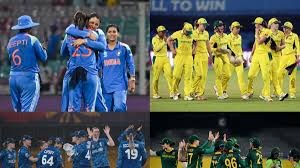
News India Live, Digital Desk: Recently, when the Indian women’s team won its first Cricket World Cup 2025 under the captaincy of Harmanpreet Kaur, there was an atmosphere of celebration in the entire country. Our daughters had achieved what seemed like a dream. This historic win has once again fueled a debate that has been going on for years – when there is no lack of performance, why such a huge difference in earnings?
In the year 2022, the Board of Control for Cricket in India (BCCI) had taken a historic decision. He announced that from now on female and male cricketers will get equal match fees. That is, whether Virat Kohli or Smriti Mandhana plays, both will get Rs 15 lakh for a Test match, Rs 6 lakh for ODI and Rs 3 lakh for T20. This was a great step towards gender equality, but it is not the whole picture. The real and shocking difference is hidden in the annual contracts of BCCI.
Where is the real ‘game’?
The match fees have become equal, but the major part of the players’ real earnings comes from their annual retainership fees i.e. central contracts. This is where the huge difference in earnings of male and female players is clearly visible.
Categories of annual contracts for male cricketers:
- Grade A+: Rs 7 crore (like- Rohit Sharma, Virat Kohli)
- Grade A: Rs 5 crore
- Grade B: Rs 3 crore
- Grade C: 1 crore rupees
Categories of annual contracts for women cricketers:
- Grade A: Rs 50 lakh (eg Harmanpreet Kaur, Smriti Mandhana)
- Grade B: 30 lakh rupees
- Grade C: 10 lakh rupees
when statistics speak
This game of numbers tells the whole story:
- The lowest grade C player of the men’s team gets Rs 1 crore annually, which is exactly double the top grade (A) player of the women’s team (Rs 50 lakh).
- The earning of the top grade (A+) player of the men’s team (Rs 7 crore) is 14 times more than that of the top grade (A+) player of the women’s team (Rs 50 lakh).
- The surprising thing is that there is no grade like ‘A+’ in women’s cricket.
This gap clearly shows that even though the fees are equal for every run and wicket taken on the field, there is a huge difference in the remuneration received for dedicating one’s life to the game throughout the year. After a historic victory like the World Cup, the question becomes even more relevant that when will our world-winning team get the financial respect it deserves? BCCI had definitely made a good start by paying equal match fees, but real equality will come only when this gap in the central contract is also eliminated.