look news india

Shimla:
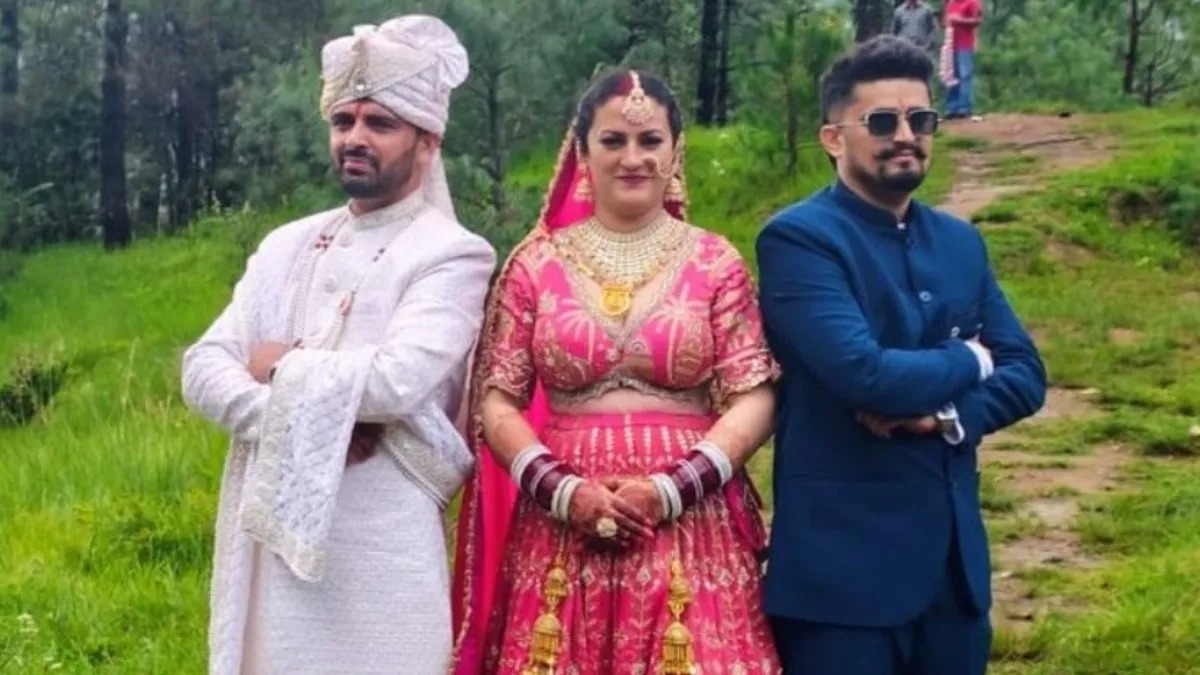
In Shillai village of Himachal Pradesh, two brothers of the Hatti tribe, while presenting a rare example of the centuries -old tradition, married the same woman, which hundreds of people gathered to see. The traditional customs of the tribe were followed in this marriage held in the Trans-Giri region of Sirmaur district and it started from July 12 and lasted for three days.
Bride Sunita Chauhan and her husband Pradeep and Kapil Negi said that they took this decision voluntarily and without any pressure. The ceremony was very enthusiastic, which performed local folk songs and traditional dances, showing the cultural prosperity of the Hatti community. Videos of this unique wedding have gone viral on social media, which has attracted widespread attention to some Himalayan tribal communities.
The revenue laws of Himachal Pradesh recognize this tradition and name it “pairdara”. In the last six years in Badhana village of Trans-Giri, there have been five such marriages.
We are proud of our tradition
Sunita, originally from the village of Kunhat, said that she was fully aware of the multiplicity system of Hatti tribe and she voluntarily married without any pressure. He expressed respect for this unique bond between the three.
Pradeep, a resident of Shillai village, is working in the government department, while his younger brother Kapil is currently working abroad.
Pradeep said, “We publicly followed this tradition because we are proud of it and it was a joint decision.”
Kapil said that he may live abroad, but through this marriage, “We are ensuring support, stability and love for our wife as a joint family.”
He said, “We have always believed in transparency.”
Why is polymorphic practice adopted in Himachal Pradesh?
The polynomial is a form of marriage in which a woman has two or more husbands simultaneously. The word Greek words “poly” (which means many) and “enr” (meaning male). This practice has been historically seen in some cultures and regions, including Tibet, Nepal and parts of India, especially in some communities in Himachal Pradesh and Uttarakhand.
A close tribal group residing on the Himachal Pradesh-Uttarakhand border, Hatti community, was officially given the status of Scheduled Tribes (ST). Historically, polynomial, in which a woman marries many husbands, often brothers, was a common practice in the Hatti community. However, with increasing literacy in women and economic development of the region, there has been a significant decrease in the frequency of such marriages.
The elders of the village said that such marriages are done in secret and accepted by the society, but such cases are less.
According to sociologists and cultural experts, this practice was traditionally based on the desire to prevent the sharing of ancestral land and to keep family property intact. Despite social changes, the issue of women’s succession rights in these communities remains a major concern.
About 450 villages of Trans Giri area of Sirmaur district live in about three lakh people from Hatti community and some villages are still popular.
It was also prevalent in the tribal region of Uttarakhand Jaunsar Babur and Kinnaur, the tribal district of Himachal Pradesh.
A family was invented to save agriculture
Kundan Singh Shastri, general secretary of the Central Hatti Committee, a major organization of the Hatti community, said that this tradition was started thousands of years ago to protect the family’s agricultural land from more sharing. He said, “The second reason is that two or more brothers born to different mothers are married to the same bride and promoted brotherhood and mutual understanding in the joint family.”
The third reason is a sense of security, “If your family is large, more male, then you are more safe in tribal society”, he said that it also helps in management of agricultural land scattered in far-flung, difficult, hilly areas, which requires a long-term family for care and farming.
Shastri further said that due to these requirements of tribal families, polynomial practice has been in circulation for thousands of years, although these traditions are gradually ending.
In this unique tribal tradition of marriage known as “Jazda”, the bride comes with the bride’s procession and the groom’s house is played at the groom’s house.
Pandit sprinkled holy water on the bride and groom while chanting in the local language and finally feeds them jaggery and blesses them that their total gods bring sweetness to their marital life.