 look news india

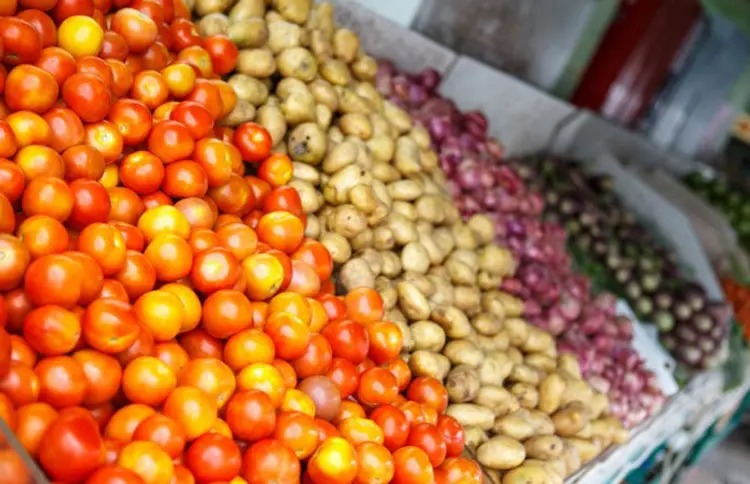
RBI report: One-third of the selling price of tomatoes, onions and potatoes, which are most commonly used in Indian kitchens, is not available to farmers compared to the cultivation of sweet potatoes and potatoes. Wholesalers and retailers are earning a major share of this, according to the working paper series prepared by the Reserve Bank. Farmers share 33 percent of the retail price of tomato, 36 percent of onion and 37 percent of potato.
Sources knowledgeable about the agricultural produce market say that APMC traders create a cartel and do not allow farmers to get higher prices for good agricultural produce than the fixed price. In the old days, they used to set prices by running their fingers behind a white handkerchief, which was a fraud. Thus, a hardworking farmer does not get proper compensation even after six months of hard work. On the other hand, APMC traders make a lot of money in six hours.
It is necessary to increase the capacity of food processing
According to the Reserve Bank report, marketing reforms are necessary to improve the value chain of agricultural produce. It is also necessary to make the storage system of agricultural produce more complex and increase the capacity of food processing. Apart from this, it is also important to increase the yield through research and development and it is equally important to develop varieties that are not affected by climate change. It is equally important to bring new technology for farming. Moreover, out of every rupee spent by the end user of the produce, farmers should get a larger share than what they are getting now.
Climate change affects crops
Tomato, onion and potato are most commonly produced and consumed in India. Since its crop season is short, its price fluctuates greatly. Tomato, potato and onion cannot be preserved for long. It is cultivated more in some areas. Besides, climate change also has a great impact on it. The total shared weight of these three items in the Consumer Price Index is only 4.8 percent. However, when inflation is mentioned, its price is significantly affected.
Climate change also affects its supply. Drought or flood also affects its supply. Similarly, its supply also depends on what minimum support price is declared. Its supply also depends on the price of chemical fertilizers. Fluctuations in per capita income also affect its sales. Due to this, its demand increases due to increase in per capita monthly expenditure. Also, if monthly per capita expenditure increases, it also impacts demand. The price level of its substitute also affects its demand.
During the harvest season, farmers throw away their produce or sell it at low prices. They are seen selling their agricultural produce at any price when the market price falls below the cost of production of their crop. On the other hand, during the off-season of vegetables, retailers charge higher prices to consumers. The gap between the price received by farmers and the people cultivating it is continuously increasing.
Stop exploiting farmers before the government makes noise about doubling farmers' income.
For the government which boasts of doubling the income of farmers, it is necessary to stop the exploitation of farmers by the Agricultural Produce Market Committee and other businessmen. When farmers take their goods to the APMC, a group of traders already decide the price. They always work in cartels. Grain and vegetables of very few farmers are purchased at high prices.
Everyone else tries to grab the produce of the farmers by buying water. For that a cartel of traders is formed. These traders also have representation in the board of APMC. Due to their collusion, the farmer is not able to get a fair price. Despite not getting a fair price, the farmer has to sell the goods at whatever price he gets to avoid the cost of hiring a vehicle to transport the goods. Unless the government breaks the dominance of traders in purchasing agricultural produce, farmers will not get fair prices.