 look news india

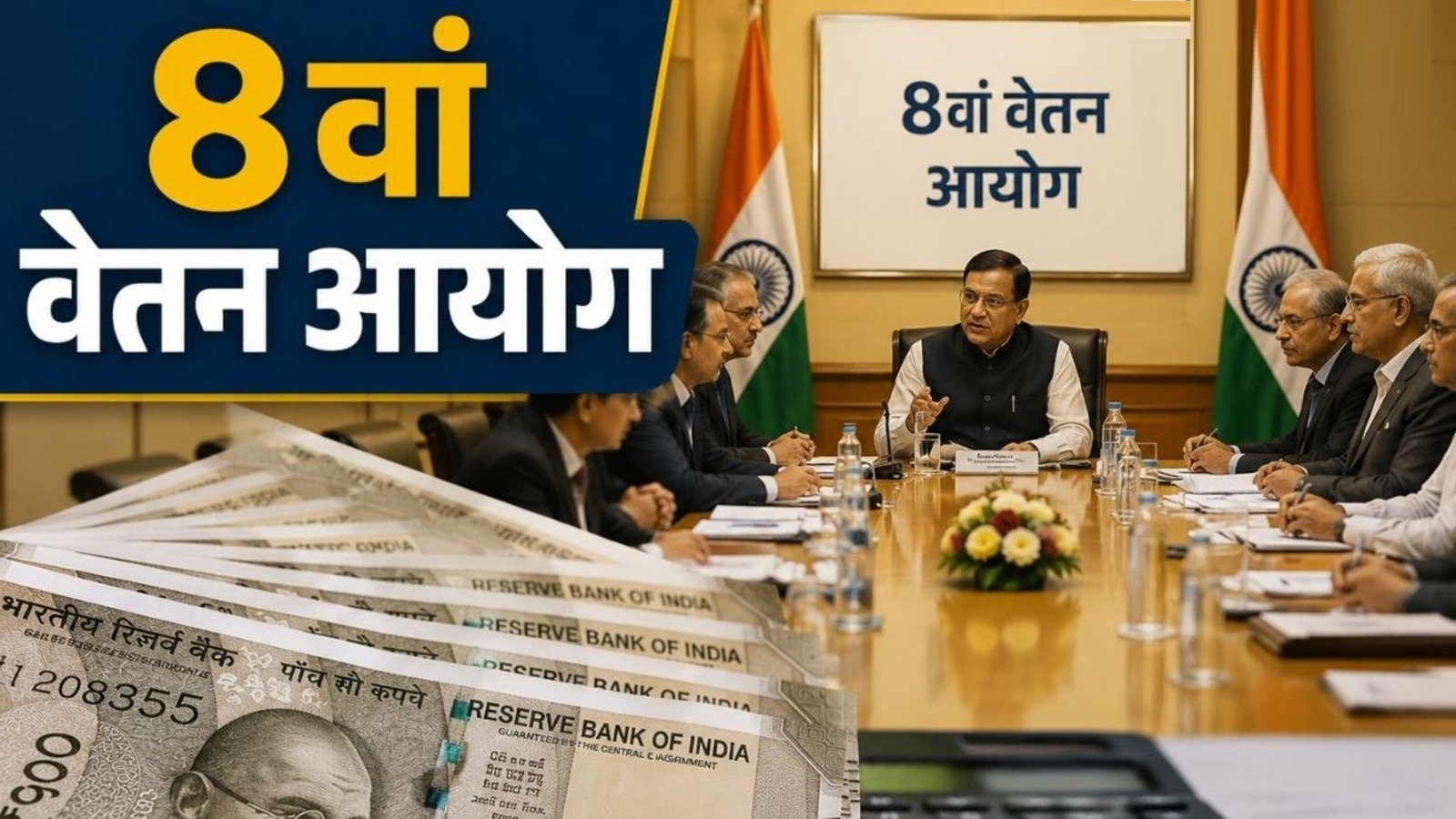
The movement for the 8th Pay Commission to revise the salary, allowances and pension structure of more than 49 lakh central government employees and 68 lakh pensioners across the country has now intensified. After the completion of the 10-year tenure of the 7th Central Pay Commission (7th CPC), the impatience regarding the recommendations of the new pay scale has increased in government departments and employee unions. In view of the rising inflationary pressure, increase in housing and transportation costs and the need for a revised pay matrix, the Commission is continuously consulting with various stakeholders. 5 major updates have emerged regarding the functioning and possible financial impact of the Pay Commission, which are important for every government employee and retired employee to know.
The series of administrative preparations and consultation meetings of the 8th Pay Commission has gained momentum. As per the official activities of the Commission, important meetings have been recently completed with employee organizations, various departments and service unions in major industrial and administrative cities of the country—Chandigarh, Jaipur, Bengaluru and Mumbai. The main objective of these meetings is to obtain direct views on the working conditions of the employees, actual inflation rates and pay band discrepancies. The Commission has also amended the guidelines related to the selection of experts and consultants, so that the scientific analysis of the economic model and financial liabilities can be completed in time.
In any pay commission, the main axis for deciding the in-hand salary and basic pay of the employees is ‘Fitment Factor’. In the 7th Pay Commission it was fixed at 2.57. For the 8th Pay Commission, economists and financial analysts estimate that this factor can be determined between 1.92 to 2.86, while a strong proposal has been made by the employee organizations (NC-JCM and other trade unions) to keep it more than 3.0. If the government finally accepts the fitment factor of around 2.28 or even 2.57, then there will be a direct and tangible increase in the existing basic salary.
At present, under the 7th Pay Commission, the minimum basic salary of a Level-1 central employee is fixed at Rs 18,000 per month. As soon as the new fitment factor is implemented, it will see a historic leap. If the minimum fitment factor of 1.92 is also approved, the basic pay will directly increase from Rs 18,000 to ₹ 34,560. Whereas if the Commission and the government take a decision in the range of 2.50 to 2.86, then the minimum basic salary can reach ₹ 45,000 to ₹ 51,480 per month. With this increase in basic pay, Dearness Allowance (DA), House Rent Allowance (HRA) and Traveling Allowance (TA) will also automatically increase in the same proportion.
The impact of the 8th Pay Commission is not limited to the existing employees only, but it will have a deep impact on the standard of living of millions of pensioners of the country. Under the 7th Pay Commission, the minimum pension was fixed at Rs 9,000 per month. Pensioners’ associations have demanded before the Commission that in view of rising medical costs and life expectancy, the minimum pension should be increased to the range of ₹20,000 to ₹25,000. Along with this, important proposals like revising Dearness Relief (DR) on quarterly basis instead of half yearly and reducing the age limit of additional pension slab are also included in the agenda of the Commission.
The Pay Commission has been given sufficient time to prepare its detailed recommendations and submit it to the Central Government. The final report of the Commission will be submitted to the Finance Ministry after balancing the economic growth rate, fiscal deficit and carrying capacity of the state governments. As per historical tradition, even if it takes time for the recommendations to be finalized and Cabinet approval to be given, the difference after the effective date of the pay scale is paid as lump sum arrears to the employees and pensioners. Financial experts recommend that employees calculate their exact pay differential only after official recommendations and government notification.