 look news india

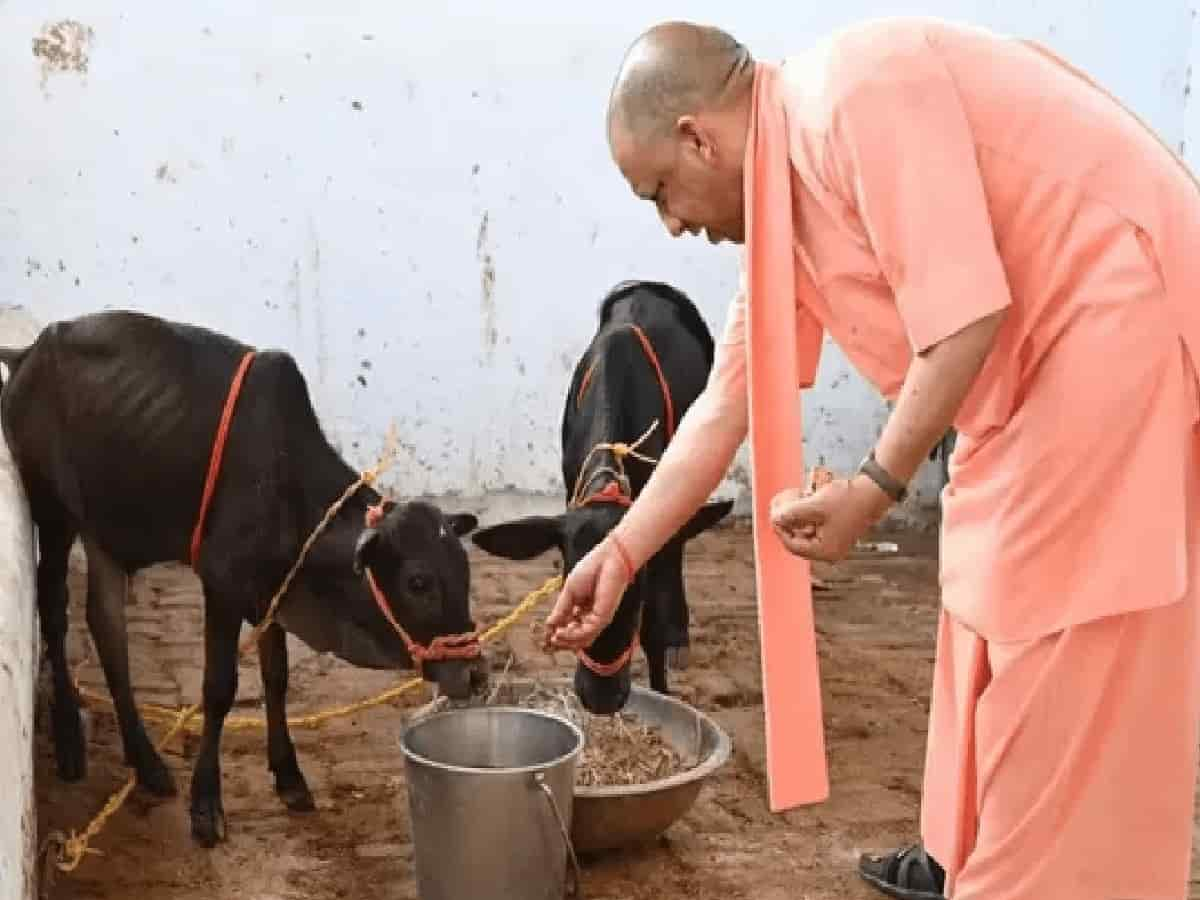
Chief Minister Yogi Adityanath has taken an epoch-making policy decision to protect the injured and helpless cows in accidents on the roads of Uttar Pradesh. The state government is now going to implement rapid emergency rescue and first aid system (Emergency Response Service) for cattle in all 75 districts of the state. The Chief Minister issued these instructions to the officials in a high-level review meeting held with the Chairman and top officials of Uttar Pradesh Cow Seva Commission at his official residence on Saturday. Under this new system, as soon as information is received, special ambulances and quick rescue teams of veterinarians will reach the spot and provide life-saving treatment to cattle falling victim to road accidents on highways, expressways and local routes. This humanitarian step will not only prevent the untimely death of thousands of voiceless people, but will also lead to a significant reduction in road accidents caused by stray animals.
The Chief Minister has announced a far-reaching action plan to validate the overall health of cattle and traditional medical methods from a modern scientific perspective. CM Yogi has instructed Pandit Deendayal Upadhyaya Veterinary Sciences University and Cow Research Institute (Mathura) and Government Ayurvedic College (Lucknow) to jointly carry out cutting-edge research and research (R&D) on Panchgavya based medical possibilities on a war footing. It was emphasized in the meeting that the medicinal properties of Panchgavya prepared from milk, curd, ghee, cow dung and cow urine should be rigorously certified on modern scientific criteria. This will bring revolutionary changes in the field of serious animal diseases as well as human health and traditional medicines and traditional Indian medical knowledge will get scientific recognition on the global platform.
The Chief Minister made it clear in the meeting that the work of cow protection cannot be permanent only by relying on administrative orders and government budget, but it is essential to link it with the self-reliant cycle of the rural economy. Under the new policy of the government, women self-help groups (SHGs), farmer producer organizations (FPOs), marginal farmers and local cow herders active across the state will be linked with the manufacturing, modern packaging, branding, value addition and marketing of cow-based products. Micro units for producing high quality organic fertilizers, natural pesticides, incense sticks, lamps, sculptures, organic paints and other products from cow dung and cow urine will be set up in the villages. With this, rural women will get a respectable livelihood near their homes and cow rearing will become a very profitable business for the farmers instead of a loss-making one.
To improve the ground reality of cow shelters, CM Yogi directed the officials to get rid of paper formalities. He said that the inspection of cow shelters should not be limited to just counting the flaws and shortcomings, but concrete solutions should be found to every problem that comes up within the stipulated time frame. In all registered and temporary cow shelters of the state, 24-hour monitoring will be done for proper feeding of cows, regular cleaning, adequate storage of dry straw and green fodder for the whole year, clean drinking water and provision of strong sheds to protect them from cold and heat. A strict order has been issued to create separate isolation wards especially for sick, old and weak cattle and take care of their special nutrition.
The Chief Minister’s stance regarding prevention of infectious diseases spread among animals appeared to be completely strict. He directed the Animal Husbandry Department to conduct 100 percent timely vaccination campaign to prevent deadly diseases like Lumpy Skin Disease, Foot-and-Mouth (FMD) and Brucellosis. If laxity in vaccination of cattle is found in any district or untimely death of any cattle occurs due to non-availability of medicines on time, then strict punitive and suspension action will be taken against the veterinary officers of the concerned development block and district. Apart from this, to implement scientific management in cowsheds, it was agreed to keep male, female, young calves and sick cattle in separate enclosures and ensure fodder and care according to their age and physical needs.
In the meeting, the Cow Seva Commission presented many practical and innovative suggestions for a permanent solution to the problem of destitute cattle in the state. The Commission recommended that under the Chief Minister Destitute Cow Partnership Scheme, government grants should be given on priority basis to progressive farmers and cow herders rearing 10 or more cows. Under this, basic facilities like construction of cattle shed, domestic biogas plant and cow urine collection tank should be established in their premises with government help. Apart from this, to maintain uninterrupted supply of green fodder throughout the year, it was agreed upon to develop the barren lands and grazing lands of the village society as pasture and to increase fodder production by contracting with local farmers. This will increase the production of natural farming components like Jeevamrit and Bijamrit in villages, reduce dependence on chemical fertilizers and drastically reduce the cost of farming for farmers.