 look news india

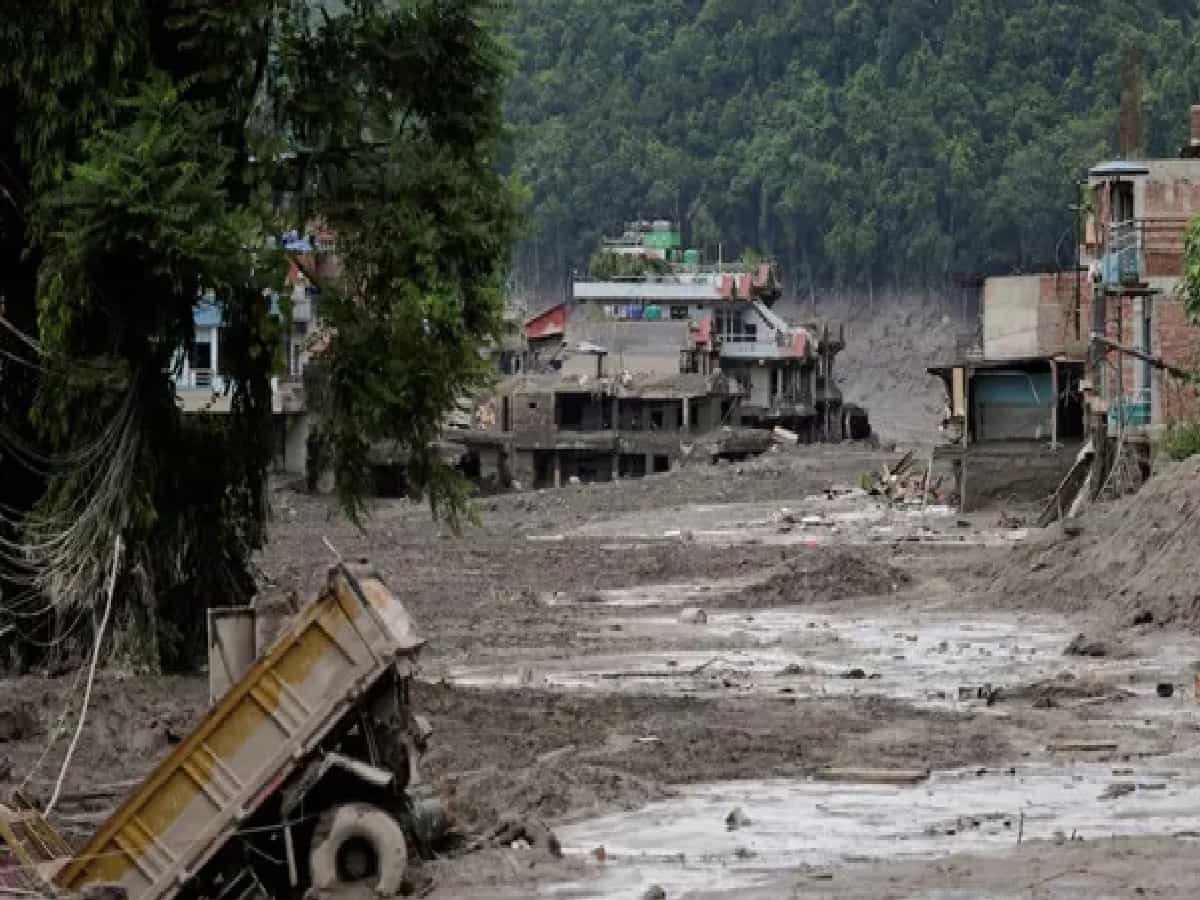
A full month has passed since the unexpected and horrific deluge that hit neighboring country Nepal on August 26, 2026, but this wound of the natural disaster still remains fresh and scary. The catastrophic floods that erupted from the Himalayan frontier region and the massive landslides that accompanied it have changed the entire geographical picture of central and northern Nepal. According to the latest official report of Nepal’s National Disaster Risk Reduction and Management Authority (NDRRMA), so far 1,453 people have been confirmed dead in this disaster, while 5,285 people are still under the debris and listed as missing. In the history of natural disasters, this incident is being counted among the most devastating events of recent decades, which has completely devastated hill settlements, major trade routes and infrastructure.
This destruction started from the sensitive mountain corridor of Nepal and Tibet border, where the swollen Bhotekoshi river took a monstrous form after the incidents of sudden torrential cloud bursts and breaking of glaciers. The huge waves of water rushed towards the low-lying plains and residential areas, carrying with them huge boulders, mud and tree trunks. In no time, concrete houses, multi-storey hotels, countless four-wheelers, heavy loading trucks, national highways and major link bridges were washed away like straw. Many important hydropower projects located in the border areas were completely damaged due to excessive water pressure and debris blockage, causing power and communication disruptions in the entire region. Quoting Chinese media reports, it has also been revealed that this border disaster also affected many parts of Tibet, where 43 civilians died and more than 500 people are still reported missing.
Immediately after the disaster, joint teams of Nepali Army, Armed Police Force (APF) and local administration started relief and rescue operations on war footing. According to the latest data released on Saturday, a total of 13,795 people have been evacuated safely from inaccessible mountain trenches and flood-hit settlements. Of the rescued homeless civilians, 1,113 people are currently taking shelter in 21 holding centers and temporary relief tents set up in different districts. If we look at the district wise figures, maximum 805 displaced people are living in the camps of Rasuwa district, while 212 people are living in Dhading and 187 people are trying to make a new start in life with the help of basic facilities in the relief centers of Nuwakot. The administration is providing food, pure drinking water and psychological counseling in these centers so that the displaced people can recover from the deep mental shock of the natural disaster.
Extensive health campaigns have been launched to prevent the threat of waterborne epidemics and infectious diseases following natural disasters. Relief agencies and the Army Medical Corps have provided primary and emergency medical aid to about 11,000 civilians affected by the floods and debris. Seven seriously injured people are still undergoing intensive treatment at various regional hospitals. However, despite extensive rescue operations, the biggest humanitarian crisis has arisen over the identification of the bodies of the deceased. Of the 1,453 bodies recovered after a month-long search, only 112 have been directly identified and have been handed over to their families for cremation. Identification of the remaining bodies remains an extremely complex and emotional challenge for the administration.
Due to being buried for weeks under hundreds of tons of debris, sand and stones along with the flood water and being swept away by the strong current of water, most of the bodies have been completely mutilated, deformed and transformed into skeletons. In such a situation, it has proved technically impossible to identify the dead on the basis of general physical appearance or clothing. To find a solution to this humanitarian crisis, the Forensic Wing of Nepal Police has made the state-of-the-art DNA profiling technology its main base. Scientists and forensic experts have so far safely collected 1,329 DNA samples from recovered bodies and human remains. On the other hand, 2,060 reference DNA samples have been taken from distressed families and relatives searching for missing relatives, so that legal and biological identity can be established by cross-matching both the samples in the laboratory.
For the convenience of citizens and for the purpose of transparent information system, Nepal Police has uploaded the complete descriptive data of 1,421 unidentified bodies on its official digital website. In this, unique jewellery, pieces of clothing, tattoos, birthmarks and other physical identification marks found with the dead bodies have been compiled in digital form so that people from remote areas can search for clues related to their missing relatives sitting at home. On the other hand, the horrific scale of the disaster can be gauged from the fact that all government mortuaries and cold storages in Kathmandu and surrounding districts were completely exhausted. Given the acute shortage of space in mortuaries and the threat of spread of infectious diseases, administrative authorities have taken the difficult decision to safely bury many of the unidentified remains with full scientific protocol and dignity, after completing all necessary legal, medical and DNA sample collection procedures, so that legal evidence is available in case of future DNA matches.